
Electrical steel costs more than mild steel because of how it is made, not because of the silicon in it. In China in 2026, a common non-oriented grade such as 50WW800 cost only about 13% more than ordinary cold-rolled sheet. Grain-oriented steel (GOES) cost roughly 2.6 to 3 times as much as plain carbon steel coil. The silicon itself adds well under USD 40 per tonne. Most of the premium comes from extra annealing, coating and testing, and from the small number of mills that can make the top grades.
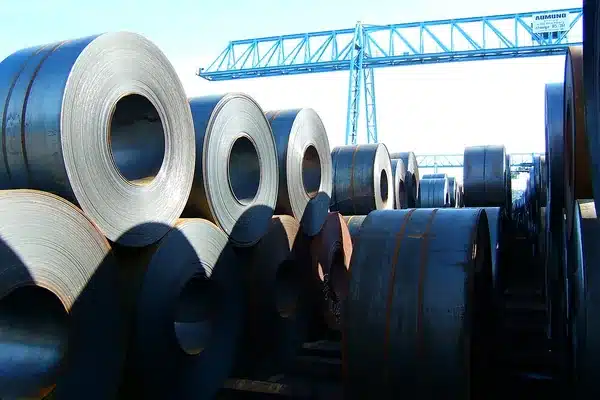
The question comes up again and again on engineering forums. One metallurgy forum user wanted a ballpark figure before talking to sales: Wikipedia once said electrical steel cost twice as much as mild steel, but a US Mint report implied it cost about the same. A builder in India asked a sharper question. A small piece of silicon steel sheet on Amazon was “damn expensive”, so how can fan makers sell complete stators so cheaply? This article answers both questions with 2026 price data. If you need to check a quote line by line, our guide on how to read a CRGO price per ton quote covers that.
Key Takeaways
- Low-grade non-oriented steel is close to mild steel in price. In China, 50WW800 traded at about 4,383 yuan/t in March 2026, against about 3,868 yuan/t for ordinary cold-rolled sheet in January.
- Grain-oriented steel is the expensive one. A September 2026 index put it at USD 1.44/kg in Northeast Asia and USD 4.23/kg in North America, about three times local hot-rolled coil.
- Silicon is cheap. At mid-2026 ferrosilicon prices, the silicon in a tonne of 3%-silicon steel costs roughly 250 yuan, under USD 40.
- The premium pays for processing: very low carbon, extra annealing (for GOES, a batch anneal lasting days), insulation coating and magnetic testing of every coil.
- US prices sit far above Asian prices because domestic GOES supply is limited and imports face tariffs.
- Mass-produced stators are cheap because the steel is bought by the coil, punched at hundreds of strokes a minute, and the die cost is spread over millions of parts.
How Much More Does Electrical Steel Cost Than Mild Steel in 2026?
It depends on the grade. Low-grade non-oriented steel costs only 10–20% more than ordinary cold-rolled sheet. Grain-oriented steel costs around three times as much as hot-rolled coil. The table puts the 2026 figures we could verify side by side.
| Market | Plain carbon steel | Electrical steel | Ratio |
|---|---|---|---|
| China domestic, yuan/t | Cold-rolled sheet: 3,868 (SunSirs, 16 Jan 2026) | 50WW800 (0.5 mm NGO): 4,383; 50WW600: 4,550 (SteelOrbis, 25 Mar 2026, incl. 13% VAT) | About 1.13–1.18× |
| China export, USD/t | HRC SS400: 493; CRC SPCC: 556 (Mysteel, FOB, 20 Oct 2026) | GOES, Northeast Asia: 1,440 (Business Analytiq index, Sep 2026) | About 2.6× CRC, 2.9× HRC |
| United States, USD/t | HRC: 1,255 per short ton, about 1,383 per tonne (Nucor spot price, 19 Oct 2026) | GOES, North America: 4,230 (Business Analytiq index, Sep 2026) | About 3.1× |
These figures come from different publishers, dates and price bases, so treat the ratios as approximate. The pattern is clear, though, and it means both of the forum poster’s sources can be right. The “twice the price” figure dated from 1981, and the US Mint report that said “about the same” was probably looking at a different grade.
Grade and thickness move the price within electrical steel too. Thinner gauges and lower-loss grades cost more per tonne than standard 0.50 mm material. Our 2026 electrical steel price trend tracks how each grade has moved over the year.
Where Does the Extra Cost Come From?
Mostly from processing. One commenter on the same thread put it plainly: electrical steel is more expensive “not because of the alloying elements but because the processing is pretty specialized”.
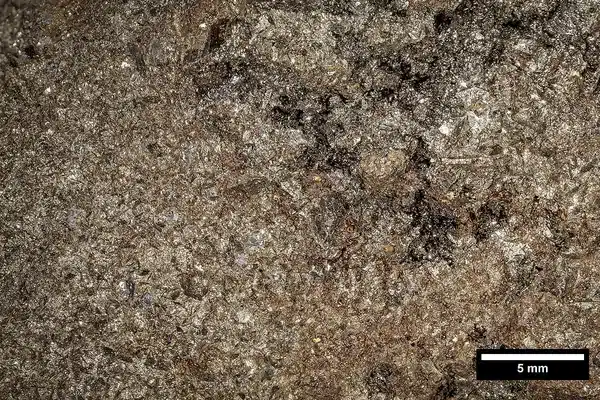
Silicon is a small cost. Steelmakers add silicon as ferrosilicon. Mysteel quoted 75% ferrosilicon at 6,000 yuan/t in June 2026. A tonne of steel with 3.2% silicon, near the top of the commercial range, needs about 43 kg of ferrosilicon. That costs roughly 250 yuan, or under USD 40. Even if melt losses doubled it, silicon would still be a few percent of the price of grain-oriented steel.
Processing is the big cost. Silicon makes steel harder to cold roll. Above about 3.2% it becomes brittle, so mills have to roll carefully to hit thin gauges. The steel also needs very little carbon, so mills anneal it in a decarburizing atmosphere. Non-oriented grades then get a final anneal, an insulating coating, and a magnetic test of every coil. That test is the Epstein measurement printed on the certificate, which we explain in core loss testing on an Epstein frame. Ordinary cold-rolled sheet skips all the magnetic steps.
Grain-oriented steel adds a slow batch anneal. After decarburizing, GOES is coated with a magnesium oxide separator and annealed as whole coils at high temperature. That is where the grains line up with the rolling direction. A 2002 patent by the Italian steelmaker Acciai Speciali Terni describes this box annealing step as “requiring some days”. Many coils go into one batch, and the coils deform under their own weight. More scrap comes from turns sticking together and from quality problems. Our walk-through of how CRGO coil is made covers the whole route.
Then comes yield. Every step that can fail means more material goes back to the melt shop. A plain cold-rolled sheet mill does not carry those losses.
Why Is Electrical Steel So Much Pricier in the US?
Because domestic supply is limited and imports are taxed. In its January 2024 update, the Congressional Research Service named Cleveland-Cliffs as the only US maker of grain-oriented steel. It also cites a 2022 Department of Energy finding that domestic production “could not meet domestic demand for the highest quality steel at prices comparable to imported GOES”.
The gap shows up in the numbers. IMARC put US electrical steel at USD 5,362/t in June 2026, against USD 1,051/t in China. That covers all electrical steel types, so it is a broad average, but a five-fold gap is hard to explain by grade mix alone. The same tight supply sits behind long transformer lead times, which we cover in why there is a global GOES shortage.
Tariffs add more. Since April 2026, Section 232 duty on steel derivative articles applies to their full customs value, not just the steel inside. Our article on the 2026 transformer lamination tariff shake-up explains what that means for imported laminations.
Why Are Mass-Produced Stators So Cheap?
Because a stator maker and a hobbyist are buying different things. The fan maker buys tonnes of coil at the mill or distributor price and punches it at production speed. The hobbyist buys one cut piece at retail. One reply in the India thread summed it up: “This is due to mass production.” Another added that fan makers “either manufacture them themselves or import directly from China”.
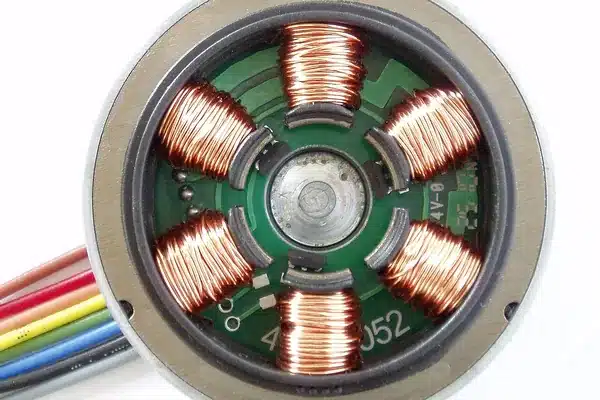
A rough example shows the scale. The inputs are our assumptions, not a quote.
| Item | Assumption | Cost per stator |
|---|---|---|
| Steel in the finished laminations | 0.2 kg of 0.5 mm 50WW800 | — |
| Steel bought, including punching scrap | About 0.4 kg, if half the strip becomes scrap | — |
| Steel price | 4,383 yuan/t (about USD 0.64/kg) | About USD 0.25 |
| Stamping die | USD 15,000–100,000, spread over 1 million stators | About USD 0.02–0.10 |
Speed does the rest. A 2002 lamination-die patent from L.H. Carbide cites 300 to 350 strokes per minute. At one lamination per stroke, that is about 18,000 to 21,000 laminations an hour from a single die. Scrap can also be sold back, which trims the steel cost a little further.
The hobbyist has none of those advantages. Retail sheet has to be cut from a coil, packed and shipped in small lots, and every seller in the chain adds a margin. Forum builders report quotes of USD 500–1,200 per prototype stator, and USD 15,000–100,000 for a stamping die. Laser cutting avoids the die for small runs. We compare the options in our guide to prototype motor laminations.
Buying the sheet itself in small lots is a separate problem. Our guide on where to buy electrical steel in small quantities compares mills, distributors and service centres.
How Can a Small Buyer Pay Less for Electrical Steel?
Buy closer to the coil, and buy only the grade you need.
- Don’t over-specify. A 50 Hz fan motor rarely needs a 0.20 mm high-frequency grade. A standard 0.50 mm grade costs much less. Our guide on how to choose electrical steel matches grades to frequency.
- Buy cut sheet from a coil processor, not a marketplace. You pay closer to the coil price, with less handling margin on top.
- Prove the concept first. Forum commenters suggest plain steel for a first proof of concept, then silicon steel for the final revision.
- Treat salvaged laminations with care. Old transformer plates are cheap, but one commenter warned that bent or deformed sheet loses magnetic performance.
- Ask for a sample before a full order. It confirms the grade and coating before you commit.
We supply non-oriented steel as CRNGO steel coil, slit strip and cut sheet, and we cut laminations to your drawing. Coil orders start at about 5 tonnes, and smaller lots can be cut from coil. Sheet orders typically start at about 500 kg. If you need less, tell us and we’ll do our best to meet the request. Samples typically cost USD 200 including freight, refunded when you place a production order.
FAQ
Why is electrical steel more expensive than regular steel?
Because of processing, not alloy cost. Electrical steel needs very low carbon, extra annealing, an insulating coating and a magnetic test of every coil. Grain-oriented grades also go through a high-temperature batch anneal lasting days. The silicon adds well under USD 40 per tonne at 2026 ferrosilicon prices.
How much does electrical steel cost compared with mild steel?
In China in 2026, low-grade non-oriented steel cost about 13–18% more than ordinary cold-rolled sheet. Grain-oriented steel cost roughly 2.6 to 3 times as much as hot-rolled or cold-rolled carbon coil, in both Asia and North America. The gap depends heavily on grade, thickness and market.
Is grain-oriented or non-oriented steel more expensive?
Grain-oriented steel is more expensive. It needs a long box anneal to line up its grains, and only a few mills worldwide make the top grades. Common non-oriented grades go through a simpler continuous process and are priced much closer to ordinary cold-rolled steel.
Why are motor stators cheap when silicon steel sheet is expensive?
Stator makers buy coil in tonnes, punch laminations at hundreds of strokes per minute, and spread the die cost over millions of parts. In our rough example, the steel in a small stator costs about USD 0.25. Retail sheet carries cutting, packing, shipping and reseller margins.
Is electrical steel more expensive in the US?
Yes, by a wide margin. A September 2026 index put grain-oriented steel at USD 4.23/kg in North America, against USD 1.44/kg in Northeast Asia. Domestic supply is limited to one US producer, and imported steel and laminations face tariffs.
Planning a motor or transformer project? Contact us with your grade, thickness, form and quantity, and we’ll quote the coil, cut sheet or finished laminations.
References
- SteelOrbis, 25 March 2026 — Silicon steel sheet prices in local Chinese market, week 13, 2026
- SunSirs, January 2026 — China hot rolled and cold rolled sheet market, 12–16 January
- Mysteel, 20 October 2026 — China steel export prices (in CRC prices: China’s major cities)
- Business Analytiq — Grain oriented electrical steel (GOES) price index
- Steel Market Update, 19 October 2026 — Nucor ups spot HR coil to $1,255/ton
- IMARC Group — Electrical steel prices, trend and forecast
- Mysteel, 3 June 2026 — Weekly: China’s FeSi prices trend steady
- Acciai Speciali Terni, US Patent 6,488,784 B1, 2002 — Process for the production of grain oriented electrical steel strips
- Congressional Research Service, IN12179, updated 3 January 2024 — DOE’s proposed regulation on electricity distribution transformers
- L.H. Carbide Corporation, US Patent 6,484,387 B1, 2002 — Progressive stamping die assembly having transversely movable die station and method of manufacturing a stack of laminae therewith
- Wikipedia — Electrical steel
Image credits
- Steel coils on a quay: LHOON, Flickr, CC BY-SA 2.0
- Ferrosilicon: Christian Schröder (ChristianSchd), Wikimedia Commons, CC BY-SA 3.0
- Brushless DC motor stator: Medvedev, Wikimedia Commons, CC BY-SA 3.0


