
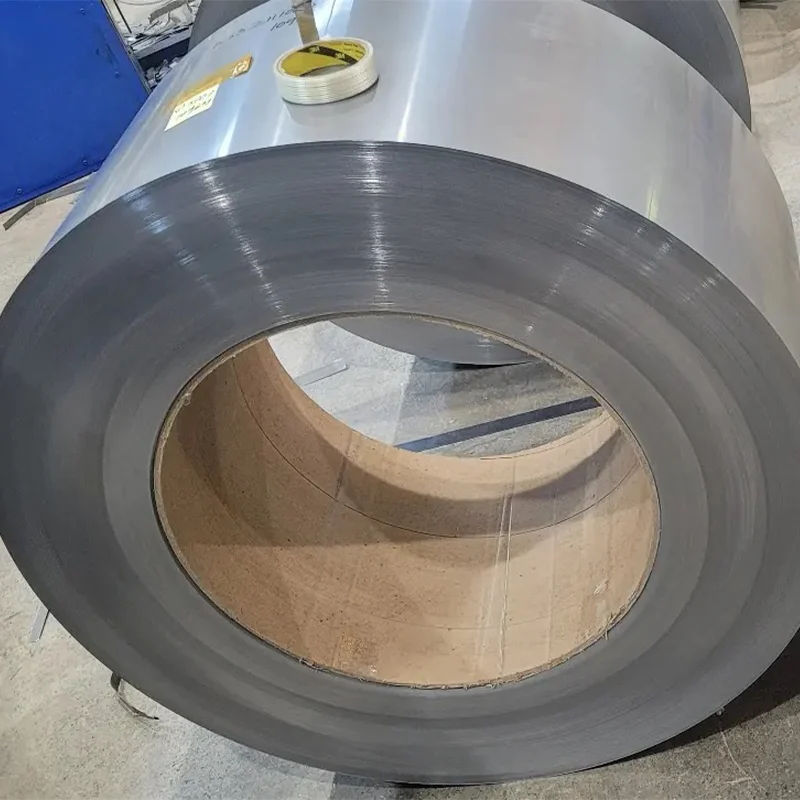
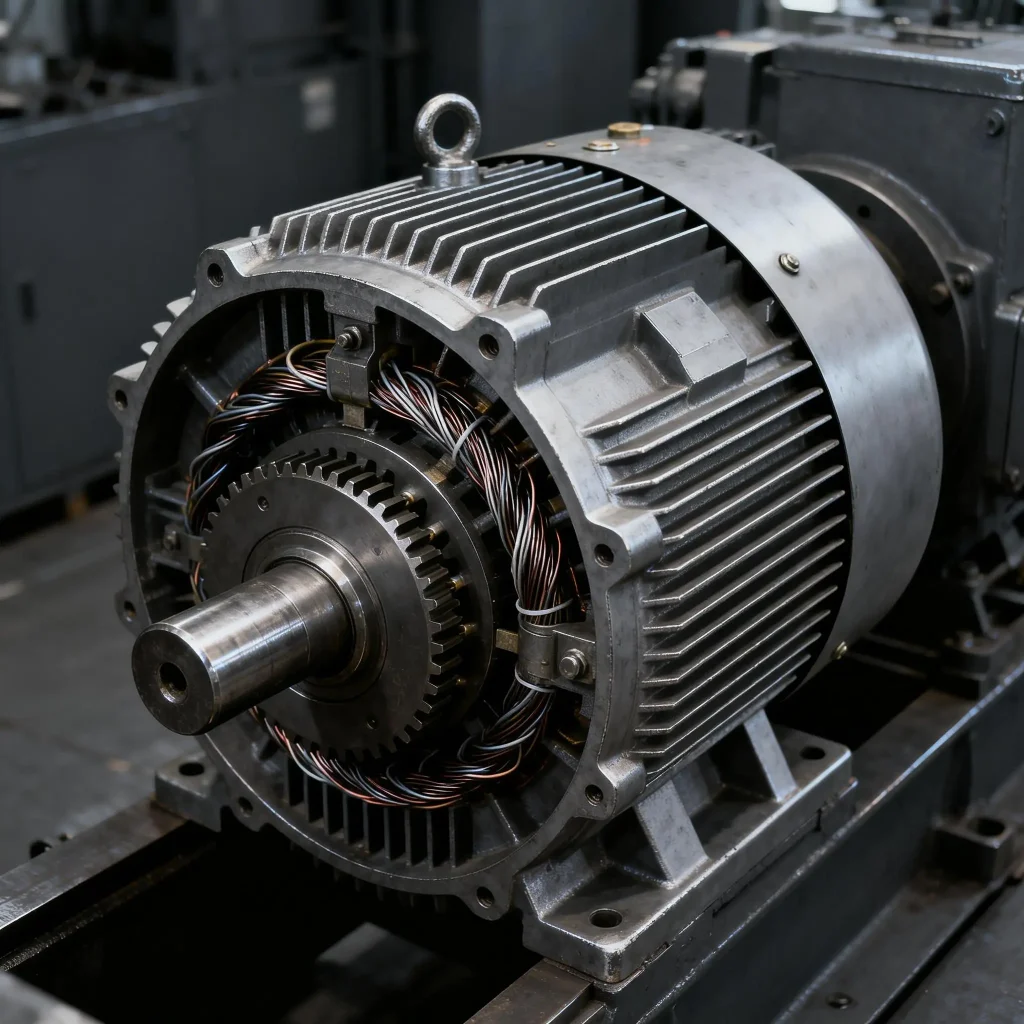
Silicon steel prices in 2026 are being pulled in opposing directions: EV demand is creating sustained demand growth for CRNGO, while the EU EcoDesign Tier 2 mandate has rewritten the grade mix for CRGO. At the same time, Chinese production capacity has surged, geopolitical trade flows are shifting, and energy costs in Asia have stabilized below 2024 peaks. The result is a market with significant grade-level divergence — where CRGO Hi-B is tight and premiums are expanding, while standard CRNGO continues to face overcapacity pressure.
Core Key Points
- Hi-B CRGO prices have risen approximately 12–18% since Q3 2024, driven by the EU EcoDesign Tier 2 A0 mandate (effective July 2025) requiring Hi-B grades for all new EU distribution transformers.
- Standard CRNGO prices remain 8–15% below their 2023 peak despite EV demand growth, due to Chinese capacity additions exceeding demand growth by approximately 15–20% in 2025.
- Ultra-thin CRNGO (0.10–0.20 mm) commands a 40–80% premium over standard 0.35 mm CRNGO and is the fastest-growing segment, with lead times extending to 8–16 weeks from Chinese producers.
- China accounts for approximately 53% of global electrical steel production in 2026, with Baowu, WISCO, and Shougang the dominant CRGO producers and dozens of mid-size mills serving the CRNGO market.
- Long-term contracts (12–24 months) for Hi-B CRGO are increasingly preferred by EU and Middle Eastern transformer builders to secure supply ahead of further tightening.
Electrical Steel Price Overview: June 2026
The following table presents representative price ranges for major electrical steel grades, FOB main Chinese ports, June 2026:
| Grade | Type | Thickness | Price Range (USD/tonne FOB China) | Change vs. June 2025 |
| B35G130 | CRGO Standard | 0.35 mm | $1,080–1,150 | +3% |
| B30G120 | CRGO Standard | 0.30 mm | $1,150–1,230 | +5% |
| B27G120 | CRGO Standard | 0.27 mm | $1,250–1,350 | +7% |
| B30G110 | CRGO Hi-B | 0.30 mm | $1,380–1,480 | +14% |
| B27G100 | CRGO Hi-B | 0.27 mm | $1,480–1,600 | +16% |
| B23G090 | CRGO Hi-B | 0.23 mm | $1,680–1,820 | +18% |
| 50W600 | CRNGO Standard | 0.50 mm | $780–860 | −5% |
| 35W300 | CRNGO Standard | 0.35 mm | $920–1,020 | −3% |
| EV Grade (0.20 mm) | CRNGO Ultra-thin | 0.20 mm | $1,450–1,700 | +8% |
| EV Grade (0.10 mm) | CRNGO Ultra-thin | 0.10 mm | $2,800–3,400 | +12% |
Prices are indicative market range, not official quotations. Actual pricing depends on order quantity, specification details, payment terms, and port of delivery. Contact Zhongxin Steel for current pricing: cn-electricalsteel.com/contact-us.
CRGO Price Drivers: EU Regulation + Grid Expansion
EU EcoDesign Tier 2 Effect
The single biggest structural change to the CRGO market in 2025–2026 has been the EU EcoDesign Tier 2 regulation (July 2025), which raised the minimum efficiency class for distribution transformers from A to A0. This means all distribution transformers ≥ 25 kVA sold in the EU from July 2025 onward must use Hi-B CRGO for their cores.
The demand shift is significant:
- Before Tier 2: approximately 40% of EU distribution transformer cores used standard grade CRGO, 60% Hi-B
- Post Tier 2: approaching 90–95% Hi-B CRGO requirement for EU distribution transformer market
This demand concentration into Hi-B grades — B30G110, B27G100, B23G090 — has tightened supply and increased Hi-B premiums relative to standard grade by approximately 8–12 percentage points since Q4 2024.
Global Grid Investment
Global electricity grid investment reached $400 billion in 2024 (IEA estimate), with transformer capex representing approximately 15–20% of grid investment. The surge in renewable energy integration — particularly solar and wind, which require transmission capacity expansion and distribution network upgrades — has created sustained transformer demand independent of industrial activity cycles.
This is supporting CRGO demand broadly, but the Hi-B segment is seeing the strongest demand since capacity for Hi-B production is concentrated at a small number of mills globally (Baowu, Nippon Steel, POSCO, Thyssenkrupp).
CRNGO Price Drivers: EV Demand Surge vs. Overcapacity
CRNGO pricing presents a paradox in 2026: end-use demand from EV motors has never been stronger, yet prices remain below 2023 levels. The explanation is capacity expansion:
- Chinese CRNGO production capacity expanded by approximately 3.2 million tonnes/year between 2022 and 2025, driven by government support for the EV supply chain.
- EV-driven demand, while growing rapidly (+18% CAGR), has not fully absorbed this capacity addition.
- Result: standard CRNGO (0.35–0.50 mm grades) faces soft pricing despite excellent demand growth.
The exception is ultra-thin CRNGO (0.10–0.20 mm). Ultra-thin production requires specialized rolling equipment and process control that few mills can achieve. The ultra-thin segment remains supply-constrained, with lead times of 8–16 weeks from Chinese producers and prices running 40–80% above standard gauge.
The market consensus (Wood Mackenzie, 2026) is that standard CRNGO overcapacity will resolve by 2027–2028 as EV demand continues to grow, at which point CRNGO prices are expected to recover toward their 2023 peaks.
Regional Price Differentials
Electrical steel prices vary significantly by destination due to logistics costs, trade policy, and local demand dynamics:
| Destination Market | CRGO Hi-B Premium vs. FOB China | Import Duty | Key Trade Policy Factor |
|---|---|---|---|
| European Union | +$180–240/t (CIF) | 0% (standard) or 5.4–9.6% (anti-dumping, some origins) | EU anti-dumping measures on Chinese CRGO in force |
| United States | +$120–160/t (CIF) | Section 301 tariffs: 7.5–25% on Chinese steel | Tariff creates significant premium for US buyers |
| Middle East (UAE) | +$80–100/t (CIF) | 5% import duty | Growing infrastructure demand driving imports |
| India | +$90–120/t (CIF) | BCD 15–18% | Domestic production growing; import-dependent for Hi-B |
| Southeast Asia | +$60–80/t (CIF) | Varies (0–12%) | Strong transformer manufacturing base in Vietnam, Thailand |
The EU anti-dumping measures on CRGO from China (in force since 2020, reviewed and extended) add $40–80/tonne to effective landed cost for Chinese-origin CRGO in the EU. This creates a significant competitive advantage for Japanese and Korean CRGO producers in the EU market, with Nippon Steel and POSCO commanding stronger pricing in Europe.
Price History: 2022–2026 Context
| Year | CRGO Hi-B (USD/t, avg) | CRNGO Standard (USD/t, avg) | Market Event |
|---|---|---|---|
| 2022 | $1,750–2,100 | $1,050–1,350 | Post-COVID supply disruption; energy crisis |
| 2023 | $1,380–1,580 | $1,000–1,200 | Normalization; Chinese capacity ramp |
| 2024 | $1,200–1,400 | $880–1,050 | Overcapacity pressure; EV demand absorbs some |
| 2025 | $1,320–1,520 | $850–980 | EU Tier 2 effect begins; Hi-B tightens |
| 2026 (H1) | $1,480–1,820 | $780–1,020 | Hi-B premium widening; ultra-thin surging |
The 2022–2023 price peak was driven by post-COVID supply chain disruption and European energy crisis effects on steel production. The subsequent correction was steeper than most market participants expected, creating challenging conditions for producers. The current recovery (2025–2026) is structurally supported by regulatory drivers (EU Tier 2) and EV demand, making it more durable than the 2022 peak.
Trade Flow Shifts and Tariff Effects
The global electrical steel trade landscape has shifted significantly since 2020:
China → Europe: Reduced by anti-dumping measures. Chinese CRGO faces 40.5–53.8% anti-dumping duties in the EU (certain origins/producers). Some Chinese producers with certified origin from countries not subject to AD measures maintain access.
Japan/Korea → Europe: Nippon Steel (NSC), JFE, and POSCO have expanded EU market share as Chinese supply is constrained by duties. Premium positioning at 15–25% above Chinese-origin pricing.
China → Middle East/India: Growing rapidly. Middle Eastern transformer manufacturers (UAE, Saudi Arabia, Turkey) are increasingly sourcing CRGO from Chinese mills at competitive prices. India remains the largest importer of Chinese electrical steel globally.
China → US: Severely limited by Section 301 tariffs (25% effective rate on most Chinese steel products). US buyers source primarily from domestic producers (AK Steel/Cleveland-Cliffs), Japan, and occasionally through third countries.
Procurement Strategy for 2026–2027
Based on the current market structure, here are the key procurement recommendations:
For Hi-B CRGO buyers (EU, A0+ transformers):
- Lock in 12–24 month forward contracts now. Hi-B supply is structurally tight and is expected to remain so through 2027 as capacity takes time to expand.
- Evaluate dual-sourcing between Chinese and non-Chinese origins to manage anti-dumping risk and duty costs.
- Request quarterly price review clauses tied to published indices (e.g., CRU CRGO index) rather than fixed prices for contracts longer than 6 months.
For standard CRNGO buyers:
- Spot market remains favorable. Excess capacity continues to suppress prices.
- Take advantage of current pricing to build safety stock for 2027 (when market is expected to tighten).
- For ultra-thin CRNGO (0.10–0.20 mm), treat as a specialized grade — qualify at least two suppliers and maintain longer safety stock given 8–16 week lead times.
For all buyers:
- Track the steel-making raw material inputs (iron ore, ferro-silicon, energy) separately from finished steel prices — they have shown ~6–8 week lead correlation with electrical steel pricing.
- Build supplier relationships before market tightens; capacity-constrained suppliers prioritize long-term customers during tight periods.
FAQ
Why are Hi-B CRGO prices rising faster than standard CRGO?
Hi-B CRGO requires an additional high-temperature annealing process (secondary recrystallization) that standard grade does not, meaning Hi-B production capacity cannot be quickly expanded. The EU EcoDesign Tier 2 mandate has redirected significant demand volume from standard to Hi-B grades, tightening an already-constrained supply base.
How do Chinese electrical steel prices compare to Japanese and Korean competitors?
For comparable IEC grades, Chinese electrical steel is typically priced 15–30% below Japanese (Nippon Steel, JFE) and Korean (POSCO) equivalents FOB. The price gap narrows when EU anti-dumping duties are applied. Chinese mills compete primarily on price in markets without significant trade barriers (Middle East, India, Southeast Asia).
Are electrical steel prices expected to rise or fall through end of 2026?
Market consensus for H2 2026: Hi-B CRGO prices are expected to remain firm or increase slightly (0–8%) as EU Tier 2 demand continues to absorb supply. Standard CRNGO prices are expected to remain flat to slightly negative (0–5% decline) due to Chinese overcapacity. Ultra-thin CRNGO is expected to firm or rise (5–12%) as EV adoption continues to grow.
What is the minimum order quantity for electrical steel from Chinese suppliers?
Minimum order quantities vary by supplier and grade. Large mills (Baowu, WISCO) typically require 50–100 tonne minimums per grade per shipment. Mid-size mills like Zhongxin Steel can typically accommodate smaller trial orders (5–10 tonnes) for grade qualification, with standard commercial orders starting at 20–30 tonnes.
References
- CRU Group (2026). CRGO Market Intelligence Report Q2 2026. London: CRU.
- Wood Mackenzie (2026). EV Materials Outlook: Electrical Steel 2026–2030. Edinburgh: Wood Mackenzie.
- International Energy Agency (2024). World Energy Investment 2024. Paris: IEA. https://www.iea.org/reports/world-energy-investment-2024
- BusinessAnalytiq (2026). Silicon Steel Price Index and Market Commentary. https://businessanalytiq.com/procurementanalytics/index/silicon-steel-price/
- European Commission (2020, extended 2024). Council Regulation (EC) on anti-dumping measures on imports of certain cold-rolled flat steel products originating in China. Official Journal of the EU.


