
The IEC 60076-20 transformer efficiency classification system — AA0, A0, A, and B — is not just a rating scale. Each class sets specific no-load loss limits that translate directly into CRGO grade requirements, core design parameters, and material costs. This guide decodes the efficiency class system and maps each level to the silicon steel specification it demands — including the high efficiency core material that A0 and AA0 designs require.
Core Key Points
- IEC 60076-20 defines four transformer efficiency classes: AA0, A0, A, and B — where AA0 is the highest efficiency (lowest losses) and B is the lowest.
- Each step up in class reduces no-load losses by approximately 25–40% — a difference that demands progressively higher CRGO grades.
- AA0 requires Hi-B CRGO (B27G100, B23G090) — standard grade CRGO cannot physically achieve AA0 loss limits.
- The EU EcoDesign Tier 2 (July 2025) mandates A0 class minimum for distribution transformers ≥ 25 kVA placed on the EU market.
- Moving from class A to class AA0 in a 630 kVA transformer reduces 30-year lifecycle energy cost by approximately $2,000–3,000 per unit — strongly justifying the material premium.
The IEC 60076-20 Efficiency Class System Explained
IEC 60076-20, published in 2017 and titled Power Transformers — Part 20: Energy Efficiency, establishes a labeling framework for transformer efficiency analogous to the energy label system for appliances.
The system covers:
- Liquid-filled distribution transformers (25 kVA – 10 MVA, up to 36 kV)
- Dry-type distribution transformers (same range)
- Medium power transformers (10 MVA – 100 MVA)
- Large power transformers (> 100 MVA)
For each size category, the standard defines two loss levels:
- No-load losses (P₀) — Core losses that occur whenever the transformer is energized, regardless of load.
- Load losses (Pk) — Copper losses that occur under load, proportional to I².
The efficiency class primarily characterizes no-load losses (P₀), because:
- No-load losses are 100% under the designer’s control through material and core design choices.
- P₀ is incurred 8,760 hours/year regardless of utilization — making it the dominant lifecycle cost driver for most distribution transformers.
Class-by-Class Breakdown
IEC 60076-20 Table 1 sets P₀ values for liquid-filled distribution transformers. The table below shows indicative values for a 630 kVA, 11/0.4 kV transformer:
| Efficiency Class | No-Load Loss P₀ (W) | vs. Class A | Typical CRGO Grade |
|---|---|---|---|
| AA0 | ≤ 395 W | −40% | B23G090 / B27G100 Hi-B |
| A0 | ≤ 500 W | −25% | B30G110 / B27G100 Hi-B |
| A | ≤ 660 W | Baseline | B30G120 / B27G120 Standard |
| B | ≤ 830 W | +25% | B35G130 Standard |
Values are illustrative for a specific transformer design. Actual IEC 60076-20 values depend on rated power, voltage class, and frequency. Refer to IEC 60076-20 Tables 1–4 for normative values.
Key insight: The gap from class A to AA0 is a 40% reduction in no-load losses. No amount of core geometry optimization can bridge this gap without upgrading from standard CRGO to Hi-B — the material’s inherent magnetic properties set a physical ceiling on achievable loss levels.
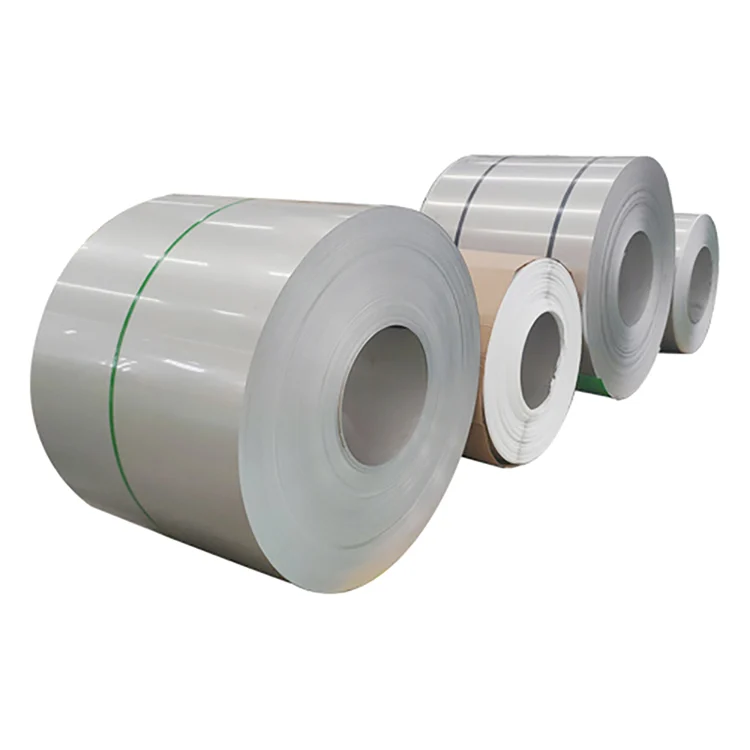
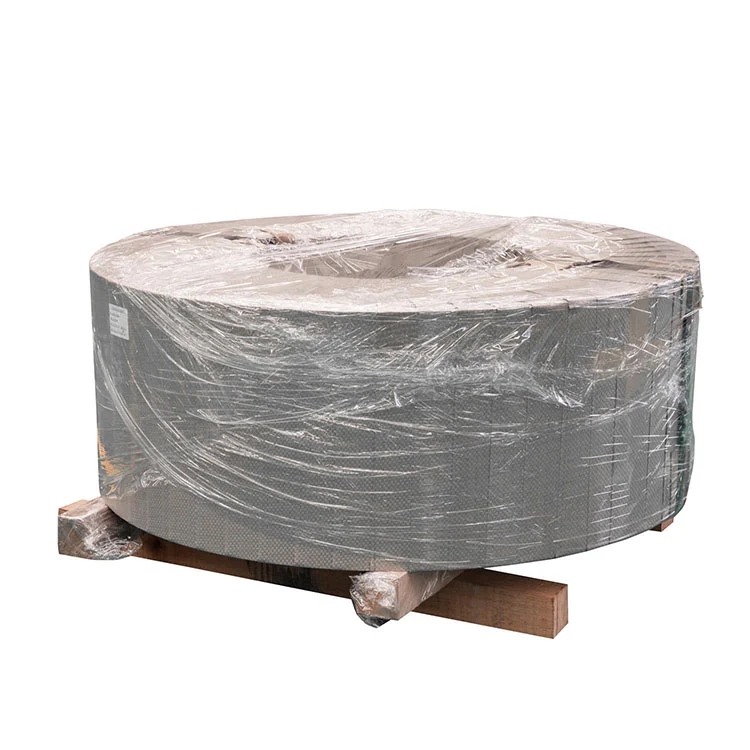
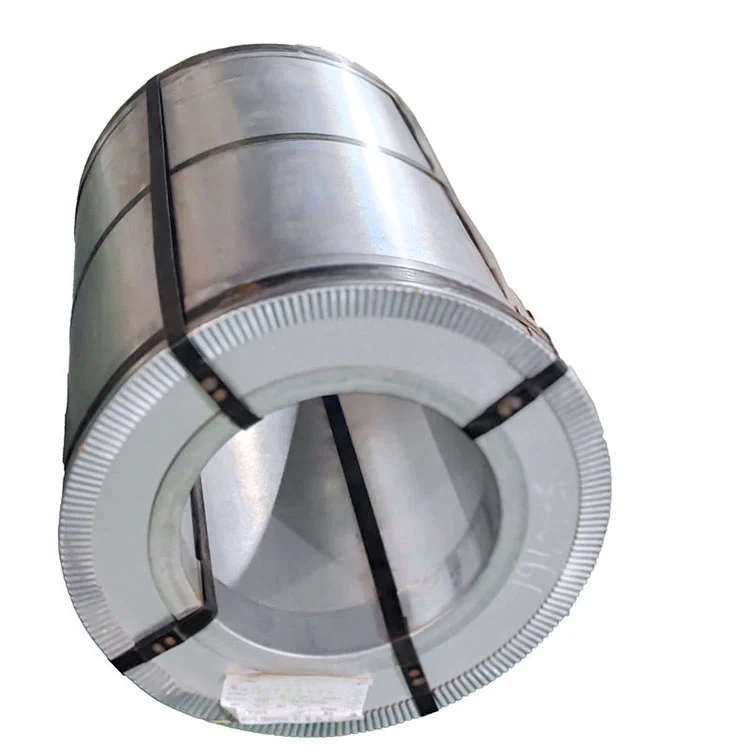
Class-by-Class Breakdown
Class B — Economy Tier
Class B represents the historical minimum standard — essentially the performance achievable with early cold-rolled electrical steel and conventional mitred-joint core construction. In most developed markets, class B transformers are no longer accepted for new installation in grid applications.
CRGO implication: Class B can be achieved with standard grade CRGO (B35G130, 0.35 mm) and basic core construction. Some class B designs use economy non-grain-oriented steel for very small auxiliary transformers, though this is not standard for distribution applications.
Current market status: Class B is still sold in some developing markets. EU, US, and China regulations have moved the floor to class A or better.
Class A — Current Baseline
Class A was the dominant global standard from approximately 2010 to 2025. It represents a meaningful efficiency improvement over class B and is achievable with standard CRGO in conventional step-lap core designs.
CRGO implication: Class A is typically achieved with:
- 0.30 mm standard CRGO (B30G120), OR
- 0.27 mm standard CRGO (B27G120) for designs at the A class boundary
Current market status: Still the minimum standard in the USA (DOE TP-2 approximately equivalent), India, and most of Southeast Asia. Being superseded by A0 in Europe.
Class A0 — Premium Efficiency
Class A0 represents a 25% reduction in no-load losses versus class A. This requires a step change in core material — A0 cannot reliably be achieved with standard CRGO; Hi-B grades are required.
CRGO implication:
- 0.30 mm Hi-B CRGO (B30G110) — borderline A0 in optimized designs
- 0.27 mm Hi-B CRGO (B27G100) — solid A0 with design margin
- Better core joint design (step-lap) essential
Current market status: A0 is the mandatory minimum in the EU from July 2025 per EcoDesign Tier 2. Major markets including Brazil, South Korea, and Australia are converging toward A0 as their new baseline.
Class AA0 — Ultra-High Efficiency
AA0 represents the frontier of current distribution transformer efficiency — a 40% reduction in no-load losses versus class A. Building a high efficiency core at this level requires both the best available CRGO grades AND optimized core design.
CRGO implication:
- 0.23 mm Hi-B CRGO (B23G090) — the primary grade for AA0
- 0.27 mm Hi-B CRGO (B27G100) — achievable in some optimized designs
- Step-lap or step-mitred core joints essential
- Core flux density design at 1.60–1.65 T (not maximum)
Current market status: Not yet mandated in any major market as of 2026, but under discussion as the EU’s next EcoDesign tier (possibly 2030). Some utility procurement frameworks already require AA0, particularly for renewable energy substations in Northern Europe.
How Classes Map to CRGO Grades
| Efficiency Class | Primary CRGO Grade | Alternative | Steel Type |
|---|---|---|---|
| AA0 (best) | B23G090 | B27G100 (optimized design) | Hi-B |
| A0 | B27G100 | B30G110 (borderline) | Hi-B |
| A | B30G120 | B27G120 | Standard |
| B (lowest) | B35G130 | B35G155 | Standard/Economy |
Important note on Hi-B identification: When sourcing CRGO for A0 or AA0 applications, always verify that the grade meets the Hi-B specification B₈ ≥ 1.88 T. Some suppliers label material as B27G100 without Hi-B magnetic induction characteristics. Always request the actual B₈ value on the Mill Test Certificate.
Regional Regulatory Mapping
| Region | Minimum Efficiency Standard | Effective Date | Equivalent Class |
|---|---|---|---|
| European Union | EcoDesign Tier 2 | July 1, 2025 | A0 minimum |
| European Union | Proposed Tier 3 | ~2030 (TBC) | AA0 (proposed) |
| United States | DOE 10 CFR 431 TP-2 | January 2016 | ~A (close to A) |
| China | GB/T 17468-2019 S20 | 2021 | A0 equivalent |
| India | BEE Star-3 minimum | 2022 | ~A |
| Australia | MEPS Level 3 | 2023 | ~A0 equivalent |
| Japan | Top Runner Program | Ongoing | A0–AA0 range |
| Brazil | PROCEL A label | Ongoing | ~A0 |
The global regulatory trend is clear: A0 is becoming the new global baseline, and AA0 is the emerging premium standard. Transformer manufacturers serving multiple markets need a flexible CRGO sourcing strategy that can supply both Hi-B and premium Hi-B grades.
The Economics of Moving Up a Class
For distribution transformers, the lifetime economic case for higher efficiency classes is compelling:
630 kVA transformer, 30-year service life, electricity at €0.10/kWh:
| Class | P₀ (W) | Annual Energy Loss | 30-Year Energy Cost* | Class Upgrade Cost** |
|---|---|---|---|---|
| B | 830 W | 7,270 kWh | €21,800 | — |
| A | 660 W | 5,780 kWh | €17,300 | — |
| A0 | 500 W | 4,380 kWh | €13,100 | +€100–150 material |
| AA0 | 395 W | 3,460 kWh | €10,400 | +€200–300 material |
*30-year simple energy cost, undiscounted. **Incremental material cost estimate.
The A → AA0 upgrade costs approximately €200–300 in additional CRGO material per transformer but saves €6,900 in electricity over 30 years — a payback of approximately 2 months.
When utilities apply capitalized loss rates ($2,000–5,000/kW of no-load loss), the economic case is even more compelling: a 265 W reduction in P₀ (A → AA0) is worth $530–1,325 in capitalized loss value per transformer, justifying a significant material premium.
Designing to the Efficiency Class Boundary
A common mistake is specifying a CRGO grade that delivers just enough performance to technically meet an efficiency class — with no design margin. This creates problems:
- Material variability — Even within a grade, actual P₁.₇/₅₀ varies from coil to coil. Designing at the exact boundary means some production lots may fail the class.
- Production variability — Core construction introduces additional loss (cutting, stacking, joint gaps) that must be budgeted. A 10% production loss margin requires the CRGO to perform 10% better than the final transformer target.
- Test condition differences — Epstein Square tests (used for grade qualification) can differ from single-sheet tester values and from actual transformer test results. A 5–8% safety margin is standard practice.
Recommended design practice:
- For A0 class: target CRGO grade that achieves P₁.₇/₅₀ ≤ 85% of the A0 no-load loss limit
- For AA0 class: target CRGO grade that achieves P₁.₇/₅₀ ≤ 82% of the AA0 no-load loss limit
This provides adequate margin for material variation, production variation, and test condition differences.
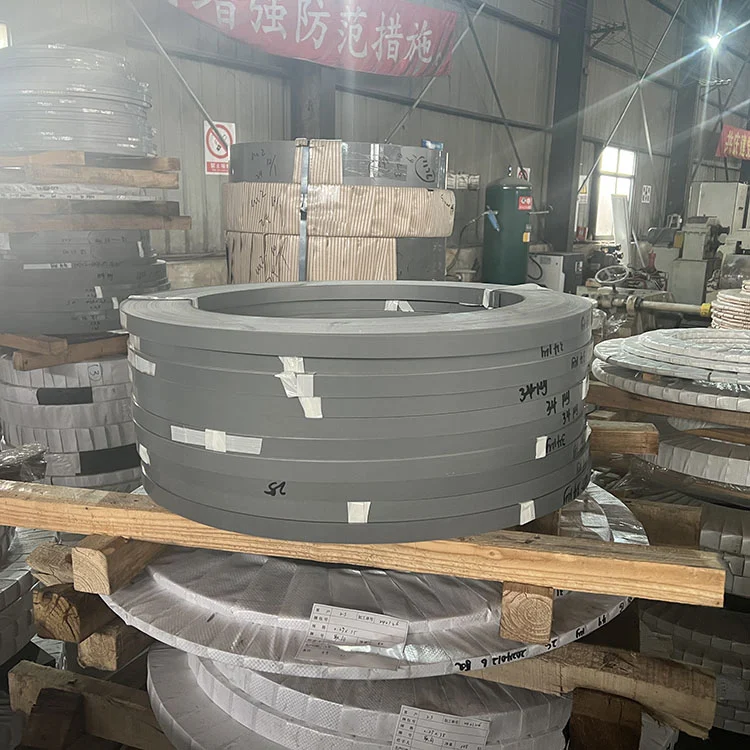
FAQ
Is AA0 class mandatory anywhere in the world as of 2026?
As of June 2026, AA0 class is not mandatory as a minimum standard in any major market. However, AA0 is required by some utility procurement specifications in Northern Europe and Japan. The EU has signaled that AA0 may become mandatory in a future EcoDesign revision (potentially 2030), and market leaders are designing to AA0 voluntarily to build competence ahead of that requirement.
Can I achieve A0 class without Hi-B CRGO?
A0 class is borderline achievable with the best standard-grade CRGO (B27G120) in highly optimized core designs — but it is a difficult and risky approach. The design margins are tight, and production variability means a significant fraction of transformers may fail the A0 test. Hi-B CRGO (B30G110 or B27G100) provides a comfortable margin and is the recommended approach.
How does the efficiency class affect the transformer load losses (Pk) specification?
IEC 60076-20 addresses both no-load and load losses, but the class designation primarily characterizes no-load losses. Load losses are specified separately and are largely a function of winding design rather than core material. Upgrading to a higher efficiency class CRGO directly reduces P₀ but does not change Pk.
What is the difference between IEC 60076-20 efficiency class and EU EcoDesign class?
The EU EcoDesign Regulation 2019/1781 uses the same AA0/A0/A/B classification system as IEC 60076-20 and directly references it. The regulation specifies which IEC class is the legal minimum for EU market access. As of July 2025, EU EcoDesign Tier 2 requires A0 class minimum for liquid-filled distribution transformers ≥ 25 kVA.
References
- IEC 60076-20:2017 — Power transformers — Part 20: Energy efficiency. Geneva: International Electrotechnical Commission.
- European Commission (2019). Regulation (EU) 2019/1781 laying down ecodesign requirements for electric motors and variable speed drives. Official Journal of the EU.
- Heathcote, M. J. (2007). The J&P Transformer Book (13th ed.). Oxford: Newnes.
- Joint Research Centre (2021). Ecodesign Working Document: Distribution and Power Transformers, 2021 Review. Brussels: European Commission JRC.
- BusinessAnalytiq (2026). Transformer Core Materials Market Intelligence Q1 2026. https://businessanalytiq.com/


