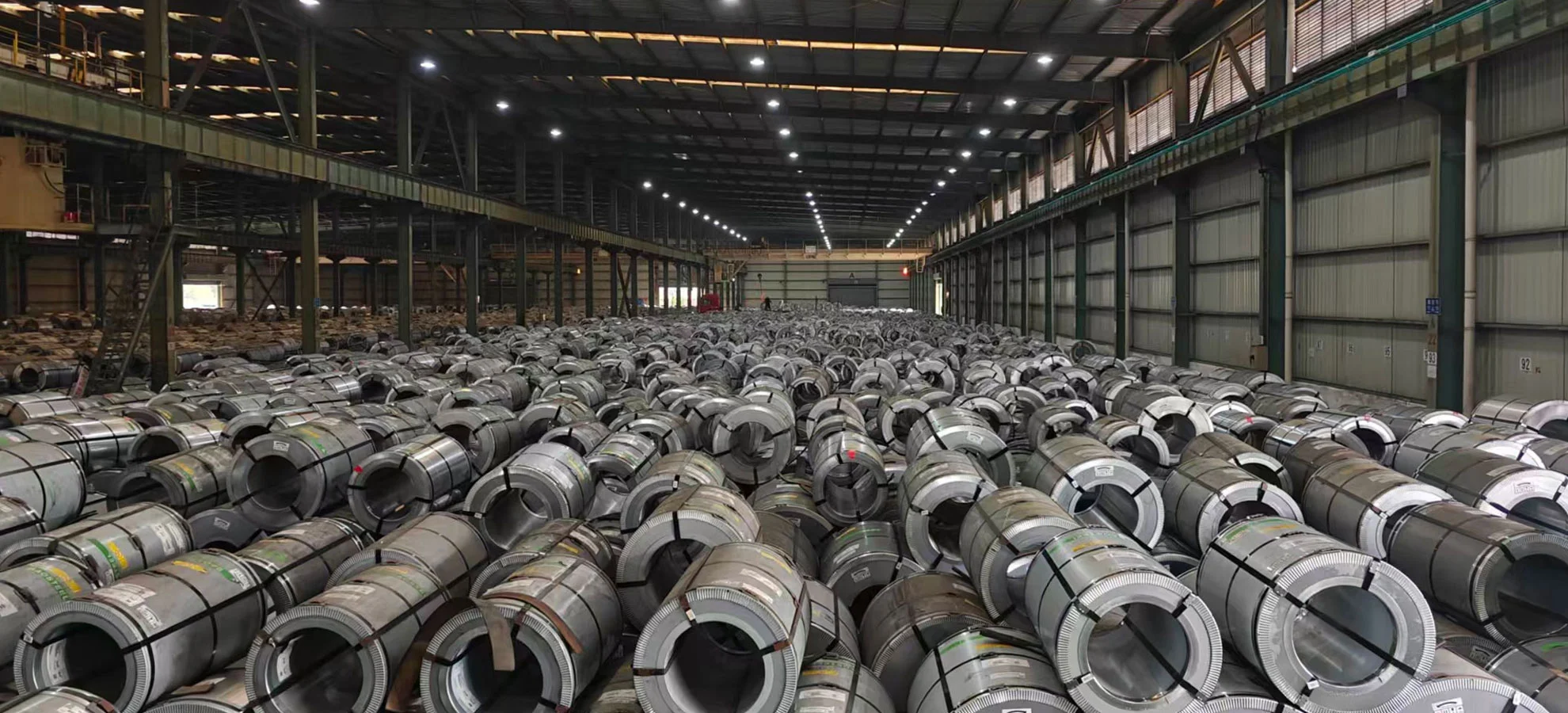
Products · Grain-oriented · Ultra-thin
Ultra-Thin CRGO0.05–0.20 mm high-frequency grain-oriented silicon steel
Directionally rolled grain-oriented silicon steel down to 0.05 mm, engineered to cut eddy-current loss at 400 Hz and above — for high-frequency transformers, reactors, aerospace power supplies and EV onboard chargers. Grades GT-050 to GT-200, slit to width.
Product photos
Ultra-thin CRGO, coil to core
Real production material — from master coil through precision slitting to a wound high-frequency core.
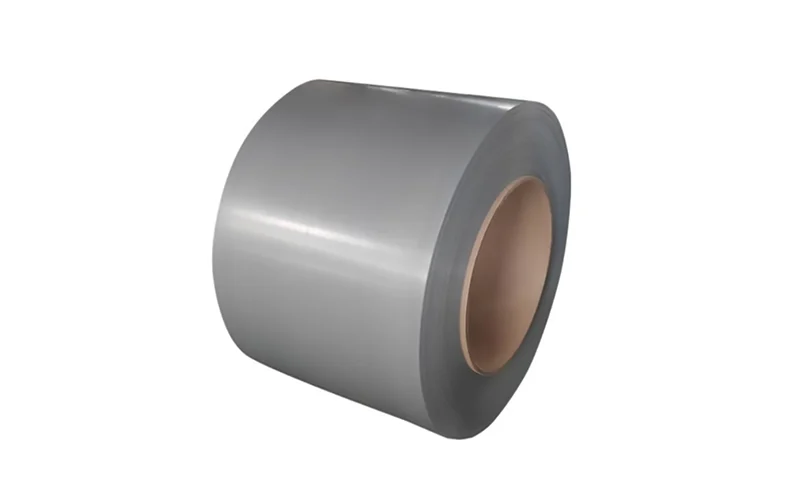 Master coil · 0.05–0.10 mm
Master Coil
Ultra-thin grain-oriented coil straight off the mill, ready for slitting to your width.
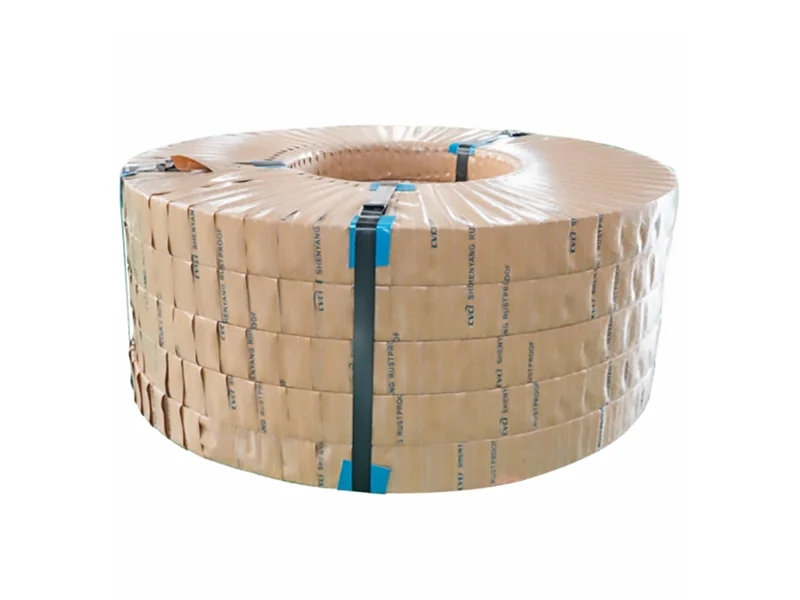 Slit strip · tight tolerance
Precision Slit Strip
Narrow-width strip slit to tight tolerance for wound HF transformer and reactor cores.
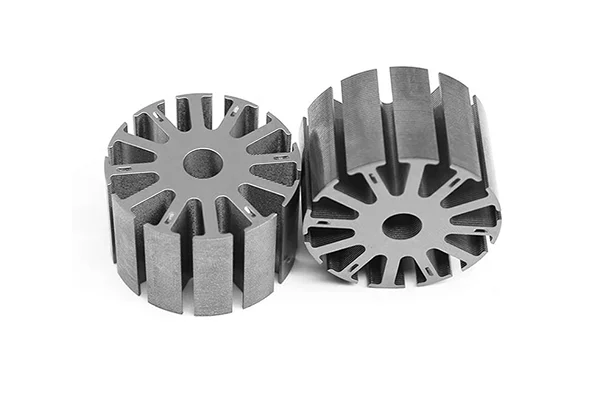 Wound core sample
Wound Core Sample
Test-wound on ultra-thin gauge to verify core loss at your target operating frequency.
Why ultra-thin
Thinner gauge, lower loss above 50/60 Hz
Standard 0.23–0.35 mm CRGO is optimised for 50/60 Hz power frequency. Above a few hundred hertz, eddy-current loss rises with the square of thickness — so cores running at 400 Hz, switching frequency or aerospace power specs need a thinner lamination to stay efficient.
| Property | Standard CRGO | Ultra-Thin CRGO |
|---|---|---|
| Thickness | 0.23–0.35 mm | 0.05–0.20 mm |
| Typical test frequency | 50 / 60 Hz | Up to 400 Hz+ |
| Core loss reference | P1.7/50 ≤ 0.90 W/kg | P1.0/400 ≤ 9–25 W/kg |
| Magnetic induction | B8 ≥ 1.88 T | B8 ≥ 1.83–1.87 T |
| Best for | Power / distribution transformers | HF transformers, reactors, 400 Hz & EV power |
Need standard 50/60 Hz gauges instead? Standard CRGO covers 0.23–0.35 mm in grades M4–M6 and 27Q120 — see Standard CRGO →
By thickness & grade
Five gauges, from 0.05 to 0.20 mm
Core loss drops as thickness decreases — pick the gauge that matches your operating frequency and cost target.
GT-050
0.05 mm
P1.0/400 ≤ 9 W/kg · B8 ≥ 1.83 T. Highest-frequency cores, aerospace 400 Hz.
GT-080
0.08 mm
P1.0/400 ≤ 11 W/kg · B8 ≥ 1.84 T. HF reactors and chokes.
GT-100
0.10 mm
P1.0/400 ≤ 14 W/kg · B8 ≥ 1.85 T. EV onboard chargers, DC-DC converters.
GT-150
0.15 mm
P1.0/400 ≤ 19 W/kg · B8 ≥ 1.86 T. Mid-frequency transformers.
Standards & equivalents
GT-series grades, cross-referenced
GT-050 and GT-100 are our internal grade codes for ultra-thin grain-oriented steel. If you’re specifying against a JIS or a competitor’s part number, send it over and we’ll confirm the closest match before quoting.
Ultra-thin CRGO, at a glance
By application
Where ultra-thin CRGO earns its keep
High-frequency transformers
Cuts eddy-current loss on 400 Hz+ and switching-frequency cores.
Explore →Reactors & chokes
Thin lamination for compact, low-loss HF magnetic components.
Get a quote →EV onboard chargers
Silicon steel for DC-DC converter and OBC transformer cores.
Get a quote →Aerospace 400 Hz power
Low-loss cores for aircraft and ground-power 400 Hz systems.
Get a quote →By form
Supplied the way your line runs
01
Coil
Master and mill-edge coils in ultra-thin gauge, to your inner diameter.
02
Sheet
Cut-to-length sheet for prototyping and small-batch cores.
03
Slit strip
Tight-tolerance narrow slitting for wound and stamped HF cores.
How we work
From enquiry to your dock
A simple path from spec to delivery, built for overseas buyers.
Send your spec
Thickness, frequency, width — or the JIS/competitor code you’re matching.
Quote in 24h
Pricing and availability within one business day.
Free samples
Test core loss at your operating frequency, usually within a week.
Production & QC
Rolled, slit and tested to grade, with a mill certificate.
Export delivery
Moisture-proof packing and ocean freight to your port.
FAQ
Sourcing ultra-thin CRGO from us
What is ultra-thin CRGO used for?
It’s grain-oriented silicon steel rolled down to 0.05–0.20 mm, used where the operating frequency is well above 50/60 Hz — high-frequency transformers, reactors, EV onboard chargers and 400 Hz aerospace power supplies — because thinner lamination sharply cuts eddy-current loss.
What’s the difference between ultra-thin CRGO and standard CRGO?
Same grain-oriented material family, but standard CRGO (0.23–0.35 mm) is optimised for 50/60 Hz power-frequency cores, while ultra-thin CRGO (0.05–0.20 mm) is optimised for higher-frequency operation where thickness-driven eddy-current loss would otherwise dominate.
Which thickness should I choose?
As a starting point: the higher your operating frequency, the thinner the gauge you’ll want. Send us your frequency, induction level and core geometry and we’ll recommend a grade.
Do you supply GT-050 and GT-100 as standard?
Yes — GT-050 (0.05 mm) and GT-100 (0.10 mm) are our most-requested ultra-thin grain-oriented grades, with GT-080, GT-150 and GT-200 available on the same lead time.
Can you slit to narrow widths?
Yes — precision slitting to width is standard for ultra-thin gauges, with tight tolerance for wound and stamped high-frequency cores.
What’s the minimum order quantity?
MOQ depends on gauge and width. Tell us your target volume and we’ll confirm what’s workable — trial quantities are possible for new projects.
Do you provide samples?
Yes — free samples are usually ready within about a week, so you can test core loss at your operating frequency before committing.
How do you handle export?
Seaworthy, moisture-proof packaging on coils or pallets, shipped to any port. We’ll align on payment terms at the order stage.
Why buyers choose Zhongxin
Mill-grade material, export-ready service
Wuxi Zhongxin Special Steel Co., Ltd. is a Chinese manufacturer and exporter of grain-oriented, non-oriented and ultra-thin silicon steel, serving transformer and motor makers across Europe, the Americas, Asia and beyond.
Send your spec — get a quote in 24 hours
Share gauge, frequency, width and grade, or upload a drawing. Free samples available.