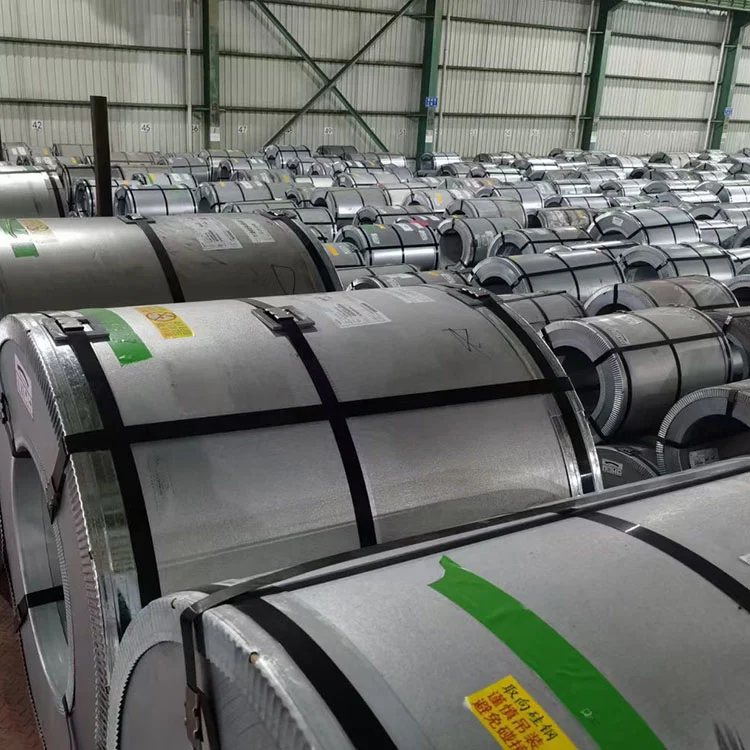
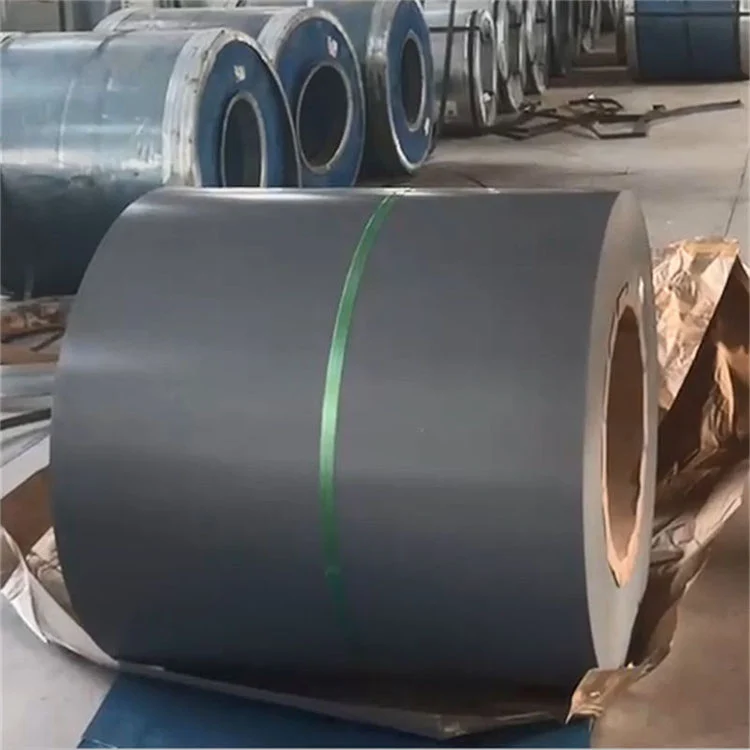
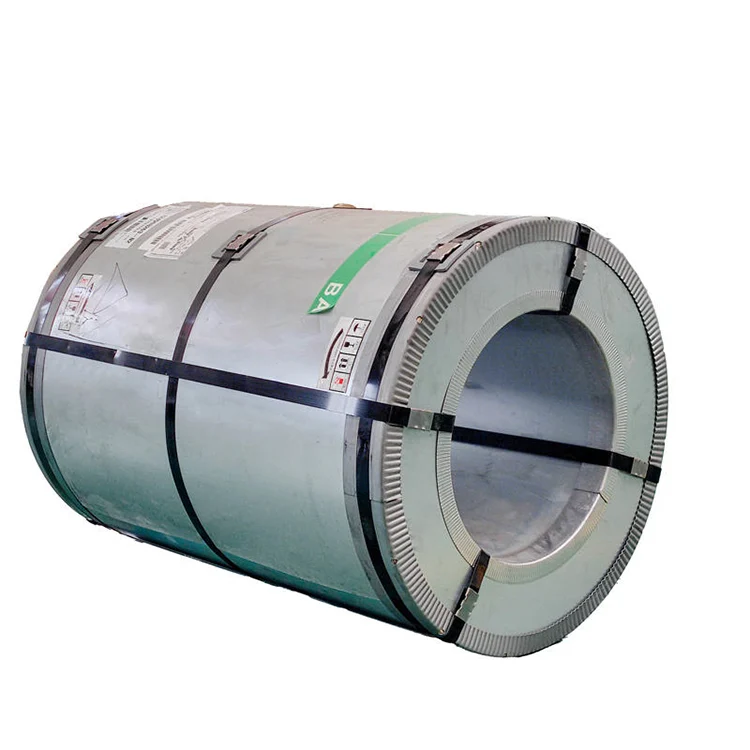
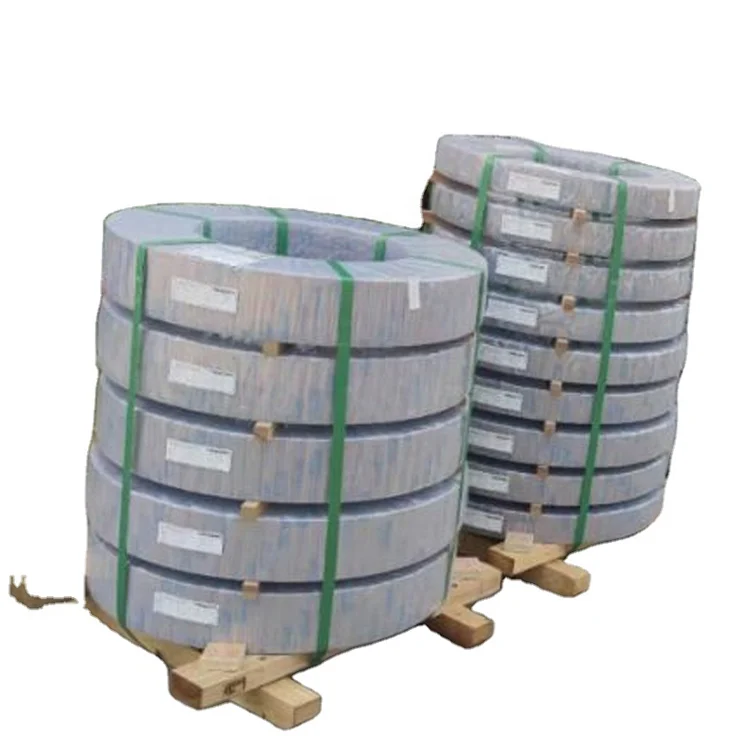
Prime CRGO is first-quality mill coil, supplied with a per-coil EN 10204 3.1 mill test certificate and a guaranteed maximum core loss. Secondary CRGO — also sold as non-prime, “second and defective,” or lamination grade — is downgraded material: off-gauge or off-chemistry coil, edge trim and slit remnants, re-rolled stock, or sheet reclaimed from scrapped transformers. It usually ships oiled, in mixed widths and heats, with no certificate tied to the coil in front of you, at 40–60% of the prime price.
Both have a legitimate market. The problem is a narrow one: secondary coil sold at a prime price, or sold without being identified as secondary at all. This article covers how to tell the two apart before the coil reaches your stamping line.
We get a version of this every few weeks. A transformer builder forwards a quote that undercuts everyone else by a wide margin and asks whether it looks right. Usually the spec sheet says “CRGO, 0.27 mm, grade equivalent to 27Q120” and nothing else — no mill named, no mention of first quality, no sample certificate. When we ask the seller for a per-coil 3.1 certificate and a heat number, the conversation slows down. That pause is the answer: the discount wasn’t a better deal, it was a different product.
None of this is unique to any one country’s market, but it has become more visible in 2026 because the grain-oriented steel shortage has pulled marginal material into the export stream that a looser market would have kept local.
Key Takeaways
- Secondary CRGO is not a lower grade in the standards sense — it is downgraded prime. India’s Ministry of Steel defines non-prime steel as “Second & Defective” product with non-standard dimensions, surface defects such as edge damage, rust and rolled-in scale, or internal faults like off-chemistry and mechanical-property deviation.
- The core-loss number is where it costs you. Prime CRGO carries a guaranteed maximum specific core loss (P₁.₇/₅₀ in W/kg); secondary coil carries no such guarantee, and an IEEE study of different CRGO core grades reported power-factor values of 0.4–0.75 for prime material versus below 0.3 for non-prime and ex-service steel.
- The single most reliable paper test is the mill test certificate. A per-coil EN 10204 3.1 certificate with measured P₁.₇/₅₀, B₈, thickness and a heat number that also appears on the coil tag is a prime document. “Grade class confirmed” with no coil-level data is not.
- Secondary is a reasonable buy for small non-critical cores, relay and ballast laminations, prototypes, or budget distribution work where the loss guarantee is loose — but only when it is bought knowingly and priced as secondary on the invoice.
- The 2026 shortage is the reason to be more careful, not less. Global transformer lead times have stretched toward four years, and secondary oily CRGO becomes more visible in the market exactly when buyers are under the most schedule pressure to accept it.
What “Secondary CRGO” Actually Means
“Secondary” is a commercial classification, not a grade. It covers any grain-oriented coil that a mill or trader has downgraded out of the first-quality stream. India’s Ministry of Steel, in its guidelines identifying non-prime steel, groups the reasons into three families that apply directly to CRGO:
- Non-standard dimensions — mixed bundles below normal tonnage, off-gauge thickness, inconsistent width, short or partial coils.
- Surface defects — edge damage, waviness and buckling, rust, scratches, rolled-in scale, and coating irregularities.
- Internal faults — off-chemistry composition, mechanical-property deviation, dimensional-tolerance violations, and inclusions found by ultrasonic or chemical testing.
On top of the mill-downgrade category, the CRGO trade uses “secondary” for two further sources:
- Slit remnants and edge trim — the outer wraps and narrow side-slit strips left after a master coil is cut to width. Magnetically these can be close to prime, but they arrive in short, mixed lots without a coil-level certificate.
- Reclaimed or ex-service material — sheet de-stacked from decommissioned or rejected transformer cores, straightened and re-sheared. This is the lowest tier, and the one where magnetic performance has already been degraded by prior use and handling.
A grade code such as 27Q120 (GB/T 2521), M120-27N (EN 10107) or M-4 (AISI) describes a target for prime material — a thickness, a family and a guaranteed maximum loss. Applying that code to secondary coil is where the misrepresentation happens: the code implies a guarantee the coil no longer carries. Our note on electrical steel grade equivalents covers what those designations promise when the material is prime.
Why More Secondary Coil Is on the Market in 2026
The secondary CRGO trade is always there. It gets larger, and reaches further, when prime supply is tight — and 2026 is a tight year.
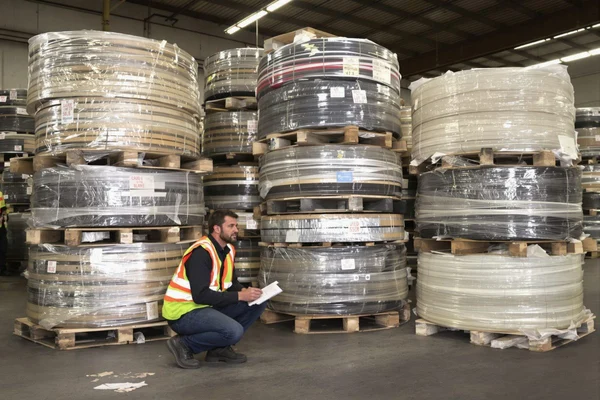
Transformer demand has outrun grain-oriented steel capacity for three consecutive years. Industry tracking now cites large-power-transformer lead times stretching toward four years, and analysts project the cumulative global supply shortfall climbing from roughly 700 GVA in 2025 toward 1,700 GVA by 2028. We covered the mechanics of that squeeze in our grain-oriented steel shortage analysis.
Two things follow for the secondary market:
- Mills tighten their first-quality screens. When order books are full, marginal coil that a mill might have shipped as prime in a soft market gets downgraded and sold into the secondary channel instead. Volume goes up.
- Buyers under schedule pressure accept it. A builder facing a penalty for a late transformer will look harder at a lot of oily secondary coil than one with comfortable lead time. Trade commentary from the Indian market — which imports roughly 90% of its CRGO — notes explicitly that secondary oily CRGO becomes more visible during supply tightness.
Regulation is moving in the opposite direction. India’s mandatory Quality Control Order for steel now covers CRGO and requires BIS certification to import, with only temporary, shipment-dated exemptions issued through mid-2026 — a signal that non-standardised electrical steel entering the supply chain is a recognised concern, not a fringe one.
The practical read: the discount on offer for “CRGO” quotes has widened in 2026, and part of that widening is a genuine market shift while part of it is more secondary coil wearing a prime label. Our CRGO price-per-ton guide explains the legitimate reasons Chinese prime CRGO trades below Japanese or Korean material; a quote well under that baseline is the one to question.
The Performance Gap: What You Give Up
Secondary CRGO is cheaper because it carries risk the buyer absorbs. The risk shows up in four places.
| Property | Prime CRGO | Secondary / non-prime |
|---|---|---|
| Guaranteed core loss (P₁.₇/₅₀) | Guaranteed maximum per grade, stated on the certificate | Not guaranteed; actual value unknown until tested |
| Magnetic consistency | Single heat per coil, tight process control | Mixed heats and mixed history in one lot |
| Coating integrity | Intact C-3/C-5 insulation, known stacking factor | Scratched, partially stripped or re-oiled; interlaminar resistance uncertain |
| Dimensional stability | Within slitting tolerance, low camber | Edge damage and camber that fights an automated stamping line |
The core-loss point is the expensive one. A core built from laminations near the low end of a grade’s loss range performs very differently from one built near the ceiling — and secondary coil can land above the ceiling entirely, because nothing guaranteed it wouldn’t. An IEEE study comparing CRGO core grades reported power-factor values of roughly 0.4 to 0.75 for prime grades against below 0.3 for non-prime and ex-service steel — a gap wide enough to move a transformer’s no-load loss outside its guarantee.
That matters because no-load loss guarantees flow downstream. Transformer OEMs sign efficiency figures with their own customers, often with liquidated-damages clauses attached. A core that fails factory acceptance testing means re-stacking, re-testing, schedule slippage, and a credibility cost that outlasts the single order. The saving on the coil is rarely worth the exposure on the transformer.
Coating damage is the quiet failure mode. Grain-oriented steel ships with an inorganic insulation coating; our note on electrical steel coating types covers how C-3 and C-5 films affect stacking factor and interlaminar resistance. Secondary coil that has been re-oiled to hide rust, or handled enough to scratch the coating, gives up interlaminar resistance you cannot easily measure on receipt — and eddy-current loss climbs with it.
The Paper Trail: What the Documents Show
Most of the signal is in the documents, before anything ships. Ask for these at the quote stage, not after arrival.
| Document | Prime looks like | Secondary looks like |
|---|---|---|
| Mill test certificate | Per-coil EN 10204 3.1 with measured P₁.₇/₅₀, B₈, thickness, coating, and a heat/coil number | No certificate, a generic datasheet, or “grade class confirmed” with no coil-level data |
| Mill identification | Named producing mill; a trader can name the mill and pass through its certificate | Seller will not name the mill, or names a “partner” that cannot be verified |
| Order description | “Prime, first quality” accepted in writing on the proforma invoice | Seller resists the wording, or substitutes “commercial quality” / “as available” |
| Quantity and form | Full coils or mill-slit coils to a stated width tolerance | Mixed bundles, unspecified widths, “job lot,” tonnage below a normal minimum |
The EN 10204 certificate type is the anchor. A 3.1 certificate reports actual measured values for the delivered material, validated by the mill’s own inspection function; a 2.1 or 2.2 document is a statement of compliance with no coil-specific test data behind it. Our explainer on mill test certificates 3.1 vs 3.2 walks through what each type does and does not certify.
One line in the purchase order does most of the work: “Material to be prime, first quality, supplied with mill EN 10204 3.1 certificate per coil.” A seller who cannot accept that line is telling you what they are selling. A structured supplier verification process builds the same check into qualification rather than leaving it to a single order.
On Receipt: Checking the Coil Itself
Paper can be forged or borrowed, so the incoming inspection still matters. Check these on the first pallet before releasing the lot to production:
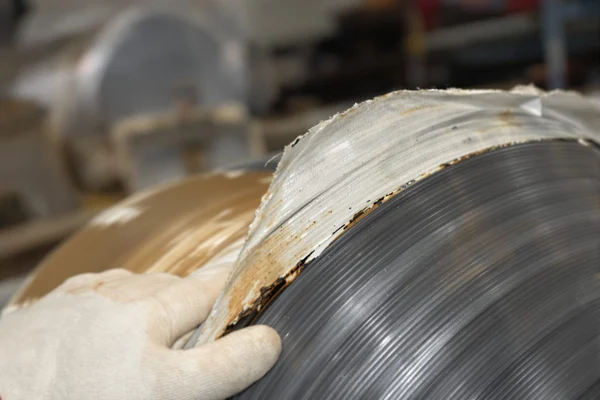
- Edge condition. Prime coil has a clean, uniform slit or mill edge. Nicks, folds, torn wraps and heavy burrs point to downgraded or reclaimed material.
- Surface and oil. A light, even protective film is normal. A heavy, uneven oil coat can be hiding rust or rolled-in scale — wipe a section and inspect underneath.
- Coil identification. Every coil should carry a tag whose heat/coil number matches the certificate and the packing list. Missing tags, handwritten tags, or numbers that do not reconcile are a traceability break.
- Width and camber. Measure width at several points and sight down the strip for camber. Secondary lots often mix widths and carry the edge camber that makes a coil wander in an automated die.
- Consistency across the lot. Prime coils in one shipment look alike. A pallet where coils differ visibly in edge finish, colour or width is a mixed secondary lot.
Then verify the number that matters: cut Epstein strips and test specific core loss against the grade’s guaranteed maximum. Our guide to reading an Epstein frame report covers the method. Where the stakes justify it, a pre-shipment check by SGS, BV or TÜV confirms edge condition, coil identity and sampled properties before the container leaves port.
When Secondary CRGO Is a Reasonable Buy
Secondary has a place. It is a rational purchase when three conditions hold together: the application tolerates a wider loss band, the material is identified as secondary in writing, and it is priced as secondary — not near prime.
Cases where it can make sense:
- Small, non-critical cores — relay laminations, contactor and ballast cores, current-transformer shells, where a few percent of extra core loss is immaterial to the device.
- Prototype and pre-production runs — proving a die or a stacking fixture before committing to prime coil for the production build.
- Budget distribution work without a contractual no-load loss guarantee, where the end user is buying on first cost.
- Slit-remnant strip from a known master coil, when the seller can identify the parent heat and the strips are being used for a tolerant application.
Cases where it does not:
- Any transformer with a signed no-load loss or efficiency guarantee.
- Hi-B grade applications — paying a premium for high permeability and then accepting reclaimed coil defeats the specification.
- Cores where low audible noise matters; magnetostriction behaviour is not controlled in secondary material.
- Any situation where the price is within ~15% of prime. At that point the discount does not compensate for the risk, and you should be buying prime standard CRGO.
How Zhongxin Handles Prime and Secondary
Because the question comes up so often, it is worth stating plainly how we quote it.
- We quote prime, first-quality coil by default. Unless a buyer specifically asks for secondary, every quote is for prime material against a stated grade and guaranteed maximum P₁.₇/₅₀.
- We name the mill. Our master coil comes from major Chinese producers, and the producing mill’s EN 10204 3.1 certificate is passed through per coil, with heat numbers that reconcile to the coil tags and the packing list. Where a certificate is marked for domestic use only, we supply an export test report alongside it.
- If you want secondary, we label it as secondary. It is described as non-prime on the proforma invoice, priced accordingly, and quoted with whatever coil-level data the source can provide — never against a prime grade guarantee.
- We will tell you when a low target price only buys secondary. If a buyer’s budget lands below what prime costs, we say so rather than meeting the number with downgraded coil and a prime-looking label.
That is the whole point of the distinction: a supplier should make it easy to know which product you are buying. Our broader approach to documentation and qualification is set out in the supplier verification guide.
Before You Accept a Low CRGO Quote
- Compare the quote against the legitimate Chinese prime baseline, not against Japanese or Korean pricing — a quote well below the prime baseline needs an explanation.
- Require a sample EN 10204 3.1 certificate for a recent heat of the same grade before ordering.
- Put “prime, first quality, 3.1 certificate per coil” in the purchase order and confirm the seller accepts it in writing.
- Ask the seller to name the producing mill, and check that the mill actually rolls that grade.
- Cap the first order at a trial quantity and test core loss on receipt against the guaranteed maximum.
- If the material is offered as secondary, get that in writing, get whatever coil data exists, and hold the price to a real secondary discount — not 5–10% off prime.
FAQ
How much cheaper is secondary CRGO than prime?
It varies widely by source and condition, but secondary CRGO commonly trades at roughly 40–60% of the prime price, and reclaimed ex-service material can be lower still. If a quote is only 5–15% below the legitimate prime baseline, it is very unlikely to be genuine secondary — it is more likely secondary coil priced as prime, or a prime quote with a problem elsewhere.
Is secondary CRGO the same as a lower grade like M5 instead of M4?
No. Grade codes such as M-4, M-5 or 27Q120 describe prime material with a specific thickness and guaranteed maximum core loss. Secondary CRGO is prime coil that has been downgraded for defects, dimensions or prior use, and it carries no loss guarantee at all. A lower grade is a known, certified specification; secondary is an uncertified one.
Can I use secondary CRGO in a distribution transformer?
Only if there is no contractual no-load loss or efficiency guarantee on that transformer, the buyer accepts a wider loss band, and the material has been tested on receipt. For any transformer with a signed efficiency figure or liquidated-damages clause, the risk of a core failing factory acceptance testing outweighs the coil saving.
What document proves CRGO is prime?
A per-coil EN 10204 3.1 mill test certificate showing measured specific core loss (P₁.₇/₅₀), magnetic polarisation (B₈), thickness and coating, with a heat or coil number that also appears physically on the coil tag and on the packing list. A generic grade datasheet, or a certificate that only confirms “grade class” without coil-level measured values, does not prove prime status.
Why is there more secondary CRGO available in 2026?
The global grain-oriented steel shortage has tightened prime supply, so mills downgrade more marginal coil into the secondary channel, and buyers under long transformer lead times are more willing to accept it. Trade commentary from import-dependent markets notes that secondary oily CRGO becomes more visible in the market precisely when supply is tight.
What are the signs of reclaimed or ex-service CRGO?
Look for mixed widths and heats in one lot, heavy or uneven oil coating over pitting or rust, damaged and folded edges, inconsistent coil-to-coil appearance, missing or handwritten coil tags, and the absence of any per-coil certificate. Reclaimed material also tends to arrive as cut sheet or short coil rather than full master coils.
Bottom Line
Prime and secondary CRGO are different products at different prices, and the trouble starts only when a seller blurs the line between them. Prime coil comes from a named mill with a per-coil EN 10204 3.1 certificate and a guaranteed maximum core loss; secondary coil is downgraded material — defects, dimensions or prior service — sold at a real discount and without that guarantee.
Buy either one on purpose. Put “prime, first quality, 3.1 per coil” in the purchase order, benchmark the price against the legitimate prime baseline rather than the lowest number in your inbox, and test core loss on the first shipment. In a shortage year, the widest discount is the one that most deserves a second look.
References
- Ministry of Steel, Government of India — Identification Criteria / Guidelines of Non-Prime (Second & Defective) Steel Products
- IEEE Xplore — Study of Different Grades of CRGO Core Material for Transformer Application
- Power Magazine — Transformers in 2026: Shortage, Scramble, or Self-Inflicted Crisis?
- pv magazine USA — U.S. transformer market faces severe supply constraints as lead times extend to four years
- S M Steels — CRGO Steel Supply in India 2026: Structural Realities for Transformer Manufacturers
- SS Global Services — BIS Temporary Exemption on Steel Imports till 30 June 2026: QCO Update
- International Electrotechnical Commission — IEC 60404-8-7, Cold-rolled grain-oriented electrical steel strip and sheet