IE3 (Premium Efficiency) and IE4 (Super Premium Efficiency) are motor efficiency classes defined by IEC 60034-30-1, each setting a minimum efficiency percentage that induction motors must hit at a given power rating and pole count. IE4 sits one full class above IE3, and the gap between them is closed almost entirely by cutting core loss in the motor’s electrical steel laminations — not by making the copper windings thicker.
“We’re upgrading to IE4, same design, just need a quote.” That’s what a motor manufacturer told us last quarter. It doesn’t work that way, and we had to walk through why before quoting anything sensible. IE3 and IE4 aren’t software settings you flip on a finished design. Under IEC 60034-30-1, IE4 demands a meaningfully lower core loss ceiling than IE3 at the same power rating. That number has to come from somewhere. Usually a different steel grade. Sometimes different core geometry. Occasionally both. For how motor efficiency class fits alongside every other electrical steel application, see our electrical steel applications guide.
What Are IE3 and IE4 Motors?
IEC 60034-30-1 organizes induction motors into four international efficiency classes: IE1 (Standard Efficiency), IE2 (High Efficiency), IE3 (Premium Efficiency), and IE4 (Super Premium Efficiency). Each class sets a minimum efficiency percentage that scales with power rating and pole count — there’s no single number that applies to every motor size within a class, which is the detail that trips up a lot of first-time buyers comparing datasheets.
Regulators in most major markets have already pushed the floor up to IE3 for general-purpose industrial motors, with IE4 increasingly required or incentivized for larger continuous-duty applications. That regulatory direction is one reason demand for tighter-core-loss electrical steel keeps climbing even outside markets with strict mandates — buyers specify ahead of the curve rather than redesign twice.
| Efficiency class | IEC designation | Typical positioning |
|---|---|---|
| IE1 | Standard Efficiency | Legacy designs, largely phased out in regulated markets |
| IE2 | High Efficiency | Minimum baseline in many regions; common on smaller or intermittent-duty motors |
| IE3 | Premium Efficiency | Current general-purpose industrial standard in most major markets |
| IE4 | Super Premium Efficiency | Continuous-duty, high-utilization motors where lifetime energy cost dominates |
Core Key Points
- IE4 (Super Premium Efficiency) motors require a minimum efficiency of roughly 96.0% for common ratings, versus 95.0% for IE3 (Premium Efficiency). Sounds small. It isn’t — that’s a real cut in total losses, not a rounding difference.
- Regional dertec industry data puts typical real-world efficiency around 84.1% for IE3 and 87.2% for IE4 at certain lower power ratings. Exact numbers shift with motor size and pole count, but the gap holds.
- Moving from IE3 to IE4 core loss requirements isn’t primarily a “thicker copper windings” fix. It usually needs lower-core-loss electrical steel, often thinner laminations, tighter grain control, or some combination.
- Independent studies comparing IE2, IE3, and IE4 induction motors found IE4 costs roughly 30% more to manufacture than IE3 — but delivers avoided emissions roughly 2.35x higher over the motor’s life.
- Payback between IE3 and IE4 can be just a few months in continuous-duty industrial use. The full lifetime savings compound over the motor’s typical 15-20 year service life.
- Steel grade selection typically tracks efficiency class fairly closely — see the typical core loss targets below before you write the spec.
Typical Core Loss Targets by IE Class
IEC 60034-30-1 sets a motor efficiency percentage, not a steel core loss figure — so there’s no official “IE3 grade” or “IE4 grade” written into the standard. In practice, though, motor designers converge on a fairly narrow band of core loss values to hit each class, and knowing that band before the RFQ goes out saves a round trip with your supplier. The figures below are representative values at 1.5T/50Hz, drawn from grades commonly used at each efficiency tier — treat them as a starting point for your own spec conversation, not a substitute for it.
| Efficiency class | Typical grade family | Core loss @ 1.5T/50Hz | Common lamination thickness |
|---|---|---|---|
| IE1 | 50W600 / 50W800 (NGO) | ≈ 5.0–6.0 W/kg | 0.50 mm |
| IE2 | 50W400 / 50W470 (NGO) | ≈ 3.5–4.7 W/kg | 0.50 mm |
| IE3 | 35W270 / 35W300 (NGO) | ≈ 2.3–3.0 W/kg | 0.35 mm |
| IE4 | 27W150 / 30W180 (NGO) | ≈ 1.5–1.8 W/kg | 0.27–0.30 mm |
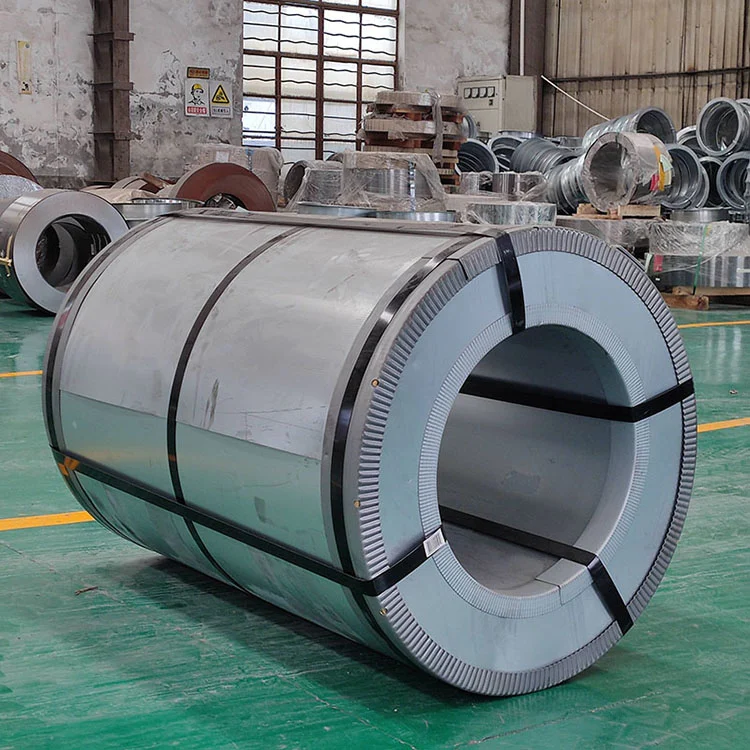
Two things worth flagging before you lock a number in. First, the jump from IE3 to IE4 grades is proportionally larger than the jump from IE2 to IE3 — you’re not just moving one step down a linear scale, you’re usually also dropping lamination thickness at the same time, which changes your stamping tooling and processing yield, not just your material cost. Second, “core loss” alone doesn’t guarantee an efficiency class on its own; induction (B8) and stacking factor matter too, and a supplier quoting only a loss number without those is giving you half the spec. For our full non-oriented grade line, see non-oriented silicon steel coil.
What IE3 and IE4 Actually Require
IEC 60034-30-1 defines four efficiency classes: IE1 (Standard), IE2 (High), IE3 (Premium), IE4 (Super Premium). Each sets a minimum efficiency percentage that varies by power rating and pole count. There’s no single universal number for “IE3” across every motor size — that trips people up constantly.
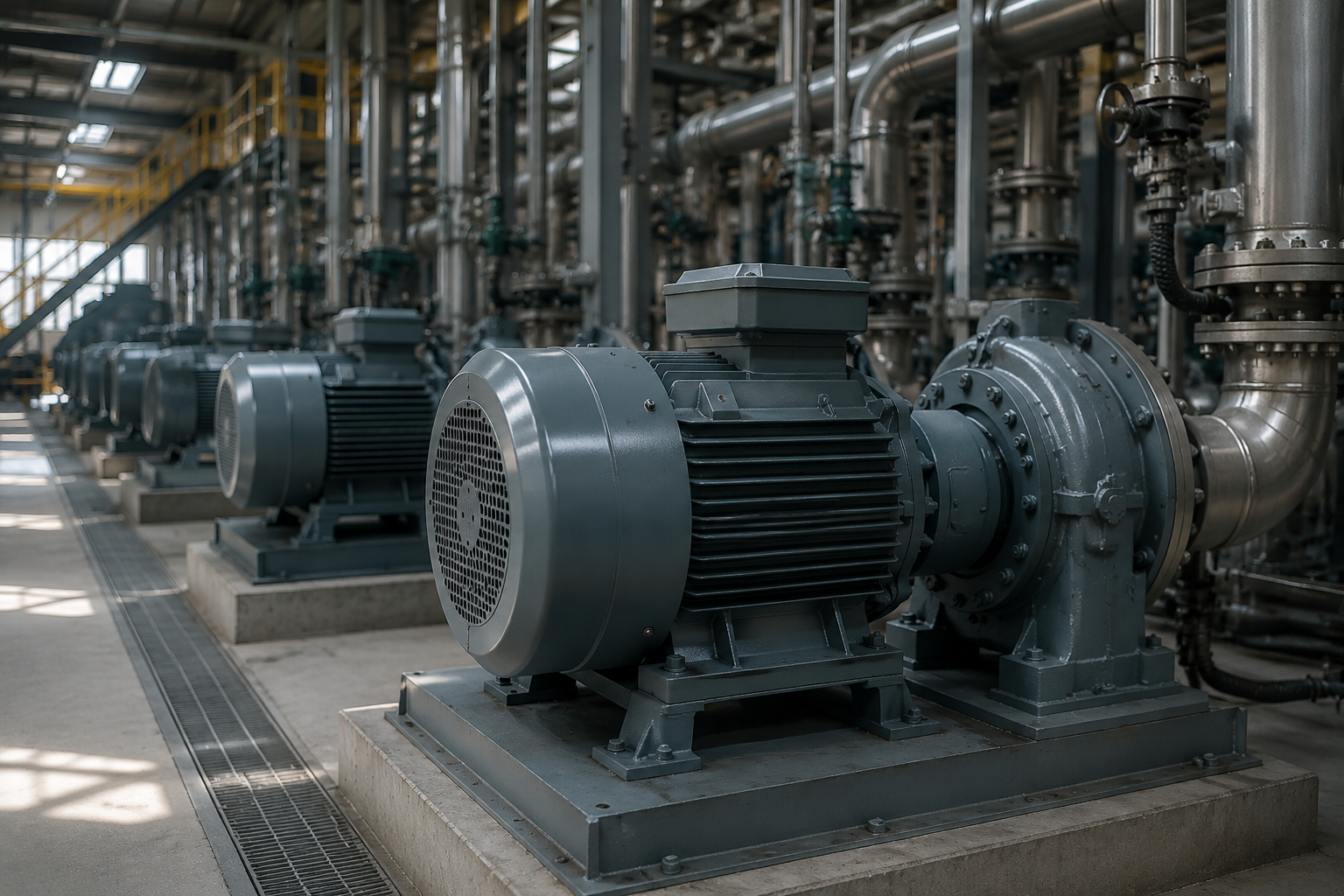
What actually matters here is the loss budget behind these classes. Total motor losses come from a few sources: core (iron) loss, copper (winding resistance) loss, friction and windage, stray losses. Core loss is one of the biggest single contributors in most induction motor designs. Moving IE3 to IE4 means cutting total losses meaningfully — and that’s exactly why the steel spec sits at the center of hitting the higher class. Not incidental to it. Central to it. As a rough rule of thumb across common frame sizes, core loss typically needs to drop by somewhere in the range of a third to reach IE4 from an IE3 baseline — the exact fraction depends heavily on your specific power rating and pole count.
Where the Efficiency Gain Actually Comes From
Three levers get pulled, usually together:
- Lower-core-loss electrical steel — a premium CRNGO grade with tighter core loss ceilings than whatever the IE3 version used
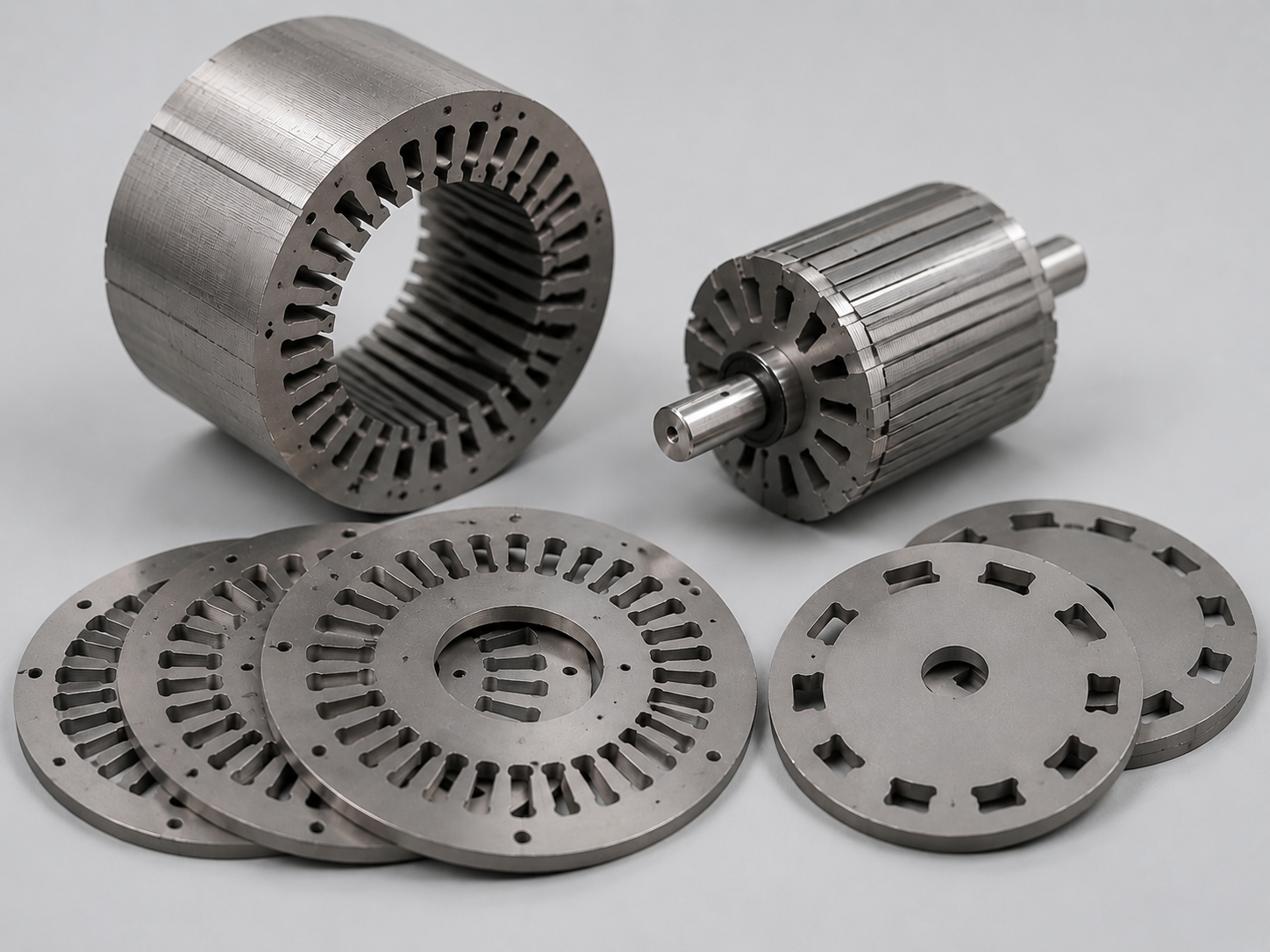
- Thinner laminations — cuts eddy current loss the same way it does everywhere else, at the cost of processing yield and per-ton price
- Larger core or copper cross-section — a physically bigger motor at the same power rating, trading size and material cost for lower current density and lower losses across the board
Steel grade usually gets pulled first. It doesn’t force a redesign of the motor’s physical envelope, which makes it the path of least disruption for an IE3 design that needs to become IE4-compliant without starting from scratch. In practice, most redesigns pull a second lever too — thinner laminations almost always accompany a lower-loss grade at IE4, since the two effects compound rather than substitute for each other. A design that tries to hit IE4 on steel grade alone, without touching gauge, tends to leave efficiency on the table and pay full price for the upgrade anyway.
The Cost and Payback Reality
Comparative research on IE2, IE3, and IE4 induction motors found IE4 costs roughly 30% more to manufacture than IE3 — real money, shows up directly in the purchase price. Same research: avoided emissions from an IE4 motor run about 2.35 times higher than IE3 over its operating life. That’s the other side of the premium.
Payback depends almost entirely on duty cycle, and we mean almost entirely. A motor running continuously in an industrial process can see payback in a few months, because savings accumulate around the clock. A motor running a few hours a day with long idle stretches sees a much longer payback — sometimes the IE4 premium never fully justifies itself for that specific use case, and that’s a legitimate answer, not a failure to optimize. If you’re running the numbers yourself, the two inputs that swing the answer most are annual operating hours and local electricity price — a motor at $0.15/kWh running 6,000+ hours a year almost always clears payback well inside its warranty period; one running under 1,500 hours a year on cheap power often doesn’t.
The Steel Spec Impact, Concretely
If you’re specifying steel for an IE4 redesign, the core loss ceiling needs to be meaningfully tighter than what worked at IE3. Not “same grade, just make it more efficient somehow.” Our transformer and motor core buyer’s guide covers the full list of what belongs on a purchase spec beyond the grade name. A few things worth nailing down before the RFQ goes out:
- Confirm the core loss ceiling at your actual operating frequency and induction, not a vague “premium grade” request
- Expect a real cost premium on the steel itself, separate from whatever premium shows up elsewhere in the redesign
- If lamination thickness is changing as part of the IE4 push, revisit coil width and processing specs with your supplier — thinner gauge changes handling requirements on your stamping line, and that’s easy to miss until the line’s already down
- Ask for stacking factor and induction (B8) alongside core loss — a grade that hits the loss target but underperforms on stacking factor can still leave you short of the motor’s rated output
FAQ
Can I upgrade an existing IE3 motor design to IE4 just by changing the steel grade?
Often yes, at least partially — steel grade is usually the first lever pulled because it doesn’t force a redesign of the motor’s physical envelope. Depending on how large the efficiency gap is for your specific power rating, you may also need thinner laminations or a larger core cross-section.
How much more does an IE4 motor cost to produce than IE3?
Independent research comparing IE2, IE3, and IE4 induction motors found IE4 runs roughly 30% more expensive to manufacture, though this varies by motor size and design specifics.
Is the payback period for IE4 always worth it over IE3?
Depends heavily on duty cycle. Continuous-duty industrial applications often see payback in a few months. Intermittent-duty applications with long idle periods may not recover the premium in any reasonable timeframe — and sometimes IE3 is genuinely the better call.
What’s the actual efficiency difference between IE3 and IE4?
Varies by power rating and pole count, but IE4 requires roughly 96.0% minimum efficiency for common ratings versus roughly 95.0% for IE3 — a meaningful cut in total losses, not a rounding difference.
What core loss should I target if I’m sourcing steel for an IE4 motor?
As a starting point, IE4 designs commonly land around 1.5–1.8 W/kg at 1.5T/50Hz on a 0.27–0.30 mm non-oriented grade, versus roughly 2.3–3.0 W/kg on 0.35 mm for IE3. Treat these as a starting conversation, not a final spec — your actual target depends on power rating, pole count, and how much margin your design carries above the IEC minimum.
Do all IE4 motors need thinner laminations, or can I keep my IE3 gauge?
Not always, but usually. A lower-loss grade at the same gauge can close part of the gap, but most IE4 designs also drop lamination thickness because the two effects compound. Keeping your IE3 gauge and only upgrading grade tends to leave efficiency on the table and still pay a real premium for the steel — worth checking both variables before committing to a spec.
If you’re mid-redesign from IE3 to IE4 and not sure how much tighter your core loss spec really needs to be, send us your current IE3 steel spec and target power rating. We’ll tell you the real gap, not just quote whatever “premium grade” sounds impressive on the datasheet.