
Power transformers are the backbone of electrical grids — and their core material determines both efficiency and service life. A 100 MVA transmission transformer running at 70% load for 35 years will consume or prevent the consumption of hundreds of MWh of energy based on the quality of its CRGO core steel. This guide covers material selection for power transformers from 10 MVA to 1,000 MVA, addressing grade selection, core geometry, loss optimization, and procurement considerations.
Core Key Points
- Power transformers (≥ 10 MVA) universally use CRGO steel; CRNGO is inappropriate for any static transformer application.
- For large power transformers (≥ 100 MVA), Hi-B CRGO grades (B23G090, B27G100) are typically mandatory — standard grades cannot meet IEC AA0 or A0 efficiency targets.
- The transformer no-load loss budget directly determines the required CRGO grade: calculate specific core loss requirement = P₀ budget ÷ estimated core weight.
- Step-lap core joints reduce no-load current and noise by 30–40% compared to mitred joints — and require consistent CRGO width tolerance (±0.1 mm) from the steel supplier.
- Always specify both the IEC grade designation and the minimum B₈ (magnetic induction at 800 A/m) to fully characterize CRGO quality — especially when sourcing Hi-B grades.
Power vs. Distribution Transformers: Why Material Demands Differ
The distinction between power and distribution transformers is not just about MVA rating — it fundamentally changes the optimization priorities for core steel selection.
Distribution transformers (< 10 MVA, 11–33 kV):
- Operate continuously at 20–60% of rated load
- No-load losses dominate lifetime energy cost (energized 8,760 hours/year regardless of load)
- Core design: simple single-phase or three-phase stacked core
- Steel priority: Minimize no-load loss per kg → CRGO grade optimization
Power transformers (10–1,000+ MVA, 66–765 kV):
- Operate at higher average load factors in grid backbones (60–85%)
- Both no-load AND load losses are significant; copper losses often dominate at full load
- Core design: multi-limb, multi-step, often with on-load tap changers
- Steel priority: Minimize no-load losses while managing core geometry complexity → Hi-B CRGO enables smaller, lighter core → reduced copper weight and shorter mean turn length → cascading cost benefit
According to the International Energy Agency (IEA), global power transformer capacity additions must increase from approximately 600 GVA/year in 2023 to over 1,000 GVA/year by 2030 to support grid expansion — creating sustained demand for premium CRGO grades.
CRGO Grade Selection by MVA Rating
| Power Rating | Voltage Class | Recommended CRGO Grade | Efficiency Class |
|---|---|---|---|
| 10–50 MVA | 33–66 kV | B30G110 or B27G120 | IEC A0 |
| 50–100 MVA | 66–220 kV | B27G100 (Hi-B) | IEC A0 / AA0 |
| 100–300 MVA | 220–400 kV | B23G090 (Hi-B) | IEC AA0 |
| 300–1,000 MVA | 400–765 kV (HVDC) | B23G090 Hi-B or domain-refined | IEC AA0 |
| Single-phase railway traction (25 kV, 50/162.5 Hz) | — | B27G100 or 0.20 mm ultra-thin | Special spec |
Note on domain-refined CRGO: For very large generators and HVDC transformers where maximum efficiency is critical, laser-etched or mechanically-scribed domain-refined CRGO can reduce core loss by an additional 5–10% versus standard Hi-B. Domain refinement creates artificial domain walls that reduce magnetostriction noise and eddy losses simultaneously.
Core Geometry and Its Effect on Steel Requirements
The transformer core design directly interacts with steel specifications in several important ways:
Three-Phase Three-Limb Core
The most common power transformer core geometry. Flux in the outer limbs travels in a fixed direction aligned with the rolling direction of the CRGO laminations — optimal for grain-oriented steel performance. The yoke corners, where flux must turn 90°, represent a flux direction change that can increase local losses by 30–50% above the rated lamination core loss.
Steel specification implication: For yoke corner sections, some core builders specify slightly wider laminations with improved grain structure near the edges. Zhongxin Steel can supply CRGO coils with controlled edge quality and width tolerance of ±0.10 mm for step-lap cutting.
Three-Phase Five-Limb Core
Used for large, transport-limited power transformers where circular tank dimensions restrict the standard three-limb core height. The two outer return limbs carry about one-third of the main flux.
Steel specification implication: Five-limb designs require careful flux density balance across all five limbs to avoid hot spots. Core loss calculation must account for the return limb cross-sections, typically designed at lower flux density (1.4–1.5 T vs. 1.7 T for main limbs).
Single-Phase Core
Used for ultra-large autotransformers (≥ 500 MVA) where transport weight prevents three-phase construction. Single-phase transformers are commonly used in HVDC converter stations.
Steel specification implication: Single-phase cores typically use the highest grade available (B23G090 Hi-B) to minimize size and weight for transport. Order quantities are large (often 50–200 tonnes per transformer) with strict consistency requirements between coils.
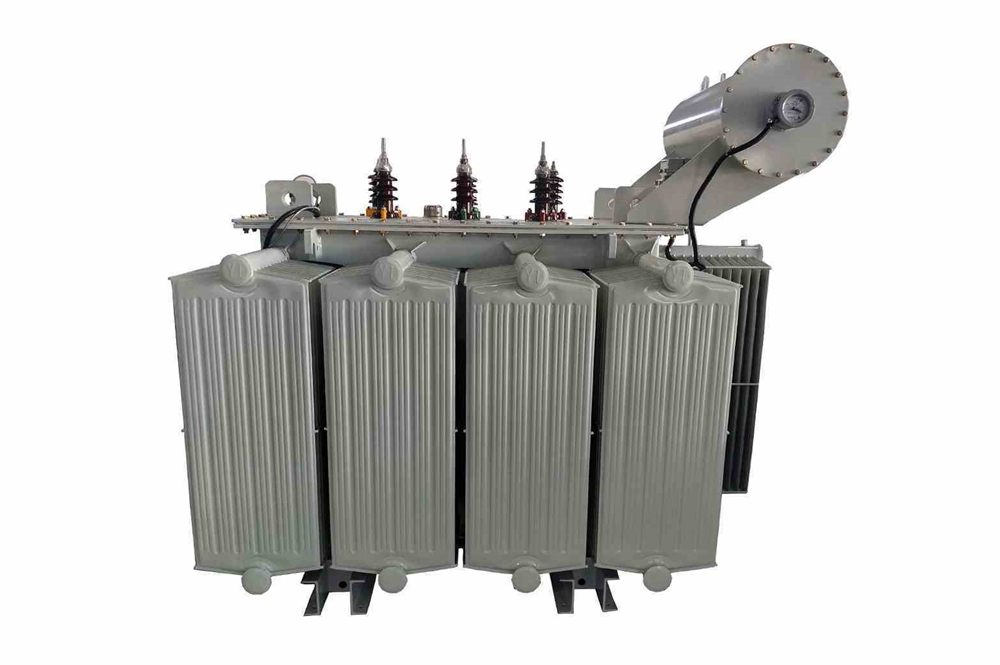
Loss Budget Calculation Framework
Follow this framework to convert an IEC efficiency class requirement into a CRGO grade specification:
Step 1: Identify the no-load loss (P₀) requirement.
From the IEC 60076-20 efficiency class table, find P₀ for your rated power (kVA) and voltage class at the required efficiency level.
Step 2: Estimate core weight.
Core weight (approximate) = Power rating (kVA) × 0.15–0.25 kg/kVA for three-phase transformers. Precise value requires detailed core design, but this range provides a starting budget.
Example: 100 MVA three-phase transformer → core weight ≈ 15,000–25,000 kg (15–25 tonnes)
Step 3: Calculate allowable specific core loss.
Specific core loss = P₀ requirement ÷ core weight
Example: P₀ = 20 kW for AA0 class 100 MVA → 20,000 W ÷ 18,000 kg = 1.11 W/kg
Step 4: Add design margins.
- Cutting loss allowance: +8–12% (to compensate for increased loss from shearing)
- Stacking factor allowance: typically 0.97 (reduce effective cross-section by 3%)
- Test condition correction: 1.05 factor for Epstein vs. actual single-sheet tester values
Effective required grade: 1.11 ÷ 1.10 ÷ 1.05 = 0.96 W/kg → specify B23G095 or B27G100
Step 5: Select grade from supplier catalog.
Choose the grade that meets or beats your calculated required specific core loss with appropriate margin.
Step-Lap vs. Mitred Joint Design
The joint design at the core corners significantly affects no-load losses and noise — and has practical implications for the CRGO slit width specification.
| Design | No-Load Loss Penalty | Noise Level | CRGO Width Tolerance Required |
|---|---|---|---|
| Mitred (45°) | +20–30% at corners | Higher (magnetostriction) | ±0.3 mm acceptable |
| Step-lap (multi-step) | +5–12% at corners | 5–8 dB lower | ±0.1 mm required |
| Fully-interleaved step-lap | Minimum | Lowest | ±0.05 mm preferred |
Step-lap construction requires that each lamination step be accurately positioned, which demands consistent CRGO slit width. When ordering CRGO for step-lap cores, specify width tolerance ±0.1 mm or better and verify that your steel supplier has the slitting precision to meet it. Zhongxin Steel achieves ±0.05 mm width tolerance on custom-slit CRGO for step-lap core applications.
Winding-Core Integration Considerations
The choice of CRGO grade affects not only no-load losses but also the winding design through the following mechanism:
Hi-B CRGO (B₈ ≥ 1.88 T) allows the core to be designed at higher flux density (typically 1.70–1.75 T vs. 1.60–1.65 T for standard grade). Higher flux density means:
- Smaller core cross-section → shorter mean turn length on all windings
- Shorter mean turn length → less copper in each winding
- Less copper → lower winding resistance → lower load losses (I²R)
- Net effect: Hi-B core can reduce total transformer losses by 3–5% beyond what the steel core loss specification alone suggests, because it enables a weight-optimized winding design.
This cascading benefit means the economic case for Hi-B CRGO in large power transformers is stronger than a simple material cost comparison suggests.
Quality Verification: What to Demand from Your Steel Supplier
For power transformer applications, these quality documents and tests should be standard requirements:
- Mill Test Certificate (MTC) — Per IEC 60404-8-7; actual measured P₁.₇/₅₀ and B₈ for each coil.
- Statistical process control data — Coil-to-coil consistency data for P₁.₇/₅₀ (standard deviation ≤ 0.03 W/kg preferred for Hi-B).
- Surface insulation resistance — Per IEC 60404-11; Class C5 or C6 for stress-relief annealing compatibility.
- Dimensional report — Actual measured thickness (10 points across width), width, and coil weight.
- Yield test results — Actual Epstein Square test results vs. grade maximum, confirming compliance margin.
Zhongxin Steel provides full MTC documentation with each shipment, including per-coil Epstein test data and dimensional reports.
FAQ
What CRGO grade is used in HVDC transformers?
HVDC converter transformers operate under harmonic-rich current waveforms and significant DC bias, both of which increase core losses beyond standard AC specifications. Most HVDC transformer specifications require Hi-B CRGO at 0.23 mm (B23G090) or domain-refined grades, with special requirements for low harmonic core loss at operating conditions.
How much does CRGO weight vary between transformer designs of the same MVA rating?
Core weight varies significantly based on design philosophy. Optimizing for lowest first cost typically results in higher flux density and lower core weight but higher losses. Optimizing for lowest lifetime cost (lowest losses) uses lower flux density and more core material. For 100 MVA three-phase transformers, core weight ranges from approximately 12 tonnes (high-loss design) to 28 tonnes (ultra-low-loss design).
Can I use domain-refined CRGO in a standard transformer design?
Yes, domain-refined CRGO (also called low-loss Hi-B or scribe CRGO) is a drop-in replacement for standard Hi-B CRGO. The core loss reduction (5–10% below standard Hi-B) translates directly to improved no-load loss, justifying the material premium for large transformers where even small loss reductions have significant lifecycle value.
What is the typical service life of a power transformer, and does it affect steel selection?
Power transformers are designed for 25–40 year service lives in utility applications. Over this period, the operating losses are a much larger cost than the initial capital cost. A 100 MVA transformer running at 70% load factor incurs approximately $2–3 million in no-load loss electricity cost over its life (at $0.06/kWh). Investing an additional $50,000–100,000 in higher-grade CRGO to reduce these losses by 15–20% represents an excellent return.
References
- IEC 60076-20:2017 — Power transformers — Part 20: Energy efficiency. Geneva: IEC.
- IEEE C57.12.00-2021 — IEEE Standard for General Requirements for Liquid-Immersed Distribution, Power, and Regulating Transformers. New York: IEEE.
- International Energy Agency (2023). Electricity Grids and Secure Energy Transitions. Paris: IEA. https://www.iea.org/reports/electricity-grids-and-secure-energy-transitions
- Harlow, J. H. (Ed.) (2012). Electric Power Transformer Engineering (3rd ed.). Boca Raton: CRC Press.
- Georgilakis, P. S. (2009). Spotlight on Modern Transformer Design. London: Springer.

