
A 100 kVA pole-mounted distribution transformer and a 300 MVA substation power transformer both use grain-oriented silicon steel (CRGO) cores — but their material specifications can differ by entire grade families. The design philosophy, loss optimization strategy, and procurement approach are fundamentally different. This guide explains exactly where those differences lie and how to specify correctly for each application.
The distinction is easy to reduce to voltage rating alone — substation-scale units versus the transformer on the pole outside a house — but the underlying driver of grade selection is duty cycle, not the number stamped on the nameplate. A distribution transformer stays energized around the clock regardless of downstream load; a power transformer’s load tracks demand and swings with it. That difference in how each unit actually behaves in service, more than its MVA rating, is what pushes grade selection in different directions.
Core Key Points
- Distribution transformers (< 10 MVA) prioritize minimizing no-load losses because they run energized 24/7 regardless of load — even at midnight with zero current flow, the core is magnetized and losing energy.
- Power transformers (≥ 10 MVA) must optimize both no-load and load losses, as both are significant at higher load factors and larger absolute power levels.
- The EU EcoDesign Tier 2 regulation (effective July 2025) mandates A0 class or better for all distribution transformers ≥ 25 kVA — pushing the market decisively toward Hi-B CRGO (B30G110 / B27G100).
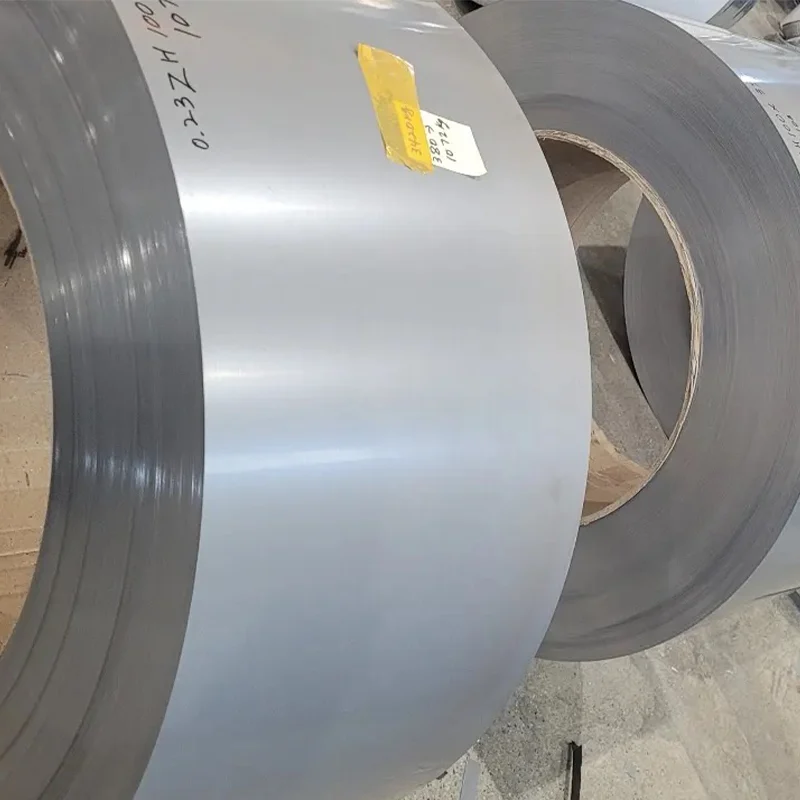
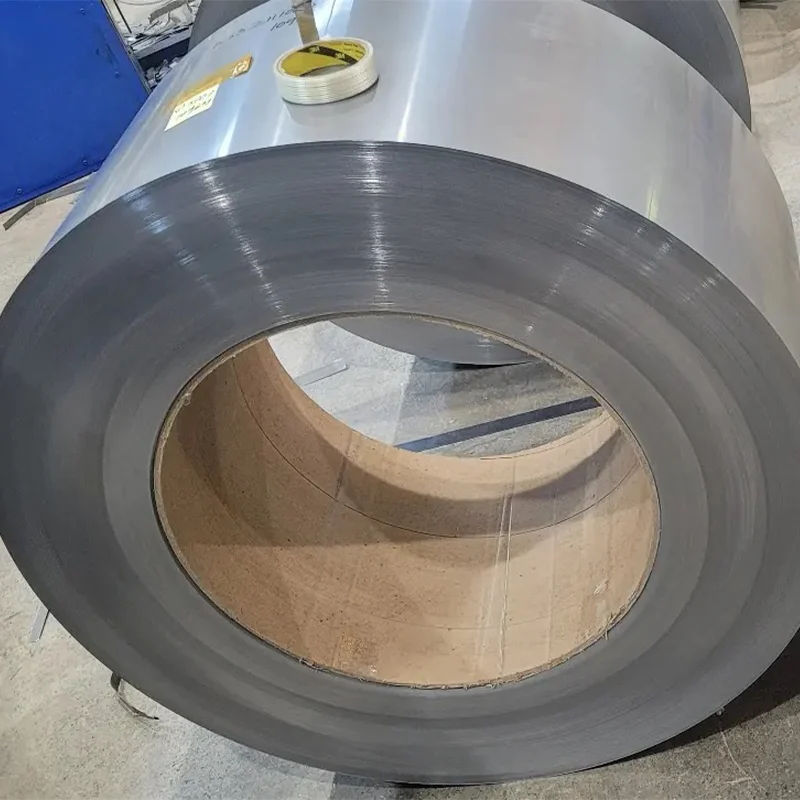
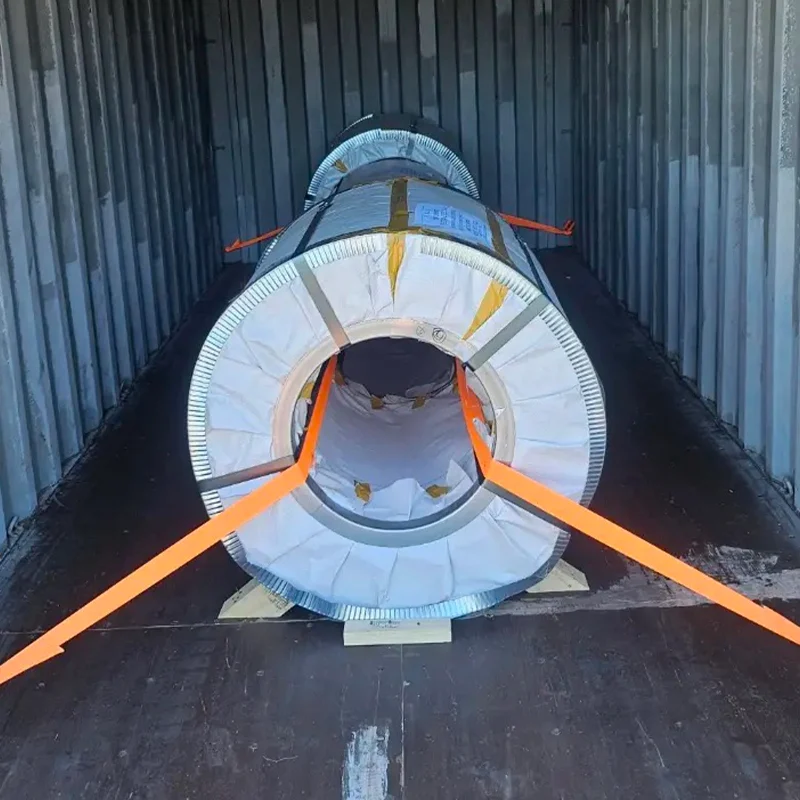
- Distribution transformer CRGO is typically ordered in standard widths (800–1,250 mm) and slit to core lamination dimensions on-site or by a service center. Power transformers often require custom-slit widths from the steel mill.
- Hi-B CRGO allows a 5–8% smaller core cross-section, reducing copper winding cost and total transformer weight — a cascading benefit that matters more in power transformers than distribution units.
Defining the Boundary: Distribution vs Power Transformers
The industry-standard boundary between distribution and power transformers is approximately 10 MVA (10,000 kVA) at medium voltage (6.6–33 kV). However, this boundary is soft:
- < 10 MVA, 11–33 kV primary: Distribution transformers. Typically pole-mounted or pad-mounted, oil-filled or dry-type.
- 10–60 MVA, 33–110 kV primary: Sub-transmission transformers; sometimes treated as distribution, sometimes as power.
- ≥ 60 MVA, 66–765 kV primary: Power transformers. Typically substation or generator step-up.
For purposes of core steel selection, the more meaningful distinctions are:
- Load factor — Distribution: 20–40% average; Power: 60–85% average
- No-load loss share of total loss — Distribution: 60–80%; Power: 30–50%
- Quantity of transformers per specification — Distribution: hundreds to thousands of identical units; Power: often custom one-off or small series
Side-by-Side Specification Comparison
| Characteristic | Distribution Transformer | Power Transformer |
|---|---|---|
| Typical rating | 25 kVA – 10 MVA | 10 MVA – 1,000+ MVA |
| Primary voltage | 11–33 kV | 33–765 kV |
| CRGO grade range | B35G130 to B27G100 | B30G110 to B23G090 |
| Grade type | Standard or Hi-B | Primarily Hi-B |
| Typical thickness | 0.27–0.35 mm | 0.23–0.30 mm |
| Core loss target | 0.8–1.4 W/kg | 0.7–1.1 W/kg |
| Efficiency class (IEC) | A, A0, AA0 | A0, AA0 |
| Order quantity | Large (t/month per grade) | Small (project-based) |
| Lead time sensitivity | Moderate | High |
| Width specification | Standard widths | Often custom-slit |
| Regulatory pressure | Very high (EcoDesign, DOE) | Moderate (IEC 60076-20) |
Distribution Transformer Steel Selection
Distribution transformers present a high-volume, cost-sensitive application where material selection is heavily influenced by regional efficiency regulations.
The Regulatory Landscape in 2026
The three major markets apply different standards:
| Region | Standard | Current Requirement | Steel Implication |
|---|---|---|---|
| European Union | EU 2019/1781 (Tier 2, Jul 2025) | A0 class or better | Hi-B CRGO mandatory for most designs |
| United States | DOE 10 CFR 431 (TP-2, Jan 2016+) | TP-2 efficiency | Typically B30G120 or B27G120 sufficient |
| China | GB/T 17468-2019 | S13/S14/S15/S20 | S20 class requires Hi-B |
| India | IS 1180 (Star Rating) | Star-3 minimum | Standard CRGO Grade 27M or better |
| Brazil | ABNT NBR 5356-1 | PROCEL A label | Hi-B CRGO growing adoption |
For EU distribution transformers, the Tier 2 A0 requirement is equivalent to approximately 20–25% reduction in no-load losses versus prior minimum standards. Achieving A0 at 630 kVA typically requires:
- 0.30 mm Hi-B CRGO (B30G110) — borderline A0
- 0.27 mm Hi-B CRGO (B27G100) — clear A0 with design margin
Standard Design Parameters (630 kVA, 11/0.4 kV, 50 Hz)
For illustration, a typical EU market 630 kVA distribution transformer:
| Parameter | Standard Grade (B30G120) | Hi-B Grade (B27G100) |
|---|---|---|
| Core flux density | 1.65 T | 1.72 T |
| Core weight | ~450 kg | ~420 kg |
| Specific core loss | ~1.20 W/kg | ~1.00 W/kg |
| Calculated P₀ | ~540 W | ~420 W |
| IEC efficiency class | A | A0 |
| Annual energy loss at P₀ | ~4,730 kWh | ~3,680 kWh |
| 30-year energy loss value* | ~$7,100 | ~$5,500 |
*At €0.10/kWh, 30-year PV. Hi-B saves approximately €1,600/unit in energy over transformer life.
The material cost difference between B30G120 and B27G100 is typically $80–120 per transformer — making the Hi-B upgrade strongly economical.
Power Transformer Steel Selection
Power transformer steel selection involves smaller quantities, more custom specifications, and greater engineering rigor than distribution transformer procurement.
Key Differences in the Procurement Process
- Project-based ordering — Each power transformer is typically specified individually. Steel orders are placed per transformer design rather than as ongoing blanket orders.
- Custom slit widths — Power transformer core laminations are often cut to specific widths that match the stepped core design. This requires the steel supplier to slit mother coils to exact specifications (e.g., 750 mm + 600 mm + 480 mm from a 1,050 mm master coil).
- Multiple deliveries — A 200 MVA transformer may require 30+ tonnes of CRGO delivered across 3–4 shipments coordinated with core winding schedules.
- Higher grade consistency requirement — For large power transformers, coil-to-coil variation in P₁.₇/₅₀ must be minimal (< 0.03 W/kg standard deviation) to ensure core loss predictions are met.
The Step-Lap Advantage
Construction method is a second axis where the two classes diverge, and it interacts with grade choice rather than sitting apart from it. Distribution transformers — especially single-phase, pole-mounted units — more often use wound core construction: the core wound continuously from one steel strip, which delivers very low core loss but constrains core geometry options. Power transformers, especially large three-phase units, more often go stacked, and almost universally step-lap stacked rather than mitred, to handle the larger and more complex core shapes these units need — usually at a small stacking-factor and joint-loss cost relative to a wound core of the same grade.
Step-lap reduces corner losses and noise relative to a mitred joint, but requires:
- Slit width tolerance ≤ ±0.10 mm (tighter than distribution transformer requirements)
- Consistent flatness to prevent joint air gaps
Zhongxin Steel achieves ±0.05 mm width tolerance on CRGO supplied for power transformer step-lap construction.
Regulatory Requirements by Region
For distribution transformers, regional efficiency standards drive purchasing decisions. Here is the current map of minimum-performance standards:
| Market | Minimum Standard | No-Load Loss Level vs. “A” Baseline |
|---|---|---|
| EU (post Jul 2025) | A0 class | −25% |
| EU (target AA0 by 2030?) | AA0 (proposed) | −40% |
| USA | DOE TP-2 | ~−30% vs. prior NEMA rule |
| China (new builds) | S20 class | −30% vs. S13 |
| Australia | MEPS Level 3 | Approx. A0 equivalent |
| India | BEE Star-4 or Star-5 | Various |
The EU’s potential extension to AA0 class by 2030 would push all European distribution transformer builders toward B23G090 or B27G100 Hi-B grades — a major demand shift in the CRGO market.
The Economics of Loss Optimization
For both distribution and power transformers, the total cost of ownership (TCO) calculation should include:
Capitalized losses formula:
Material premium (CRGO upgrade) vs. lifetime energy savings at capitalized loss rate
Most transmission utilities capitalize transformer losses at $2,000–5,000 per kW of no-load loss. For a 630 kVA distribution transformer:
- Upgrading B30G120 → B27G100 reduces P₀ by ~120 W
- At $2,500/kW capitalized rate: savings = 0.12 kW × $2,500 = $300 per transformer
- Material premium: ~$100 per transformer
- Net present value of upgrade: +$200 per transformer
Why Fleet Scale Changes the Math
The per-unit savings above look marginal in isolation. They stop looking marginal once fleet size enters the calculation. A utility operating 30,000 distribution transformers — not an unusual fleet size for a mid-sized service territory — that shaves roughly 3 W of no-load loss off each unit through a Hi-B grade upgrade is removing 90,000 W (90 kW) of continuous loss across the fleet, running 8,760 hours a year, for as long as those units stay in service. Run that through the utility’s own loss capitalization assumptions, and a grade upgrade that looks marginal unit-by-unit stops looking marginal at fleet scale.
The same aggregation effect barely applies on the power transformer side. A utility isn’t operating 30,000 power transformers — it might operate a few dozen, each individually far larger and more expensive than any single distribution unit. There’s no large population of units to multiply a small per-unit saving across, which is part of why distribution and power transformer grade-selection logic diverge even though both draw from the same CRGO category.
For a power transformer (300 MVA):
- Upgrading B27G120 → B23G090 reduces P₀ by ~40 kW
- At $3,000/kW capitalized rate: savings = 40 kW × $3,000 = $120,000
- Material premium: ~$30,000–50,000
- Net present value: +$70,000–90,000
The economics favor CRGO grade upgrades in almost all scenarios where loss capitalization is applied.
Common Specification Mistakes
Mistake 1: Applying distribution transformer CRGO specification to power transformers.
Distribution transformer steel (e.g., B35G130) is often ordered in standard widths and processed by service centers. Power transformer applications require custom-slit widths and stricter consistency — don’t assume your distribution steel supplier can serve power transformer requirements without verification.
Mistake 2: Ignoring the EU Tier 2 deadline.
As of July 1, 2025, all distribution transformers ≥ 25 kVA placed on the EU market must meet A0 efficiency class minimum. Transformers designed and procured on B30G120 standard grade cannot be legally sold in the EU without reassessment.
Mistake 3: Using the same flux density for Hi-B and standard CRGO.
Hi-B CRGO’s higher B₈ value (1.88 T vs. 1.80 T for standard) is only realized if the core is designed for higher flux density. Simply substituting Hi-B steel into a core designed for standard CRGO does not capture the size and weight reduction benefit.
FAQ
What is the difference between dry-type and oil-filled transformer CRGO requirements?
Both use identical CRGO grades for the core laminations. The difference is the cooling medium and winding insulation system, not the core steel. Dry-type transformers typically use the same CRGO grades as oil-filled units of equivalent kVA rating.
Can CRNGO be used in any transformer application?
CRNGO can be used in very small auxiliary transformers (< 1 kVA) where cost minimization dominates and efficiency is not a priority. For any transformer ≥ 5 kVA in a commercial or industrial application, CRGO is strongly preferred due to its significantly lower no-load losses.
How do I convert between different national grade designations (IEC, JIS, ASTM)?
Grade systems vary by region. IEC 60404-8-7 (B23–B35 + loss number) is the international reference. JIS C 2553 uses 23ZH, 27ZH, 30P designations. ASTM A876 uses M2–M6 designations. Zhongxin Steel can provide grade equivalency tables on request.
What is the lead time for custom-slit CRGO for power transformer applications?
For custom-slit widths from stock coils, lead time at Zhongxin Steel is typically 5–10 business days. For specific grade-width combinations not held in stock, production lead time is 4–8 weeks depending on the grade.
References
- European Commission (2019). Regulation (EU) 2019/1781 on ecodesign requirements for electric motors and variable speed drives. Brussels: EC.
- IEC 60076-20:2017 — Power transformers — Part 20: Energy efficiency. Geneva: IEC.
- U.S. Department of Energy (2016). Final Rule: Energy Conservation Standards for Distribution Transformers. Washington D.C.: DOE.
- International Energy Agency (2023). Transformers in the Energy Transition. Paris: IEA.
- Winders, J. J. (2002). Power Transformers: Principles and Applications. New York: Marcel Dekker.

