
Key Takeaways
- Stacking factor is the ratio of actual magnetic steel volume to total core volume in a laminated stack. It’s never 100% — coating and surface irregularities always take up some space.
- Typical stacking factor for coated electrical steel runs 92%-97%, depending on coating thickness, coil flatness, and thickness uniformity.
- Thicker insulation coatings (higher coating class) reduce interlaminar losses but also reduce stacking factor. That’s a real engineering tradeoff, not a defect.
- ASTM A720 is the standard test method for measuring lamination stacking factor directly, rather than estimating it from coating thickness alone.
- A core built from steel testing 2-3 percentage points below its quoted stacking factor doesn’t fail outright. It just needs a taller stack to hit the same effective magnetic cross-section — quietly adding material cost and weight.
What Stacking Factor Actually Measures
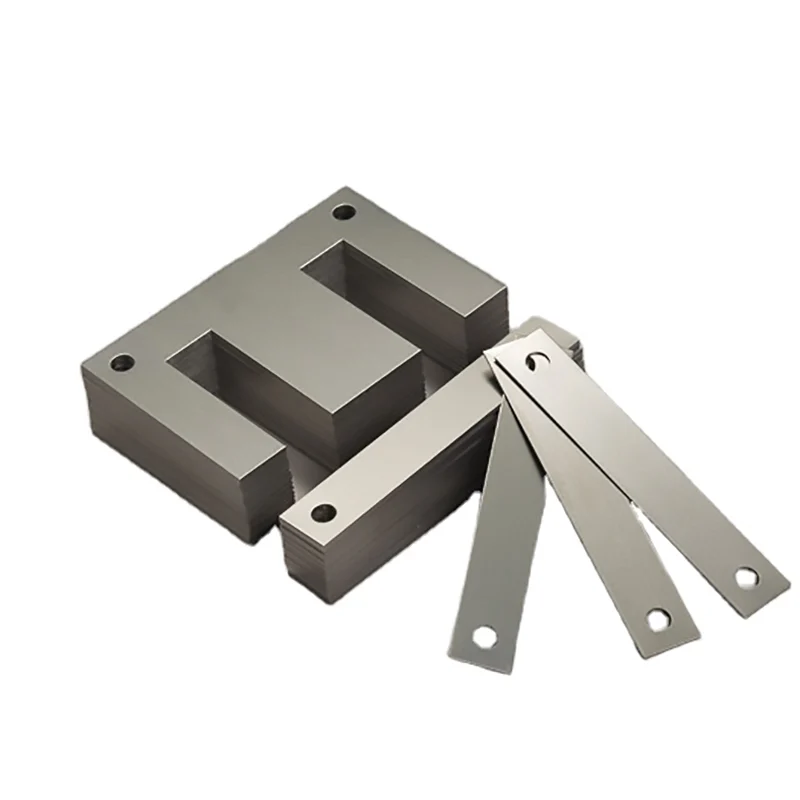
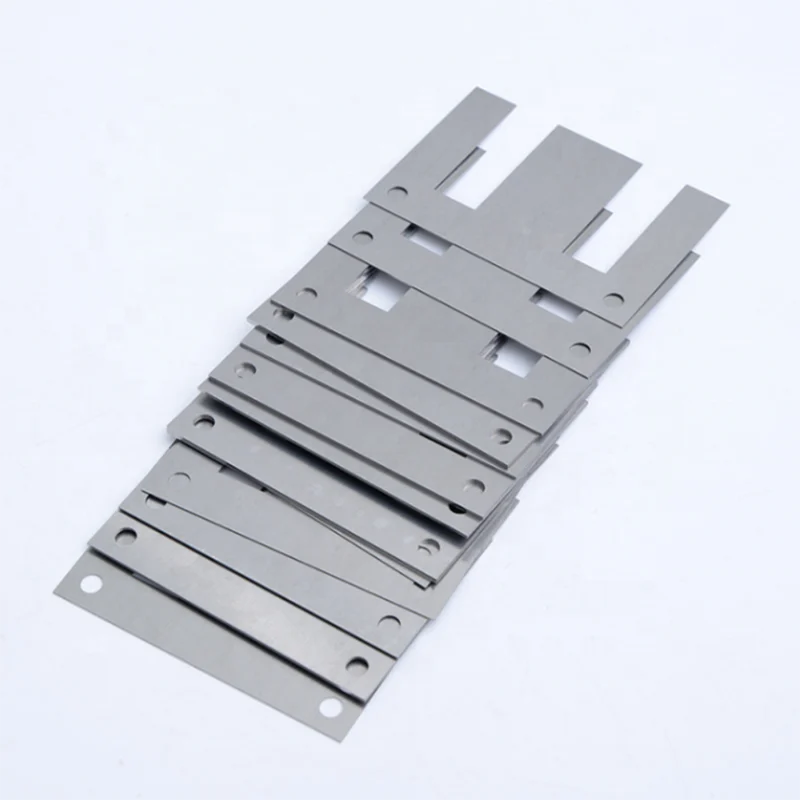
Lamination stacking factor is the ratio of the actual volume of magnetic steel in a laminated core to the total physical volume of the stack, expressed as a percentage. A stack at 96% stacking factor is 96% steel. The remaining 4%? Coating, air gaps between laminations, and surface irregularities that keep the sheets from sitting perfectly flush against each other.
It’s never 100%. It’s not supposed to be. Every laminated core is built from individually coated sheets, and that coating exists on purpose — it’s the interlaminar insulation that keeps eddy currents confined within each thin sheet instead of flowing between layers, which is the entire reason to laminate a core in the first place. Stacking factor is what you give up in exchange for that insulation.
Here’s why it matters to a design engineer specifically: it’s the number that connects a steel spec sheet to an actual finished core. Two coils can carry identical core loss and permeability figures and still produce cores with meaningfully different effective magnetic cross-sections, if their stacking factors differ. And that difference doesn’t show up on a standard mill test certificate. Not unless you ask for it by name.
Four Variables That Set the Number
They interact in ways a spec sheet alone won’t show you.
- Coating thickness. The biggest lever. Thicker coatings mean better interlaminar insulation and lower eddy current losses between sheets — but they also physically occupy more of the stack’s volume, which directly pulls stacking factor down.
- Base steel thickness uniformity. Thickness variation across a coil, even within tolerance, means some points in the stack compress more than others under pressure. Tighter thickness tolerance supports a higher, more consistent number.
- Sheet flatness. Waviness or camber keeps laminations from sitting flush. This one’s a process-control issue more than a material property — it’s where mill quality actually shows up, in a number you can measure rather than take on faith.
- Burr height at cut edges. Stamping or slitting leaves burr at the sheet edge. Too much burr height props laminations apart right at the edges, dragging down stacking factor locally, even when the rest of the sheet tests fine.
Most buyers think about coating thickness. Flatness and burr height are the two nobody asks about — and they’re exactly what separates a well-controlled mill from one cutting corners.
Typical Stacking Factor Values by Coating Class
| Coating Class | Typical Coating Thickness | Typical Stacking Factor | Common Use Case |
|---|---|---|---|
| C-2 (thin inorganic) | ~1-2 µm per side | 96%-97% | Standard stamping, cost-sensitive applications |
| C-3 to C-4 | ~1-3 µm per side | 95%-97% | General-purpose transformers and motors |
| C-5 (thicker inorganic-organic) | ~2-4 µm per side | 94%-96% | Applications needing higher interlaminar resistance |
| C-6 (heaviest insulation) | Thickest standard class | 92%-95% | High-frequency, high-resistance applications |
Typical ranges. Not guarantees. Actual stacking factor depends on how coating thickness interacts with flatness and burr control — which is exactly why coating class alone won’t tell you the number you’ll actually get on your own core.
The Coating Tradeoff Nobody Puts on the Spec Sheet
Coating class and stacking factor get discussed like two independent specs. They’re not. Every step up in coating class buys lower interlaminar eddy current loss and better insulation resistance — and costs a small amount of stacking factor in return. No way around it.
For most designs, this resolves itself. Coating class gets chosen to match the insulation requirement, and the resulting stacking factor gets built into the core’s mechanical design — stack height, window area — from day one. The problem shows up somewhere else entirely: when a design was qualified against one supplier’s coating-and-stacking-factor combination, and a second supplier quotes the “same” coating class without actually matching that performance. Coating class is a category. It’s not a single number. Two mills’ C-5 coatings can land at meaningfully different points inside that same category.
None of this is an argument against heavier coating classes where your application genuinely needs the insulation. It’s an argument for asking for the actual stacking factor number — not just the coating class label — the moment you’re qualifying a new supplier or switching mills mid-program.
Testing It: ASTM A720
Stacking factor gets measured directly, not calculated purely from coating thickness — because flatness and burr effects don’t show up in a thickness micrometer reading. ASTM A720 is the standard test method: it measures the actual physical stacking factor of a lamination sample under controlled pressure. A real measured value, not an estimate built from a coating-thickness assumption.
Why the test matters: two coils can look identical on a coating thickness spec and still test differently under ASTM A720, if one has tighter flatness control or lower burr height than the other. For a buyer, that’s the gap between a number on a spec sheet and a number you can actually design a core around.
How to Verify Stacking Factor Before You Order
- Ask for ASTM A720 test data, not just coating thickness. Coating thickness alone won’t predict it — request the actual tested value wherever the application is sensitive to it.
- Request stacking factor data at your specific coating class and gauge, not a generic range for the product family. The same coating class tests differently across different base thicknesses.
- Confirm whether the figure comes from a CNAS-accredited or equivalent third-party lab, versus a mill’s own self-reported number — same reason this matters for core loss and magnetic induction.
- For a critical or high-volume program, request a small sample stack and measure build height yourself before full production. This is what actually catches flatness and burr issues a spec sheet number can hide.
- Re-verify after any supplier or mill change, even when the coating class label doesn’t. A “C-5 to C-5” switch is not automatically stacking-factor-neutral. Assume nothing.
When the Number Comes In Low
Worth being direct about what actually goes wrong here, because it’s rarely dramatic. A core built from steel testing two or three points below its quoted stacking factor doesn’t fail. It just contains slightly less actual magnetic steel per unit of stack height than the design assumed. To hit the same effective magnetic cross-section, the core needs to be a little taller — which quietly eats into material cost, weight, and window area that were never budgeted for it.
That’s the trap. It’s easy to miss until a production run comes in a few percent over its steel budget for reasons nobody can immediately name. Stacking factor deserves the same verification discipline as core loss and magnetic induction — not the treatment of an assumed constant that rides along with coating class for free.
Applications: Where Stacking Factor Matters Most
- Power and distribution transformers — core window area is a fixed design constraint, so stacking factor directly sets how much active steel fits inside it. See power transformer and distribution transformer applications for core design considerations.
- High-efficiency and compact motors — where core volume is boxed in by frame size, stacking factor variance has an outsized effect on achievable torque density. See non-oriented silicon steel for grade options.
- EV traction motors and other weight-sensitive designs — where every percentage point of stacking factor translates more directly into finished product weight than it would in a stationary transformer.
Stacked Cores for Transformers
Transformers are where stacking factor bites hardest, because the core window area is fixed by the coil and tank design before the steel ever gets ordered. A power or distribution transformer core is built from hundreds of individually coated CRGO laminations — E-I or mitred step-lap shapes, stamped from 0.23–0.35 mm strip and clamped into the finished stack. Each lamination’s coating (C5 inorganic as standard, C6 on request) keeps eddy currents confined to individual sheets instead of flowing across the whole stack, which is the entire point of laminating a core in the first place — but that same coating is exactly what keeps stacking factor below 100%.
Because window area doesn’t move, a lower-than-expected stacking factor doesn’t just cost material — it caps how much active steel actually fits inside a core the design already committed to. On a distribution transformer built by the thousand, that shows up as a small, fleet-wide efficiency shortfall; on a large power transformer, it shows up as a single core needing a taller stack than the tank was designed around. Either way, it’s a reason to request tested stacking factor data — not just a coating class label — before locking in a transformer core spec, exactly as the verification steps above describe.
FAQ
What is a good stacking factor for electrical steel?
Typical values run 92%-97%, depending on coating class, thickness, and process quality — 96%-97% for thin-coating classes like C-2, down to 92%-95% for the heaviest insulation classes. There’s no universal “good” number independent of your specific coating and gauge requirement. The right benchmark is your own supplier’s tested value at your specific spec, not a generic industry figure.
Does a higher coating class always mean a lower stacking factor?
Generally, yes — thicker coating occupies more of the stack’s physical volume. But the relationship isn’t perfectly linear, and flatness and burr control can matter just as much as coating thickness within a given class. Two suppliers’ C-5 coatings can test at different stacking factors even at similar nominal thickness.
How is stacking factor different from coating thickness?
Coating thickness is one input, not the whole story. Sheet flatness and cut-edge burr height reduce stacking factor independently of coating thickness — which is exactly why ASTM A720 testing measures the actual stacked result instead of relying on coating thickness alone to predict it.
What happens to my core design if stacking factor comes in lower than expected?
The core doesn’t fail. It just contains less actual magnetic steel per unit of stack height than assumed, requiring a taller stack to reach the same effective magnetic cross-section — which adds unplanned material cost and weight to a production run.
Should I request ASTM A720 data on every order?
For standard, lower-sensitivity applications, coating class and typical range data is usually enough. For tight window-area transformer designs, weight-sensitive motor applications, or when qualifying a new supplier against an existing design, request actual ASTM A720 test data. Worth the extra step.
Qualifying a new coating class or supplier against a stacking-factor-sensitive design? Contact Zhongxin Special Steel for ASTM A720 test data on the specific grade and coating class you’re evaluating.

