Key Takeaways
- Hi-B is not a marketing label — it is a distinct manufacturing class defined in IEC 60404-8-7:2020, separate from conventional grain-oriented (CGO) steel and from domain-refined high-permeability grades.
- The core difference is grain alignment precision: Hi-B narrows the Goss-texture deviation to roughly 3° from the rolling direction, versus roughly 7° in conventional CGO.
- Laser scribing (domain refinement) is a separate, additional step that can be applied on top of Hi-B material, typically cutting core loss by another ~10% versus non-scribed Hi-B.
- On ZHX Steel’s own spec sheet, HiB core loss runs ≤0.80 W/kg at 50Hz/1.7T, versus ≤0.90 W/kg for the premium conventional grade (23QG090) — an 11% improvement that has to justify its price premium for each specific application.
- Hi-B’s S-coating also makes it less sensitive to the mechanical stress introduced during core building, which matters as much as the raw core-loss number for stacked or wound cores.
Hi-B steel is grain-oriented electrical steel manufactured with a sharper, more precisely aligned Goss texture than conventional grain-oriented (CGO) steel, achieved through tighter control of the hot-rolling and secondary recrystallization process. The tighter alignment — roughly 3° of deviation from the ideal rolling direction versus roughly 7° in conventional material — is what drives Hi-B’s higher permeability and lower core loss. It is a real metallurgical distinction with an IEC standard behind it, not just a premium sticker on the same coil.
We get this question from buyers more often than almost any other silicon steel spec question: is “Hi-B” just a fancier name for CRGO, or is there an actual difference worth paying for? The short version is that CRGO (cold-rolled grain-oriented) is the material family, and Hi-B is one class within it — the higher-permeability class. Every Hi-B sheet is CRGO. Not every CRGO sheet is Hi-B. That’s the whole confusion in one sentence. It keeps recurring because most supplier spec sheets — including ours until a buyer pushed us to clarify it — list “CRGO” and “Hi-B” as if they were parallel product options rather than a family and a subclass.
What “Hi-B” Actually Stands For
Hi-B stands for “high magnetic induction, grain-oriented” — the name Nippon Steel gave its ORIENTCORE HI-B line when it commercialized the process in the 1960s and 70s, and the term has since become the generic industry shorthand for this class of material regardless of which mill produces it. Nippon Steel’s own current product line still uses ORIENTCORE HI-B, ORIENTCORE HI-B LS, and ORIENTCORE HI-B PM as distinct tiers, with the LS (“laser scribed”) and PM variants delivering progressively lower iron loss on top of the base Hi-B improvement.
That three-tier structure is not a Nippon Steel-only convention — it is codified. IEC 60404-8-7:2020, the international standard covering cold-rolled grain-oriented electrical steel strip and sheet, groups material into three classes: conventional grades, high permeability grades, and magnetic domain refined high permeability grades. Hi-B sits in the middle tier. Domain-refined Hi-B (laser-scribed) sits in the top tier. This is a genuinely useful reference point when a spec sheet or a supplier’s sales pitch uses “Hi-B” loosely, because the standard itself treats it as a defined class with defined test methods, not a marketing adjective.
JFE Steel’s G-CORE line shows the same structure under different names: JG is the standard grade, JGH and JGS are the higher-flux-density (Hi-B-equivalent) grades, and JGSD/JGSE are the domain-refined variants built on top of JGS. Two independent mills — Nippon Steel and JFE — arrived at the same three-tier logic, which is a reasonable signal that the distinction reflects a real manufacturing boundary rather than one company’s branding choice.
The Metallurgical Difference: Goss Texture and Grain Alignment
Grain-oriented electrical steel gets its directional magnetic properties from the Goss texture — a crystallographic arrangement where the grains’ easy-magnetization direction (the ⟨001⟩ crystal axis) lines up with the rolling direction of the sheet. The tighter that alignment, the lower the energy needed to magnetize the steel along that axis, and the lower the resulting core loss and exciting current in a transformer core built from it.
Conventional CGO production controls this alignment to within roughly 7° of the ideal rolling direction. Hi-B production — through a combination of higher initial silicon content control, a modified hot-rolling schedule, and a secondary recrystallization step engineered to favor Goss-oriented grains more aggressively — tightens that deviation to roughly 3°. That 4° difference sounds small, but magnetic permeability in this material is extremely sensitive to angular misalignment near the easy axis, so the practical effect shows up as a meaningfully higher B8 induction value (magnetic flux density at a field strength of 800 A/m) — commonly cited around 1.92 T for Hi-B material versus roughly 1.82 T for conventional CGO.
This is the part that trips people up: a higher B8 number does not automatically mean a transformer built from that steel will run cooler or quieter. B8 measures how strongly the material magnetizes under a given field — a proxy for how “hard” the crystal alignment is working against you. Core loss (measured in W/kg at a stated frequency and flux density) is what actually determines heat generation and efficiency losses in service. The two move together in Hi-B versus CGO, but they are not the same measurement, and a supplier quoting only one of them without the other is giving you half the picture.
Domain Refinement: What Laser Scribing Actually Does
Grain-oriented steel, even at Hi-B’s tighter Goss alignment, still magnetizes through the movement of magnetic domain walls — microscopic regions of aligned magnetic moment that shift and grow as the material is magnetized. Wider domains mean fewer, larger domain-wall movements per magnetization cycle, which sounds efficient but actually increases eddy-current losses within each domain. Domain refinement narrows those domains without changing the steel’s bulk composition or its Goss texture.
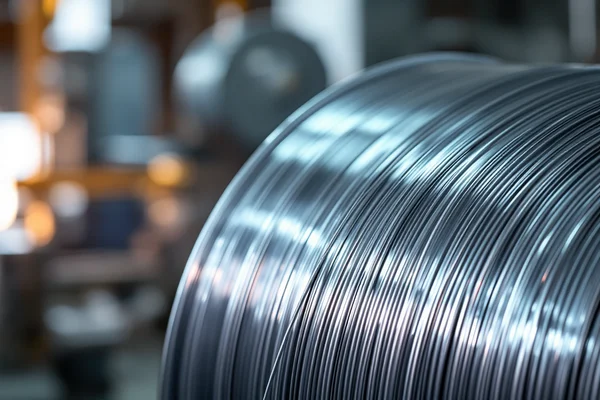
Laser scribing is the dominant industrial method for doing this. A laser (commonly a fiber, CO2, or picosecond-pulsed laser depending on the mill) tracks lines across the strip surface, introducing localized residual stress that subdivides the magnetic domains into narrower bands. USPTO patent 11,772,199, held by a major electrical steel producer, describes one current implementation of this domain-refinement approach and the resulting sheet construction. The effect on core loss is well documented in the literature and consistently cited in the roughly 10% range as an additional improvement layered on top of already-Hi-B material — Nippon Steel’s own HI-B LS and JFE’s JGSD/JGSE grades exist specifically to capture that additional gain.
There is a practical limit worth knowing before you spec a laser-scribed grade. The stress lines that refine the domains get erased by heat. Any subsequent stress-relief anneal above roughly 750-800°C — a normal step in some core-building processes, particularly stacked (rather than wound) cores that need to relieve punching stress — removes them. If your core builder anneals after cutting, a laser-scribed grade’s domain-refinement benefit can be partially or fully undone before the transformer ever gets tested. We’ve seen this catch buyers off guard more than once: they paid the laser-scribing premium, and their core builder’s process quietly gave most of it back.
Core Loss and Permeability, Side by Side
Numbers make this concrete faster than description. Here is how the tiers compare using ZHX Steel’s own grain-oriented electrical steel range alongside the general industry pattern for laser-scribed material:
| Class | Typical Grade Example | Goss Deviation | B8 Induction | Core Loss (50Hz/1.7T) |
|---|---|---|---|---|
| Conventional CGO (premium) | 23QG090 | ~7° | ~1.82 T | ≤0.90 W/kg |
| Standard CGO | 27QG100 | ~7° | ~1.82 T | ≤1.00 W/kg |
| Economy CGO | 30QG120 | ~7° | ~1.82 T | ≤1.20 W/kg |
| Hi-B (high permeability) | HiB | ~3° | ~1.92 T | ≤0.80 W/kg |
| Domain-refined Hi-B (laser-scribed) | HI-B LS / JGSD-class | ~3° | ~1.92-1.95 T | ~10% below non-scribed Hi-B |
Reading this table the way a buyer should: moving from the best conventional grade (23QG090, 0.90 W/kg) to Hi-B (0.80 W/kg) buys roughly an 11% core-loss reduction. Adding laser scribing on top of Hi-B buys another ~10% beyond that. Neither jump is free — Hi-B carries a meaningful per-ton premium over conventional CGO, and laser-scribed Hi-B carries a further premium over base Hi-B. Whether either step is worth it depends entirely on what the core loss reduction is worth in your specific application, which is the actual decision covered in the next section.
Why Hi-B Handles Building Stress Differently
Core loss numbers on a spec sheet are measured on flat, unstressed sample strips under laboratory conditions. Real transformer cores get cut, stacked or wound, clamped, and sometimes welded — every one of those steps introduces mechanical stress into the steel, and grain-oriented electrical steel’s magnetic performance is stress-sensitive. A core-loss figure that looked great on the datasheet can degrade meaningfully once the material is actually built into a core, particularly around punched holes, tight bend radii, or clamping points.
Here’s the part that surprised us the first time we dug into the technical literature on this. This is where Hi-B’s surface coating (commonly referred to as S-coating in the technical literature) does real work beyond corrosion protection. The coating applies a controlled tensile stress to the steel surface during processing, which — counterintuitively — improves magnetic performance by helping stabilize the domain structure. The practical result, confirmed across manufacturer technical data, is that Hi-B material is less sensitive to the compressive stress introduced during core assembly than conventional CGO is, despite starting from a higher baseline of magnetic performance that you might expect to be more fragile, not less.
For buyers, the takeaway is that Hi-B’s advantage over conventional CGO isn’t purely the lab-measured core-loss number — it is that the lab number holds up better once the steel goes through your core builder’s actual process. A design that’s tolerant of some stress-induced core-loss degradation (loosely stacked, minimal punching) may not need Hi-B’s stress tolerance as much as a tightly wound or heavily punched design would.
When the Upgrade to Hi-B Is Actually Worth Paying For
We had a transformer OEM contact us last year specifying “Hi-B, no substitutions” for a distribution transformer core, without a clear efficiency target attached to the request — just a general sense that Hi-B was “the good one.” When we walked through the actual numbers with their engineer, the calculation came down to this: at their annual production volume and the core-loss delta between 23QG090 (0.90 W/kg) and HiB (0.80 W/kg), the efficiency gain translated to a specific, calculable reduction in no-load losses per unit — the kind of number that matters if the buyer is paying a no-load loss penalty under a utility procurement spec, or competing on an efficiency label like DOE 2016 or EU Tier 2. It does not matter nearly as much on a cost-driven, non-regulated application where the transformer just needs to work.
That conversation is a useful template for anyone deciding between conventional CGO and Hi-B:
- Regulated efficiency requirements (utility no-load loss penalties, DOE/EU efficiency tiers, green-building certifications tied to transformer losses): the core-loss delta usually pencils out in favor of Hi-B, sometimes strongly.
- High-volume production where the per-unit core-loss saving compounds across thousands of units: even a small W/kg improvement can justify the premium at scale.
- One-off or low-volume builds, cost-sensitive applications, or designs where core loss is not the binding constraint (thermal, size, or noise limits are hit by other factors first): the premium conventional grade (23QG090-class, ≤0.90 W/kg) often delivers most of the practical benefit at a lower cost per ton.
- Heavily stress-inducing core-building processes (extensive punching, tight winding, post-cut annealing above ~750°C): confirm whether a laser-scribed grade’s domain-refinement benefit will actually survive your process before paying extra for it — see the annealing caveat above.
None of this is a substitute for running the actual loss calculation against your specific core design and duty cycle. The core-loss deltas here are real and sourced from manufacturer data, but the dollar value of a 0.10 W/kg improvement depends entirely on your transformer’s rated power, load factor, and the efficiency standard (or lack of one) you’re building to.
Grade Codes Get Confusing Fast Across Mills
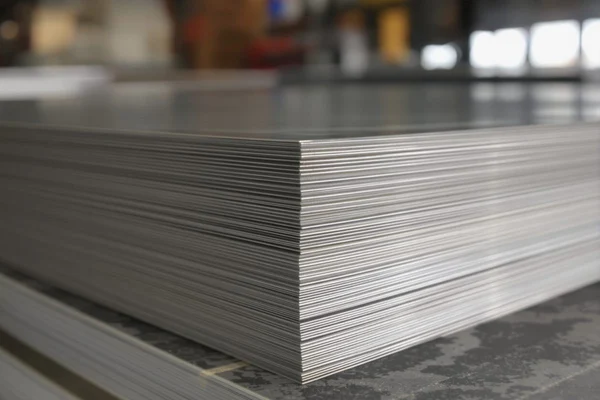
Part of why “Hi-B vs. CGO” confusion persists is that grade-naming conventions are not standardized across mills, even though the underlying IEC classification is. Nippon Steel’s ORIENTCORE HI-B, JFE’s JGH/JGS, and Chinese-mill grade codes like the QG-series and HiB designations we carry from BAOWU, TISCO, and POSCO are all describing positions within the same three-tier IEC 60404-8-7 framework, but none of them use the same alphanumeric system, and a code from one mill tells you nothing about an equivalent code from another without cross-referencing actual test data.
This matters practically when a Mill Test Certificate (MTC) arrives with a grade code you don’t recognize, or when a buyer is comparing quotes from two different mills and trying to determine whether they’re actually comparing equivalent material. The grade code alone — whether it says “Hi-B,” “23ZH90,” “JGH095,” or something else — is not sufficient to confirm equivalence. What matters is the actual guaranteed core loss figure at a stated frequency and flux density (typically 50Hz/1.7T or 60Hz/1.7T depending on the target market), the guaranteed thickness tolerance, and whether the material has been domain-refined. Two grades with different names and the same guaranteed core loss at the same test condition are functionally equivalent for design purposes, regardless of what each mill calls them — the same principle we cover in more depth in our guide to verifying a supplier’s core-loss claims.
Our own current line runs 23QG090 (0.23mm, ≤0.90 W/kg), 27QG100 (0.27mm, ≤1.00 W/kg), and 30QG120 (0.30mm, ≤1.20 W/kg) as the conventional CGO tier, with HiB material (≤0.80 W/kg) as the high-permeability step above them, across a 0.18-0.35mm overall thickness range sourced from BAOWU, TISCO, and POSCO — see our lamination gauge selection guide if you’re still deciding between the 0.23mm, 0.27mm, and 0.30mm options independent of the Hi-B question. When we quote against a competitor’s grade code we don’t recognize, the first thing we ask for is the MTC with the actual test data — not the grade name — because that’s the only reliable basis for comparison.
Limitations of This Comparison
The core-loss and B8 figures cited here are manufacturer-published typical or guaranteed-maximum values under standard test conditions (50Hz, 1.7T, per IEC 60404-2 or equivalent single-sheet/Epstein-frame methods). Real-world performance in a specific transformer design will vary based on core geometry, stacking or winding method, operating frequency and flux density if they differ from the standard test point, and how much residual mechanical stress the actual build process introduces. The ~10% laser-scribing improvement figure is a commonly cited industry range, not a guarantee that applies uniformly to every scribing method or every base grade — actual improvement depends on the specific laser process, pulse parameters, and whether a post-cut anneal removes the effect, as discussed above. Anyone making a final material decision on a regulated or high-volume design should confirm guaranteed figures directly against the specific mill’s current MTC data rather than the general figures in this article. It’s also worth noting these are as-manufactured figures — core loss in an installed transformer can drift upward over its service life for reasons unrelated to the original steel grade, which is a separate question from the Hi-B-versus-CGO comparison covered here.
FAQ
Is Hi-B steel the same thing as CRGO?
No, not in the sense of being interchangeable terms. CRGO (cold-rolled grain-oriented) is the material family. Hi-B is the higher-permeability class within that family, defined separately from conventional CGO in IEC 60404-8-7:2020. Every Hi-B sheet is CRGO; not every CRGO sheet is Hi-B.
Does “Hi-B” always mean the material has been laser scribed?
No. Base Hi-B material and laser-scribed (domain-refined) Hi-B are two different tiers — IEC 60404-8-7:2020 treats them as separate classes, and Nippon Steel’s own naming (HI-B versus HI-B LS) reflects the same distinction. If domain refinement matters to your application, confirm it explicitly on the MTC rather than assuming “Hi-B” implies it.
Can Hi-B steel be substituted directly into a core design built for conventional CGO?
Generally yes from a dimensional standpoint, since thickness and mechanical handling are similar, but the lower core loss changes the exciting current and no-load loss characteristics of the finished core. For a design where those numbers are part of a guarantee or an efficiency certification, re-verify the calculation rather than assuming a straight swap holds the same performance margin.
Why does Hi-B cost more than conventional grain-oriented steel?
The tighter Goss-texture control requires more precise processing through hot rolling and secondary recrystallization, which reduces yield and adds process steps compared to conventional CGO production. That processing cost is reflected in the per-ton premium, on top of whatever premium laser scribing adds if the grade is also domain-refined.
How do I compare Hi-B grade codes between different mills?
Don’t rely on the grade name alone. Request the guaranteed core loss (W/kg) at a stated frequency and flux density, guaranteed thickness tolerance, and whether the material is domain-refined, from the actual Mill Test Certificate. Two grades with matching guaranteed figures at the same test condition are functionally equivalent regardless of naming.
References
- Nippon Steel Corporation — Grain-Oriented Electrical Steel Sheets: ORIENTCORE, ORIENTCORE HI-B, HI-B LS, HI-B PM
- JFE Steel Corporation — Grain-Oriented Electrical Steel Sheet: JFE G-CORE (JG/JGH/JGS/JGSD/JGSE)
- International Electrotechnical Commission — IEC 60404-8-7:2020, Magnetic materials – Part 8-7: Specifications for individual materials – Cold-rolled grain-oriented electrical steel strip and sheet
- United States Patent and Trademark Office — US Patent 11,772,199: Grain-oriented electrical steel sheet and magnetic domain refinement method therefor