
Sourcing electrical steel from China offers significant cost advantages — but it requires a structured qualification process to ensure that the material you receive actually meets the grade specifications your transformer or motor design demands. This guide walks through the complete verification process: from initial supplier screening through Mill Test Certificate (MTC) interpretation, third-party testing, and factory audit — all achievable without an in-person China visit.
Core Key Points
- Never rely on a supplier’s product listing alone. Grade designations (B27G100, B35G130) are self-declared until independently tested — a crucial distinction for applications where core loss specifications determine efficiency compliance.
- A legitimate Mill Test Certificate (MTC) must include per-coil measured values for P₁.₇/₅₀ (specific core loss), B₈ (magnetic induction), and dimensional data — not just grade class compliance claims.
- Third-party Epstein Square testing by an accredited lab is the gold standard for verifying CRGO grade compliance. The test costs $200–400 per sample and takes 2–4 weeks from an ISO 17025-accredited lab.
- Chinese producers supplying international markets can hold IEC or ISO certifications, but the relevant certification for CRGO quality is IEC 60404-8-7 process compliance — not general ISO 9001 alone.
- Remote factory audits via video call, covering cold rolling mill, annealing furnaces, and in-house Epstein testing equipment, are standard practice and accepted by most procurement teams as a first-tier qualification step.
Why Supplier Verification Matters for Electrical Steel
Electrical steel is a specification-critical material. Unlike structural steel where substituting a similar grade rarely causes functional failure, substituting a lower CRGO grade in a transformer core causes measurable efficiency loss — and in regulated markets (EU, US), it causes the finished transformer to fail regulatory testing.
The stakes are high because:
- Transformer efficiency testing is done on the finished product — not on input material. A transformer that fails the A0 no-load loss test due to substandard CRGO cannot be easily regraded; the core typically must be rebuilt.
- Core loss specification deviations are invisible without testing. A coil of B27G120 standard grade and B27G100 Hi-B look identical in a warehouse — only electromagnetic testing reveals the difference.
- Hi-B CRGO commands a price premium. The financial incentive to supply standard grade labeled as Hi-B exists, and occasional cases of mislabeled product have been reported in the market.
A structured qualification process eliminates these risks.
Step 1: Initial Supplier Screening
Minimum Qualification Criteria
When evaluating a potential Chinese electrical steel supplier, confirm the following minimum criteria before proceeding to sample orders:
1. Production capability verification
- Does the supplier operate their own cold rolling mill and annealing line, or are they a trading company reselling from multiple mills?
- Trading companies are not necessarily disqualifying — but a trading company should be able to identify the specific producing mill and provide that mill’s MTC, not a reseller certificate.
2. Product range consistency
- A legitimate CRGO producer typically offers a consistent product range (e.g., 0.23–0.35 mm in specific IEC grades). Very broad product claims (“all grades available”) without a clear manufacturing base warrant scrutiny.
3. Export documentation history
- Request customs export records or shipping documents showing exports of electrical steel to verifiable end customers. Legitimate exporters can typically provide redacted shipping documents.
4. Business registration verification
- Verify business registration on China’s National Enterprise Credit Information Publicity System (gsxt.samr.gov.cn). Confirm the company has been operating for at least 3–5 years.
- Request the company’s unified social credit code (统一社会信用代码) and verify it.
Screening checklist:
| Check | How to Verify | Pass Criteria |
|---|---|---|
| Own production facility | Request facility photos + Google Maps satellite view | Clear manufacturing infrastructure |
| Quality management system | ISO 9001 certificate from accredited certifier | Valid, non-expired ISO 9001 |
| Business registration | gsxt.samr.gov.cn lookup | Active, > 3 years registered |
| Export track record | Request shipping documents (redacted) | Documents from multiple clients |
| IEC grade range offered | Product data sheets with grade specifications | Specific IEC grades, not just vague descriptions |
Step 2: Reading and Validating Mill Test Certificates
The Mill Test Certificate (MTC) is the primary quality document for electrical steel. Understanding how to read and validate it is the most critical skill in electrical steel procurement.
What a Valid CRGO MTC Must Contain
Per IEC 60404-8-7 and standard industry practice, a valid MTC for CRGO should include:
- Supplier identification — Mill name, address, quality system certification number.
- Customer purchase order reference — Links the MTC to your specific order.
- Coil identification — Each coil has a unique coil number, which must match the physical coil marking.
- Grade designation — IEC grade (e.g., B27G100) or equivalent (e.g., 27ZH100 in JIS notation).
- Measured magnetic properties per coil:
- P₁.₇/₅₀ (W/kg) — Specific core loss at 1.7 T, 50 Hz. The grade maximum is the IEC limit; actual measured value must be below this.
- B₈₀₀ or B₈ (T) — Magnetic induction at 800 A/m. For Hi-B CRGO, B₈ ≥ 1.88 T is the defining criterion.
- Dimensional data — Actual measured thickness (minimum at multiple points across width), width, and coil weight.
- Test method reference — Should cite IEC 60404-2 (measurement method) and IEC 60404-8-7 (grade specification).
Common MTC Deficiencies and What They Signal
| Deficiency | What It May Indicate |
|---|---|
| No coil-level data — only grade class confirmation | Material may not have been individually tested |
| B₈ not reported (for Hi-B grades) | Cannot confirm Hi-B specification is met |
| Measured P₁.₇/₅₀ suspiciously close to grade maximum (e.g., 0.99 W/kg vs. 1.00 W/kg limit) | Low margin; process not well-controlled |
| MTC printed on company letterhead without third-party involvement | Mill is self-reporting without external verification |
| No coil number (only lot number) | Cannot trace material to a specific coil tested |
Cross-Checking Against Grade Limits
To validate that reported MTC values are consistent with the specified grade:
| Grade | Max P₁.₇/₅₀ (W/kg) | Min B₈ (T) for Hi-B |
|---|---|---|
| B23G090 | 0.90 W/kg | ≥ 1.88 T |
| B27G100 | 1.00 W/kg | ≥ 1.88 T |
| B27G120 | 1.20 W/kg | ≥ 1.80 T (Standard) |
| B30G110 | 1.10 W/kg | ≥ 1.88 T |
| B30G120 | 1.20 W/kg | ≥ 1.80 T (Standard) |
| B35G130 | 1.30 W/kg | ≥ 1.80 T (Standard) |
Source: IEC 60404-8-7:2008+AMD1:2011.
Step 3: Sample Order and Independent Testing
Sample Order Protocol
After a supplier passes initial screening and provides satisfactory MTC samples, place a trial order of 1–5 tonnes before committing to commercial quantities. Specify:
- The exact IEC grade and thickness required
- That material must be accompanied by a per-coil MTC
- That samples may be sent for third-party testing at your discretion
Third-Party Epstein Square Testing
Send a sample from your trial order to an ISO 17025-accredited electromagnetic testing laboratory. For CRGO, the Epstein Square test (per IEC 60404-2) measures P₁.₇/₅₀ and B₈ on strip samples cut from your actual coil — providing independent confirmation of MTC claims.
Accredited testing labs (international):
- SGS Technical Services (multiple locations globally)
- TÜV Rheinland (Germany, testing labs globally)
- Brockhaus Measurements (Germany — specialist electrical steel testing)
- NIMS (National Institute for Materials Science, Japan) for research-grade testing
- CNIS (China National Institute of Standardization, Beijing)
Testing cost: $200–400 per grade test, 2–4 weeks turnaround.
Interpretation: If independent test results differ from MTC values by more than 5%, request explanation from the supplier. Discrepancies > 10% are a serious quality concern.
Step 4: Factory Audit (Remote and In-Person)
Remote Video Audit (First-Tier Qualification)
A structured remote video audit via Zoom or WeChat video is accepted as a standard first-tier qualification by most procurement organizations. Request a 60–90 minute call covering:
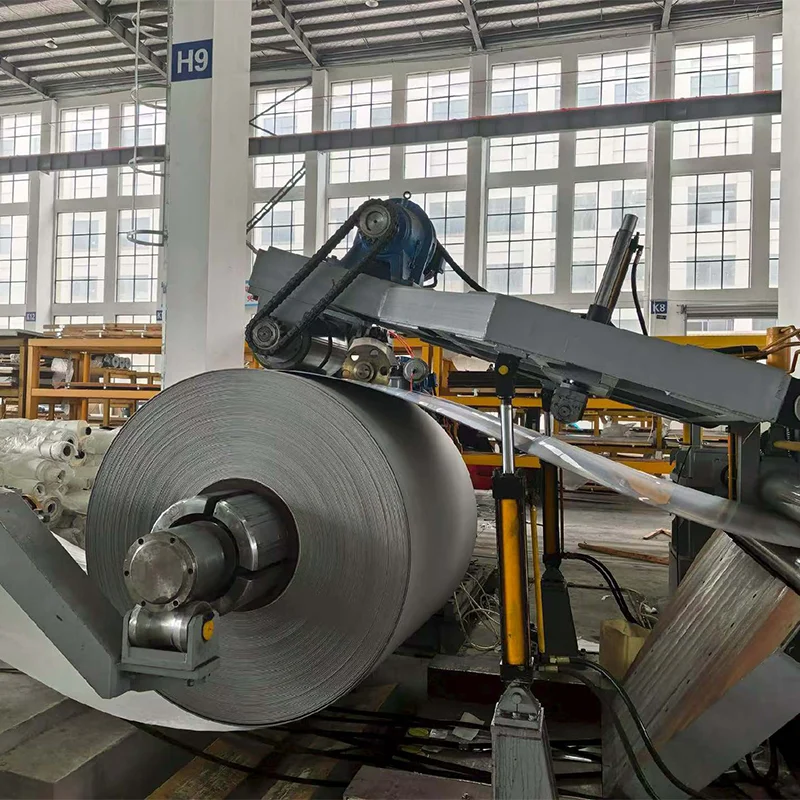
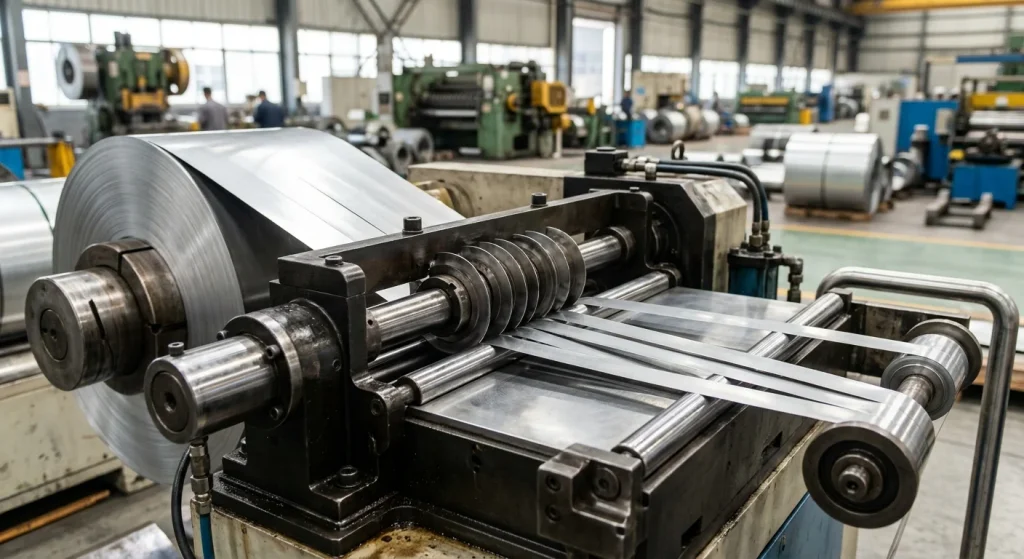
- Cold rolling mill — Verify the mill operates a Sendzimir or cluster mill capable of rolling to specified thickness (≤ 0.23 mm requires specific mill capability).
- Decarburization annealing furnace — Visible in the production hall; for Hi-B CRGO, a secondary recrystallization annealing line is mandatory.
- In-house Epstein testing equipment — The mill should be able to show a functioning Epstein frame being operated on production samples.
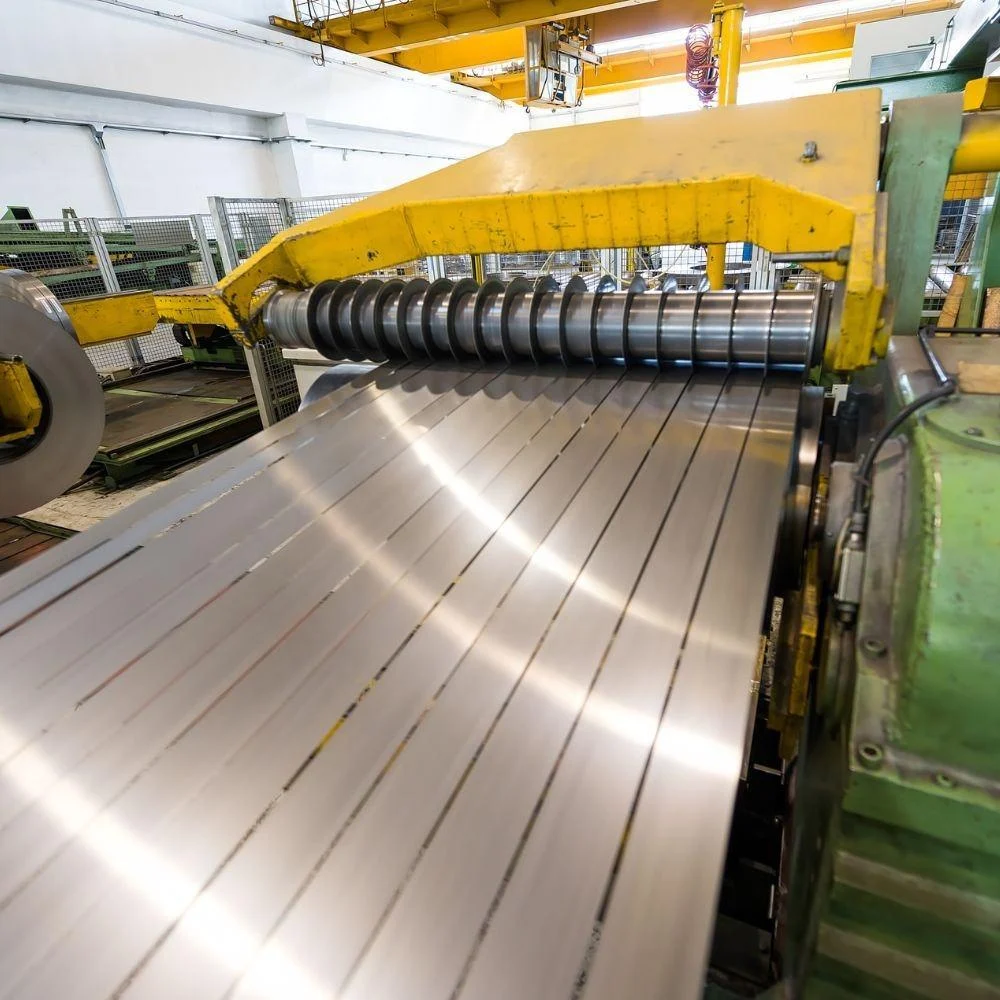
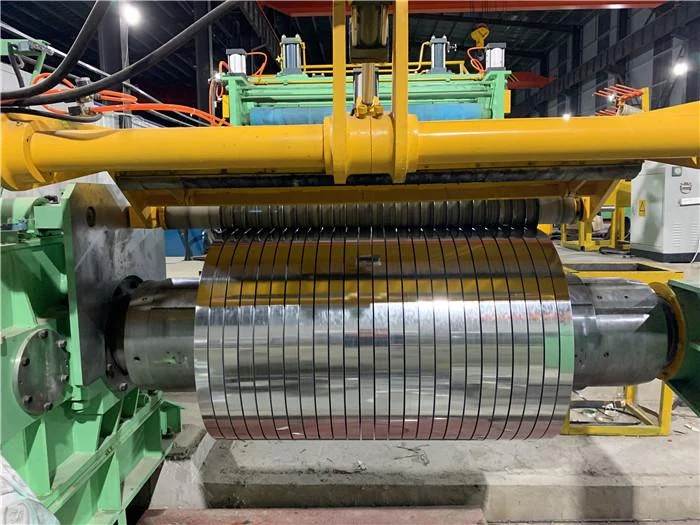
- Slitting and packaging area — Verify clean, organized storage away from moisture and contamination.
In-Person Audit (Second-Tier for Large Contracts)
For contracts exceeding $500,000/year, consider an in-person factory audit. Third-party inspection agencies can conduct facility audits on your behalf:
- Bureau Veritas China
- SGS China
- Intertek China
Typical cost: $800–1,500 per audit plus travel.
Step 5: Ongoing Quality Monitoring
After initial qualification, maintain ongoing quality through:
- Incoming inspection of each shipment: dimensional check (caliper), surface inspection (no rust, coating uniformity), coil identification vs. MTC cross-check.
- Periodic re-testing: Send samples for Epstein testing at least annually, or whenever you receive material from a new production campaign.
- Transformer factory output correlation: Compare your transformer no-load loss test results against predictions based on CRGO specification. Systematic drift (consistently above prediction) may indicate material performance has declined.
Red Flags
Watch for these warning signs during supplier qualification:
- Grade prices significantly below market — Hi-B CRGO at standard CRGO prices almost certainly means substandard material.
- Unable to provide coil-level MTC — Only lot-level certificates are inadequate for high-specification applications.
- B₈ not reported or below 1.88 T for claimed Hi-B grade — The defining property of Hi-B is its B₈ value; no data means the claim cannot be substantiated.
- Production volume claimed exceeds plausible mill capacity — A single-line cold rolling mill cannot produce more than approximately 80,000–120,000 tonnes/year of finished product; claims far exceeding this for a small facility are implausible.
- Reluctance to allow sample testing — Legitimate quality producers welcome third-party testing as it validates their product.
FAQ
Is ISO 9001 certification sufficient to trust electrical steel quality from a Chinese supplier?
ISO 9001 certifies that a supplier has a documented quality management system, but it does not certify that their product meets any specific technical standard. A supplier can hold ISO 9001 and still supply material that fails IEC 60404-8-7 requirements. For electrical steel, per-coil MTC with measured electromagnetic values is the relevant quality evidence.
How do I verify a Chinese supplier’s ISO/IEC certification is genuine?
Certifications from accredited certifiers (TÜV, SGS, Bureau Veritas, Intertek, China Quality Certification Centre) can be verified through the certifier’s online database. ISO 9001 certificates from non-recognized certifiers should be treated with caution.
Can I rely on third-party inspectors for final acceptance at Chinese ports?
Third-party inspection (SGS, Bureau Veritas, Intertek, etc.) at Chinese ports provides valuable documentation of packaging, labeling, and dimensional measurements. However, most port inspectors cannot conduct electromagnetic testing on-site. Electromagnetic testing (Epstein) requires laboratory conditions. Port inspection supplements but does not replace lab testing.
What is the typical timeline for qualifying a new Chinese electrical steel supplier?
A complete supplier qualification typically takes 8–16 weeks: 2–4 weeks for initial screening and documentation, 2–4 weeks for sample order production and shipping, 2–4 weeks for Epstein testing, and 2–4 weeks for review and trial production integration. Plan for this timeline when considering switching suppliers.
References
- IEC 60404-8-7:2008+AMD1:2011 — Cold-rolled grain-oriented electrical steel strip and sheet delivered in the fully-processed state. Geneva: IEC.
- IEC 60404-2:2008 — Methods of measurement of the magnetic properties of electrical steel strip and sheet by means of an Epstein frame. Geneva: IEC.
- International Electrotechnical Commission (2020). IECQ QC 001003 — Electrical components quality assessment system. Geneva: IEC.
- Bureau Veritas (2024). Electrical Steel Product Testing and Certification Services. https://www.bureauveritas.com/
- ASTM A876-16 — Standard Specification for Steel, Strip, High-Strength, Low-Alloy, Hot-Rolled, With Improved Formability. West Conshohocken: ASTM International.


