
The electric vehicle revolution is rewriting the specification book for motor materials. Where industrial motors running at 50 Hz were well-served by 0.35–0.50 mm non-oriented electrical steel, EV traction motors operating at 400–2,000 Hz demand gauges ten times thinner — and the material science behind that requirement changes everything about how silicon steel is selected, processed, and priced. This guide explains why ultra-thin electrical steel (0.05–0.20 mm) has become the critical battleground material in EV powertrain design.
Core Key Points
- EV traction motors operate at 400–2,000 Hz fundamental electrical frequency — 8–40× higher than grid frequency — making thin laminations essential, not optional.
- Eddy-current losses scale with thickness squared and frequency squared: at 800 Hz, moving from 0.35 mm to 0.10 mm reduces eddy losses by approximately 91%.
- Ultra-thin CRNGO for EV motors is available in 0.05–0.20 mm thickness, with silicon content typically 2.0–3.5% for high-frequency optimization.
- Global ultra-thin electrical steel demand for EVs is projected to reach 4.8 million tonnes by 2030, growing at 18% CAGR, according to Verified Market Research (2026).
- Ultra-thin silicon steel remains more cost-effective and manufacturable than amorphous metal for most EV motor stator geometries.
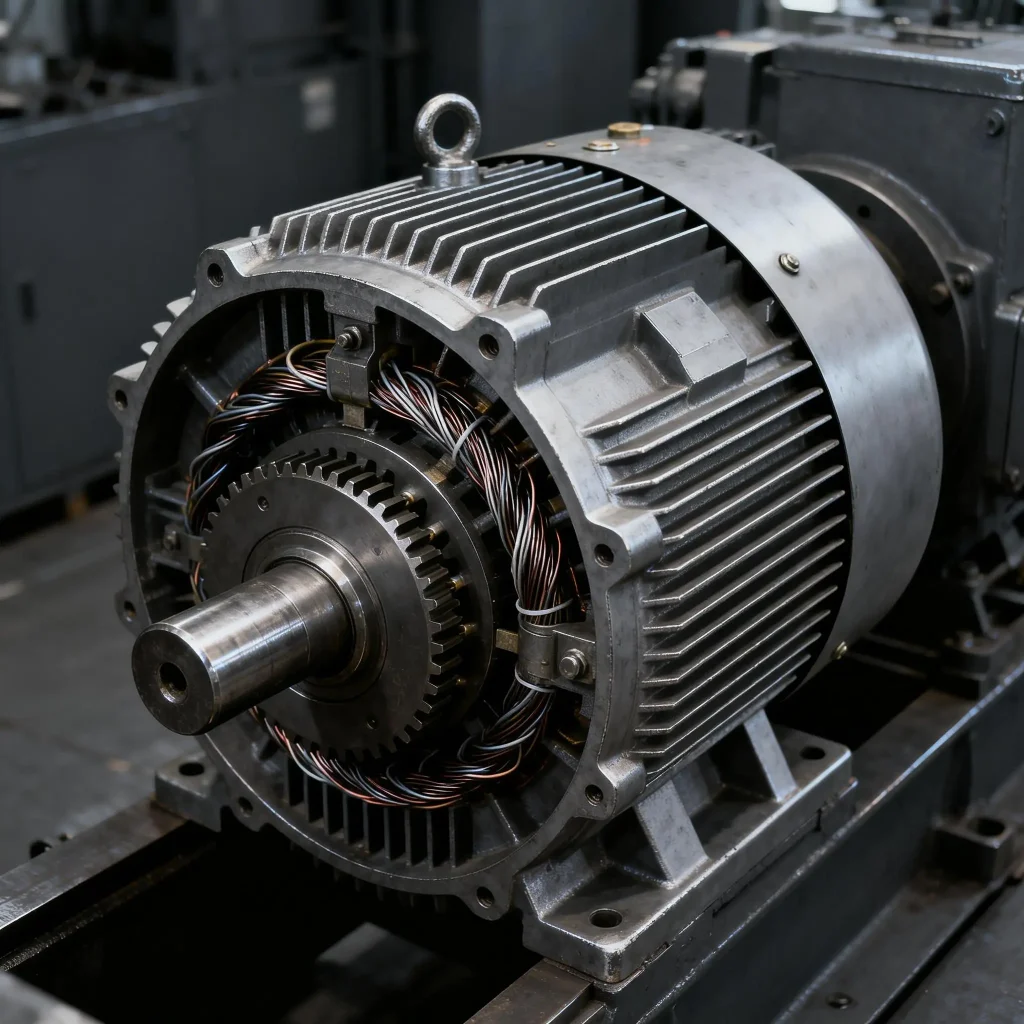
The EV Motor Frequency Problem
Understanding why ultra-thin electrical steel matters for EVs requires understanding how EV motors differ from conventional industrial motors.
Industrial induction motor (50 Hz grid):
- Rotor speed: 1,450–3,000 RPM
- Fundamental electrical frequency: 50 Hz
- Core loss regime: Hysteresis-dominated
EV permanent magnet synchronous motor (PMSM):
- Rotor speed: 6,000–20,000 RPM (peak)
- Fundamental electrical frequency: 400–2,000 Hz (pole pairs × rotor speed ÷ 60)
- Core loss regime: Eddy-current dominated
The key physics: since eddy-current losses scale with f², a motor operating at 800 Hz experiences 256× more eddy-current loss per unit of electrical steel than the same material operating at 50 Hz. The only practical way to manage this is to reduce lamination thickness dramatically.
At 800 Hz, the calculated skin depth of silicon steel (electrical resistivity ~0.50 µΩ·m, permeability ~5,000) is approximately 0.25 mm — meaning laminations thicker than this do not effectively use their full cross-section for magnetic conduction. Zhongxin Steel’s engineering team recommends targeting lamination thickness at or below 40% of the calculated skin depth for the target operating frequency.
Ultra-Thin CRNGO: Properties and Grades
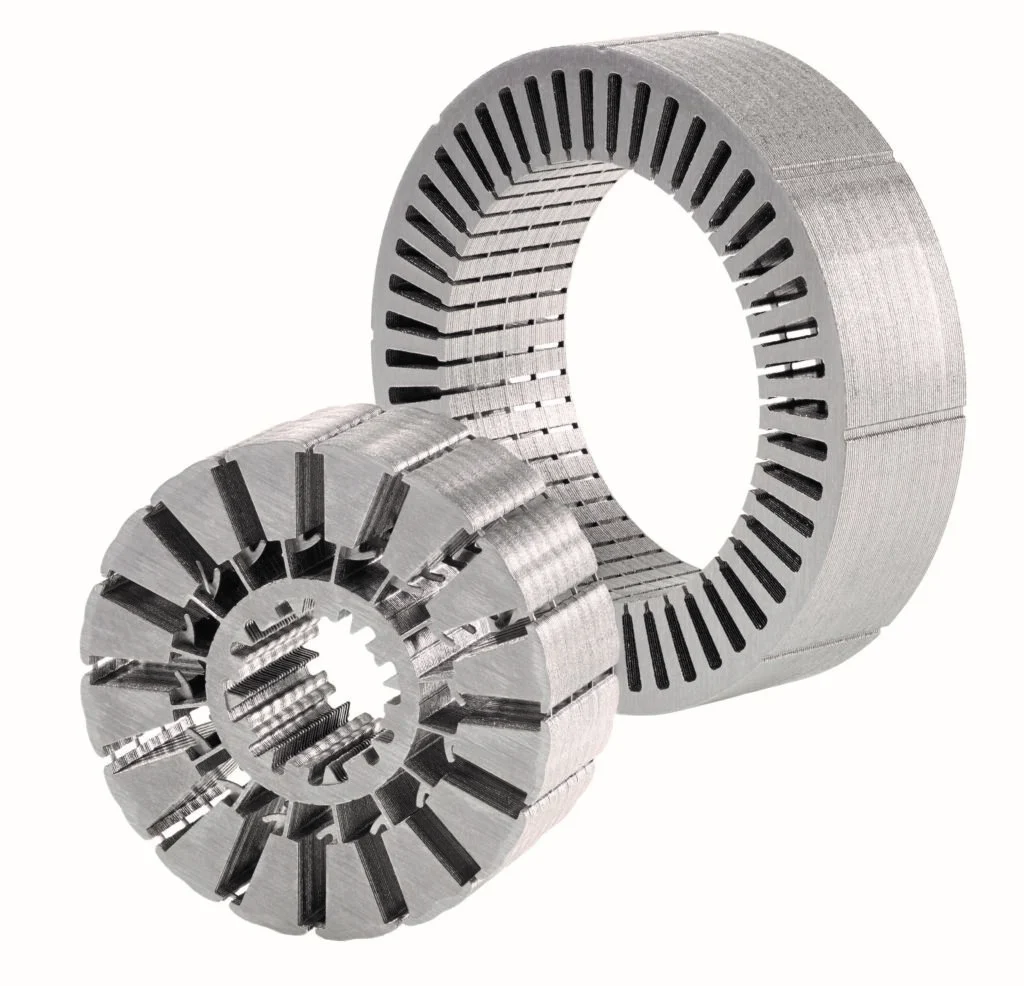
Ultra-thin CRNGO for EV applications is distinguished from standard-thickness CRNGO by several critical characteristics:
Silicon Content Optimization
Higher silicon content (up to 3.5%) increases electrical resistivity, which directly reduces eddy-current losses. However, silicon content above 3.5% makes the steel brittle — a critical limitation for punching operations at 0.10 mm thickness. Zhongxin Steel’s ultra-thin CRNGO grades balance silicon content (2.0–3.2%) with ductility and punchability for EV motor stator geometries.
Core Loss at High Frequency
| Grade | Thickness | Core Loss at 1.0 T, 400 Hz (W/kg) | Core Loss at 1.0 T, 800 Hz (W/kg) |
|---|---|---|---|
| Standard CRNGO | 0.35 mm | ~45–60 | ~180–240 |
| Standard CRNGO | 0.20 mm | ~18–25 | ~70–100 |
| Ultra-thin CRNGO | 0.15 mm | ~10–14 | ~40–56 |
| Ultra-thin CRNGO | 0.10 mm | ~5–8 | ~18–28 |
| Ultra-thin CRNGO | 0.05 mm | ~2–3 | ~6–10 |
Values are representative ranges; actual performance depends on silicon content, processing route, and measurement conditions per IEC 60404-6.
Magnetic Induction (B₅₀)
Ultra-thin EV grades typically achieve B₅₀ of 1.60–1.70 T — similar to standard CRNGO — but must balance this against the silicon content increase needed for resistivity. Designs targeting very high torque density may accept slightly lower flux density in exchange for reduced losses.
How Ultra-Thin Changes Efficiency Math
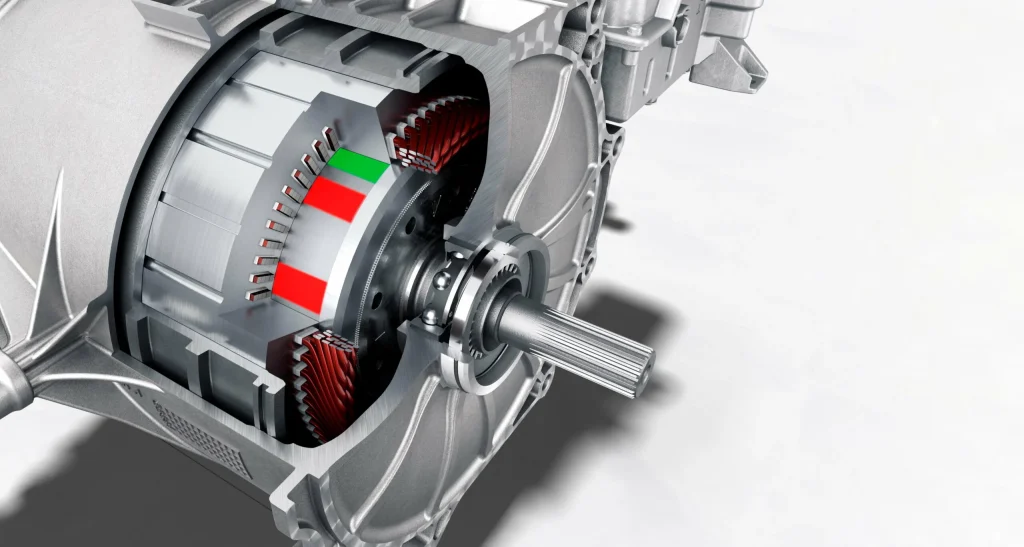
Modern EV traction motors target efficiency of 96–98% at peak operating points. Every 0.5% improvement in motor efficiency translates to meaningful range extension or battery pack size reduction.
Worked example: PMSM motor, 150 kW peak, operating at 8,000 RPM (≈ 800 Hz)
| Lamination | Eddy Loss (kW) | Hysteresis Loss (kW) | Total Core Loss (kW) | Efficiency Impact |
|---|---|---|---|---|
| 0.35 mm CRNGO | ~9.8 | ~1.2 | ~11.0 | −6.8% |
| 0.20 mm CRNGO | ~3.8 | ~1.2 | ~5.0 | −3.2% |
| 0.10 mm CRNGO | ~1.0 | ~1.2 | ~2.2 | −1.5% |
| 0.05 mm CRNGO | ~0.25 | ~1.2 | ~1.45 | −1.0% |
Illustrative values based on published motor design data. Actual results depend on motor geometry, flux density, and operating point.
The difference between 0.35 mm and 0.10 mm laminations represents 8.8 kW of recovered power at the motor’s peak — equivalent to reducing the battery pack requirement by approximately 3–5 kWh for equivalent range performance.
Ultra-Thin Silicon Steel vs. Amorphous Metal
Amorphous metal (metallic glass) alloys such as Metglas 2605SA1 offer exceptionally low core losses — approximately 50–70% lower than ultra-thin CRNGO at equivalent frequency — but present serious manufacturing challenges:
| Property | Ultra-Thin CRNGO (0.10 mm) | Amorphous Metal (25 µm) |
|---|---|---|
| Core loss at 1.0 T, 400 Hz | ~5–8 W/kg | ~2–3 W/kg |
| Thickness | 0.10 mm | 0.025 mm |
| Stacking factor | 0.88–0.92 | 0.80–0.85 |
| Punchability | Good with optimized dies | Very poor (brittle) |
| Stacking complexity | Moderate | Very high |
| Cost premium vs. CRNGO 0.35 mm | +120–180% | +800–1,200% |
| Production readiness | Mass production | Limited volume |
For mass-market EV programs with stator diameters above 100 mm, ultra-thin CRNGO remains the dominant choice because amorphous metal cannot be economically punched and stacked at automotive production volumes. Amorphous metal is finding application in smaller, specialized motors (appliances, drones, power tools) where its superior high-frequency performance justifies the processing complexity.
Processing Challenges for Ultra-Thin Laminations
Sub-0.20 mm electrical steel creates unique manufacturing challenges at the motor builder level:
1. Die and punch wear
At 0.10 mm, die clearance must be held to 3–5 µm. Tool life is significantly shorter than for 0.35 mm stamping. Progressive die sets for ultra-thin laminations typically require tool steel inserts and more frequent regrinding.
2. Burr control
Burrs on ultra-thin laminations create inter-laminar shorts that significantly increase effective core loss. Achieving burr height below 10 µm (20–25% of lamination thickness) requires precision press setup and frequent tool maintenance.
3. Coating compatibility
Standard insulation coatings (C3/C4 class per IEC 60404-11) applied to 0.35 mm stock are typically 1–2 µm thick. At 0.10 mm, even 1 µm per side represents 2% of total thickness, meaningfully reducing effective fill factor. Zhongxin Steel applies thin-coat (C5/C6) coatings to ultra-thin grades.
4. Coil handling
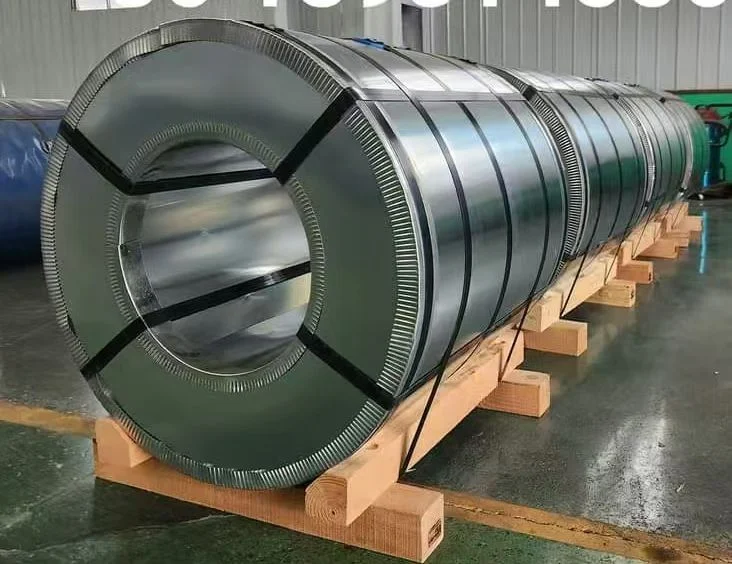
Ultra-thin coils (0.10 mm × 200 mm wide) at standard coil weights of 2–4 tonnes have inner diameter expansion issues during uncoiling due to set stresses. Specialized decoiling equipment with tension control is recommended.
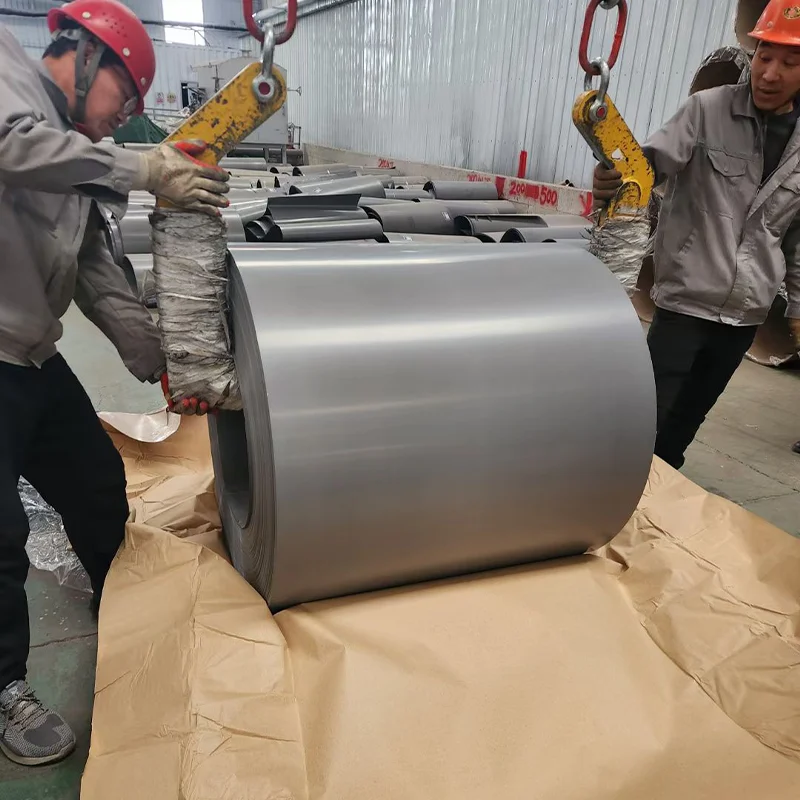
Zhongxin Steel’s Ultra-Thin Product Range
Zhongxin Steel supplies ultra-thin electrical steel from its Wuxi, Jiangsu manufacturing facility with the following standard specifications:
| Product | Thickness Range | Width Range | Available Surface |
|---|---|---|---|
| Ultra-thin CRNGO | 0.05–0.20 mm | 20–1,000 mm | C5, C6 coating |
| Ultra-thin CRGO | 0.10–0.20 mm | 30–1,000 mm | C5, C6 coating |
Thickness tolerance: ±0.005 mm across the full range.
Coil weight: 500 kg–4,000 kg (customer-specified).
Custom slit widths: Available with 5-business-day lead time from stock coil.
For EV motor applications, Zhongxin Steel provides:
- Electromagnetic performance certificates with high-frequency (400 Hz, 800 Hz, 1,000 Hz) core loss data per IEC 60404-6.
- Sample service: 50 kg sample coils available within 10 business days for prototype testing.
- Technical consultation: Grade selection support based on motor operating frequency, flux density design point, and efficiency targets.
Specifying Ultra-Thin for Your EV Motor Design
When specifying ultra-thin CRNGO for an EV motor, provide these parameters to your supplier:
- Peak operating speed (RPM) and number of pole pairs → determines fundamental electrical frequency
- Target peak efficiency (e.g., ≥ 96% at operating point)
- Flux density design point (typical: 1.2–1.5 T for EV stators)
- Stator geometry — stator OD, slot geometry → affects punchability requirements
- Production volume — impacts die investment amortization vs. material cost trade-off
For prototyping, laser cutting eliminates die costs and allows rapid iteration across multiple thickness options before committing to a production stamping die.
FAQ
What thickness of silicon steel is used in Tesla Model 3 motors?
Tesla uses non-oriented silicon steel in the Model 3’s permanent magnet rear motor. Based on published teardown analyses, the primary gauge used is in the 0.20–0.25 mm range, selected for balance between high-frequency efficiency and manufacturing producibility at automotive scale.
Why is ultra-thin CRNGO preferred over ultra-thin CRGO for EV motors?
EV motor stators carry rotating magnetic flux, which sweeps through all angular directions as the rotor turns. CRGO’s highly directional magnetic properties provide no advantage — and its anisotropy is actually a disadvantage in rotating flux applications. CRNGO’s isotropic properties are essential for motor efficiency.
Can I use standard 0.35 mm CRNGO in an EV motor to reduce cost?
At 800 Hz operating frequency, standard 0.35 mm CRNGO produces approximately 5–10× more eddy-current loss than 0.10 mm ultra-thin grade. The resulting heat generation significantly degrades motor efficiency and creates thermal management challenges that negate the material cost savings. Ultra-thin gauges are required for EV traction motors operating above ~200 Hz.
Is ultra-thin silicon steel available in China, or must it be imported from Japan?
Ultra-thin electrical steel is available from Chinese suppliers including Zhongxin Steel. While Japanese producers (Nippon Steel, JFE) were historically the primary sources, Chinese production capability for ultra-thin CRNGO down to 0.05 mm has expanded significantly since 2022.
References
- Verified Market Research (2026). Ultra-Thin Electrical Steel for EV Motors — Market Size & Forecast. https://www.verifiedmarketresearch.com/product/cold-rolled-grain-oriented-silicon-steel-market/
- International Energy Agency (2025). Global EV Outlook 2025. Paris: IEA. https://www.iea.org/reports/global-ev-outlook-2025
- Zhao, H., et al. (2023). “High-Frequency Core Loss Characterization of Ultra-Thin Non-Oriented Electrical Steel for EV Traction Motor Applications.” IEEE Transactions on Industry Applications, 59(4), 3890–3901.
- Haller, A., et al. (2024). “Comparison of Electrical Steel and Amorphous Metal for High-Speed PMSM Stators.” IEEE Energy Conversion Congress and Exposition (ECCE) 2024.
- IEC 60404-6:2018 — Magnetic materials — Methods of measurement of the magnetic properties of magnetically soft metallic and powder materials at frequencies in the range 20 Hz to 200 kHz. Geneva: IEC.

