
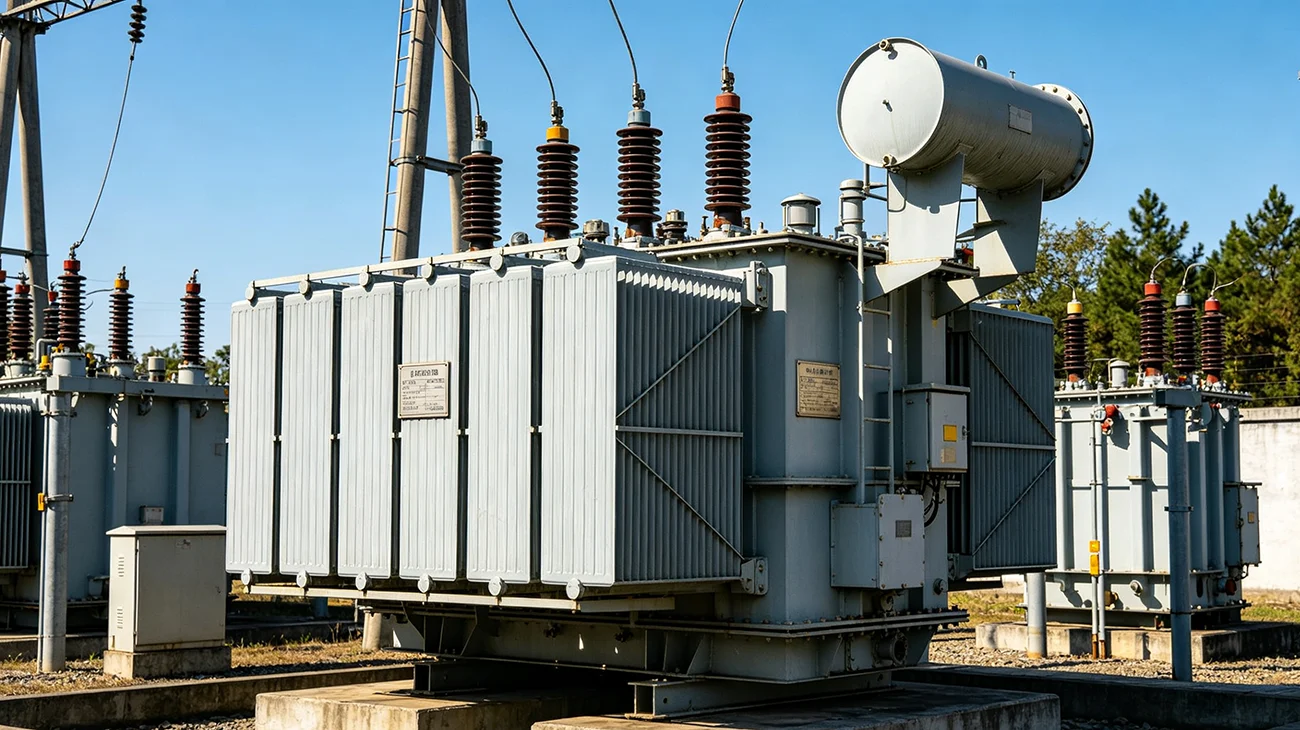
In distribution networks, distribution transformers are the critical equipment connecting medium-voltage lines to low-voltage end users. They exist in enormous quantities, are widely distributed, and remain energized almost continuously. A typical distribution transformer, from commissioning to retirement, often operates for more than 20 or even 30 years. Consequently, the no-load loss of distribution transformers accounts for a very high proportion of total distribution network losses. The fundamental material that determines this loss level is grain-oriented electrical steel for distribution transformers (cold-rolled grain-oriented silicon steel, CRGO). Selecting the correct grain-oriented electrical steel grade for different models and energy-efficiency classes is the foundation for meeting national efficiency standards, reducing grid losses, and achieving optimal total life-cycle cost.
1. What Is Grain-Oriented Electrical Steel?
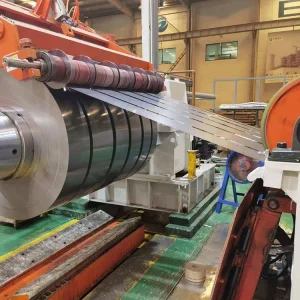
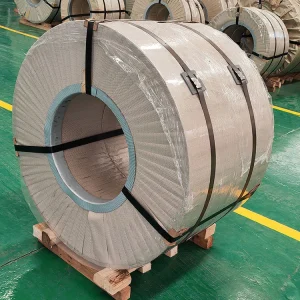
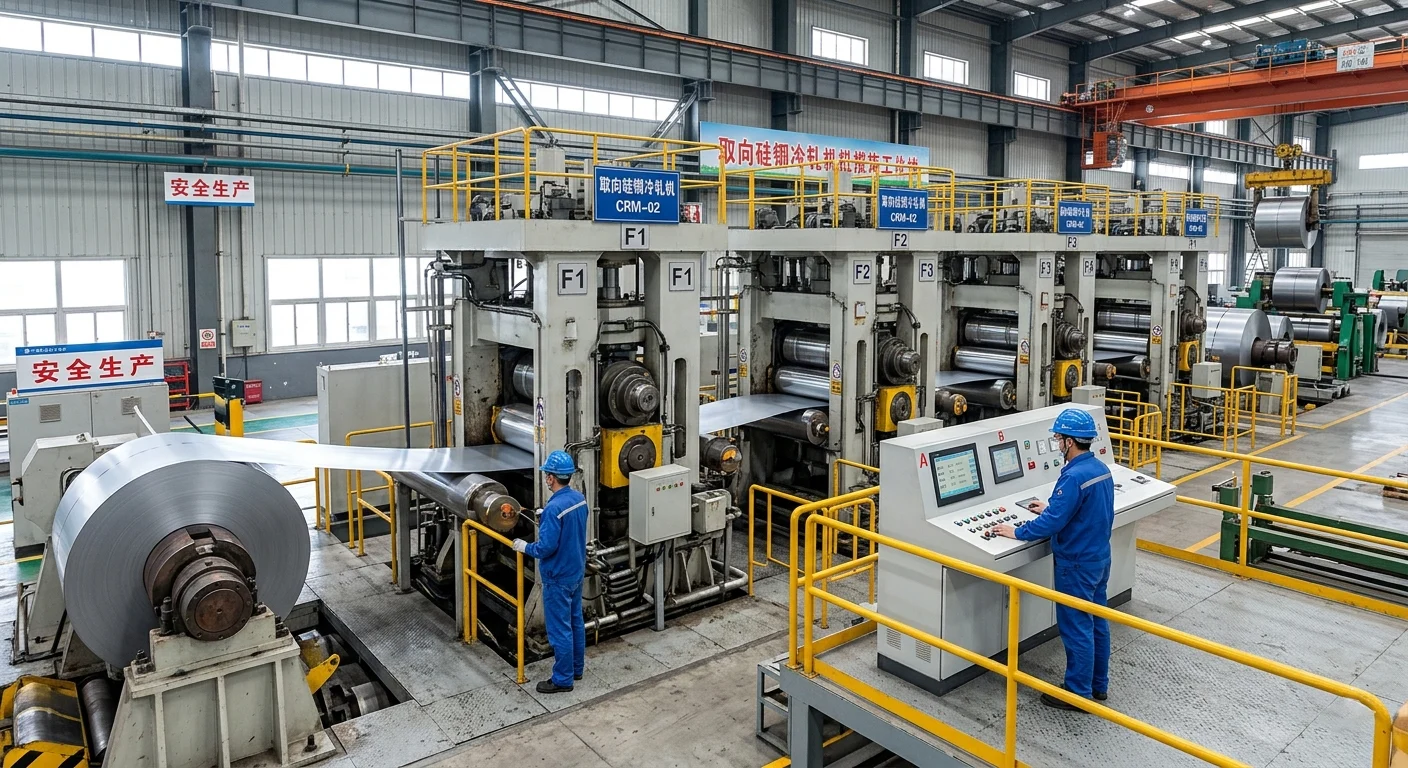
Grain-oriented electrical steel is an iron-silicon alloy containing approximately 3% silicon. Through cold rolling and high-temperature annealing processes, its internal crystal grains form a highly consistent preferred orientation along the rolling direction — the so-called Goss texture. This preferred orientation gives the material exceptionally high permeability, very low hysteresis loss, and high saturation flux density in the rolling direction.
In contrast, non-oriented electrical steel has randomly oriented grains and is used in rotating field machines such as motors and generators. The magnetic flux in a distribution transformer core is alternating but unidirectional, so grain-oriented electrical steel must be used to achieve the required flux with a smaller core cross-section and lower magnetizing current.
2. Why Distribution Transformers Use Grain-Oriented Electrical Steel
Distribution transformers serve end users directly and have operating characteristics that differ from large power transformers:
- Continuously energized, with large load fluctuations — whether the end users consume power or not, the primary side of the transformer remains energized, and no-load losses are generated 24 hours a day.
- Huge installed base — a single city’s distribution network contains thousands or even tens of thousands of transformers. While the loss of a single unit may seem small, the cumulative effect is enormous.
- Noise sensitivity — distribution transformers are often installed in residential areas, inside buildings, or near streets, making low noise a rigid requirement.
Grain-oriented electrical steel provides core value precisely for these characteristics:
- Low core loss — the preferentially oriented grains dramatically reduce hysteresis loss, and the high silicon content increases electrical resistivity to suppress eddy currents. Using a domain-refined high-permeability grade such as B20R070 can significantly lower no-load losses and save substantial electricity costs over the entire service life.
- High permeability — reduces magnetizing current, improves power factor, and eases the reactive power burden on the low-voltage network.
- Low magnetostriction and low noise — grain-oriented electrical steel undergoes minimal dimensional change during magnetization, which, combined with a rational core structure and clamping, effectively controls noise and meets the environmental requirements of residential areas.
3. Main Types of Grain-Oriented Electrical Steel for Distribution Transformers
Three categories of grain-oriented electrical steel are used in the distribution transformer sector:
1. Conventional Grain-Oriented (CGO)
The traditional product, offering serviceable magnetic properties at a lower price. It was widely used in older transformer models such as S9 and S11, but its share is steadily shrinking under the latest efficiency upgrade wave.
2. High-Permeability Grain-Oriented (Hi-B)
Through more precise grain orientation control, Hi-B achieves higher magnetic induction and lower core loss than CGO. Hi-B steel is the mainstream choice for S13, S14, and higher efficiency-class distribution transformers.
3. Domain-Refined High-Permeability Steel
On a Hi-B base, techniques such as laser scribing or mechanical scribing further subdivide the magnetic domains, pushing core loss to an extremely low level. For example, B20R070 — with a thickness of only 0.20 mm and a guaranteed maximum specific total loss of just 0.70 W/kg at 1.7 T / 50 Hz — is a top-tier energy-saving grade, used mainly for Grade 1 efficiency distribution transformers and high-end products competing with amorphous metal transformers.
4. How to Read a Grain-Oriented Electrical Steel Grade
Taking the high-performance grade B20R070 as an example:
- B — mill code (here using the Baosteel system as an illustration)
- 20 — nominal thickness of 0.20 mm
- R — indicates domain refinement (laser scribing) treatment
- 070 — guaranteed maximum specific total loss of 0.70 W/kg at 1.7 T, 50 Hz
The lower the loss number, the higher the efficiency of the steel. Mainstream thicknesses for distribution transformers are transitioning from 0.30 mm and 0.27 mm toward 0.23 mm and even 0.20 mm, and higher-grade materials are beginning to penetrate the premium distribution market.
5. Recommended Grain-Oriented Electrical Steel Grades for Different Distribution Transformer Types
Material selection for distribution transformers is closely tied to energy-efficiency class. The table below provides recommended grade solutions based on the efficiency classes defined in the Chinese national standard GB 20052, integrating high-end grades such as B20R070 into their appropriate positions.
Table: Recommended Grain-Oriented Electrical Steel Grades for Distribution Transformers by Efficiency Class
| Efficiency Class / Transformer Model | Typical Capacity | Recommended GOES Type | Typical Thickness | Example Grades | Remarks |
|---|---|---|---|---|---|
| Grade 3 Efficiency (e.g., S13 type) | 30–2500 kVA | High-permeability Hi-B | 0.27 mm, 0.30 mm | 27QG110, 30QG120 | Meets national Grade 3 efficiency, cost-priority |
| Grade 2 Efficiency (e.g., S14 type) | 30–2500 kVA | High-permeability Hi-B or domain-refined steel | 0.23 mm, 0.27 mm | B23R085, 27QG100 | Lower loss; some designs introduce domain-refined grades |
| Grade 1 Efficiency (e.g., S15 type) | 30–2500 kVA | Domain-refined Hi-B | 0.20 mm, 0.23 mm | B20R070, B23R080 | Competes with amorphous metal transformers; ultra-low no-load loss |
| Amorphous-substitute high-efficiency distribution transformers | 30–1600 kVA | Domain-refined Hi-B | 0.20 mm, 0.23 mm | B20R070, B23R080 | Grain-oriented steel solution balancing cost and performance |
| Single-phase distribution transformers | 5–167 kVA | Hi-B or domain-refined steel | 0.23 mm | B23R080, 23QG090 | Compact design; often use wound core construction |
| Urban underground / indoor low-noise distribution transformers | 315–2500 kVA | Domain-refined Hi-B | 0.20 mm, 0.23 mm | B20R070, B23R080 | Stringent noise control; requires very low magnetostriction material |
| New-energy box-type distribution transformers | 500–2500 kVA | High-permeability Hi-B | 0.23 mm, 0.27 mm | B23R080, 27QG100 | Wind and solar grid connection; high load fluctuation, high efficiency required |
| Energy-saving retrofits of aging distribution transformers | As per original design | Upgraded to domain-refined Hi-B | 0.20 mm, 0.23 mm (replacing original 0.30 mm) | B20R070, B23R080 | Direct core replacement; significant loss reduction |
Note: The table above provides recommended schemes. The specific grade for any given design should be determined comprehensively based on the transformer’s target loss value, core construction (stacked or wound), and manufacturing process. B20R070, with its ultra-thin 0.20 mm gauge and ultra-low loss of 0.70 W/kg, offers outstanding application value in Grade 1 efficiency applications and scenarios with extremely demanding noise and loss requirements.
6. Wound Cores and Stacked Cores: Two Key Constructions for Distribution Transformers
In the distribution transformer field, core construction significantly influences the application effect of grain-oriented electrical steel:
Stacked cores — the traditional construction, in which silicon steel sheets are punched and sheared to specified shapes and then interleaved and stacked. The process is mature and suitable for multi-specification batch production. Step-lap joints at the corners can reduce no-load loss and noise.
- Grade 1 efficiency: Requires 0.20 mm domain-refined grades such as B20R070. Although the unit material price is higher, under high electricity prices or continuous energization, the incremental cost can be recovered quickly, generating net savings thereafter.
Additionally, distribution transformers are produced in large volumes and many specifications, so grade standardization and supply chain stability are also important considerations. Wuxi Zhongxin Special Steel can stably supply a series of high-end grades including B20R070 to support product upgrades for distribution transformer customers.
8. Energy-Efficiency Standards Upgrading Driving Material Revolution
In recent years, the continuous upgrading of distribution transformer efficiency standards has been the biggest driving force behind the improvement of grain-oriented electrical steel grades:
- China’s GB 20052 standard classifies distribution transformers into three efficiency grades, with Grade 1 being the highest.
- New versions of the standard continue to raise the technical indicators for each grade, progressively phasing out old high-loss models.
- International standards such as the EU Ecodesign Tier 2 and the U.S. DOE 2016 regulation are also constantly lowering no-load loss limits.
Under this trend, the distribution transformer industry is accelerating its transition from GOES steel to Hi-B, and even to the ultra-thin domain-refined grades represented by B20R070. Grades like 30Q120 and 30Q130, once widely used, are being rapidly replaced by higher-grade materials such as B23R080 and B20R070. The grade coverage and delivery stability of grain-oriented electrical steel suppliers are becoming increasingly critical to the competitiveness of transformer manufacturers.
9. Quick Checklist for Selecting Grain-Oriented Electrical Steel
- Determine the target efficiency class — Grade 3, 2, or 1 directly defines the grade range. For Grade 1, prioritize the B20R070 class.
- Choose the core construction — stacked or wound; wound cores are better suited to ultra-thin gauge materials.
- Match thickness and grade — refer to the table above to find the optimal balance between loss level and budget.
- Confirm processing and supply — slit width, coating type, and delivery lead time must align with the production process.
- Verify performance consistency — minimal variation in magnetic properties across batches is the basis for ensuring every transformer passes its tests.
10. Wuxi Zhongxin Special Steel — Your Professional Supplier of Grain-Oriented Electrical Steel for Distribution Transformers
Wuxi Zhongxin Special Steel Co., Ltd. is dedicated to the field of grain-oriented electrical steel, providing complete material solutions — from conventional to high-end grades — for the distribution transformer industry. Our product range covers:
- Domain-refined high-permeability steel: 0.20 mm and 0.23 mm ultra-low-loss grades, represented by products such as B20R070 and B23R080, suitable for Grade 1 efficiency and amorphous-substitute distribution transformers.
- Hi-B high-permeability steel: 0.23 mm, 0.27 mm, and 0.30 mm high-induction grades, meeting mainstream Grade 2 and Grade 3 efficiency requirements.
- Conventional grain-oriented silicon steel: 0.27 mm and 0.30 mm economical grades, serving traditional models and the replacement market.
All products undergo rigorous performance testing and are supplied with quality assurance documents conforming to standards. We provide professional slitting and cut-to-length shearing services, and for ultra-thin gauges like B20R070, we can strictly control slitting burrs and strip flatness to meet the special requirements of wound core manufacturing.
Leveraging our location in Wuxi, a center for silicon steel processing and trading, we can provide domestic distribution transformer manufacturers with rapid response, stable quality, and reasonably priced grain-oriented electrical steel supply services. Whether you are mass-producing standard S13 or S14 transformers, or developing Grade 1 efficiency and high-end export products using B20R070, Wuxi Zhongxin Special Steel is ready to be your trusted material partner.
11. Outlook: The Future of Grain-Oriented Electrical Steel in the Distribution Sector
With the push for carbon neutrality and the construction of new-type distribution networks, emerging scenarios such as distributed energy resources, EV charging facilities, and smart distribution stations are placing higher demands on the efficiency and reliability of distribution transformers. Grain-oriented electrical steel technology continues to evolve toward thinner gauges, lower core loss, and lower noise. Domain-refined steel of 0.20 mm and below, represented by B20R070, will play an increasingly important role in the Grade 1 efficiency and ultra-low-loss distribution transformer market. Although amorphous metal competes in certain scenarios, grain-oriented silicon steel — with its higher saturation flux density, superior mechanical strength, and mature large-scale production capability — will maintain its dominant position in the distribution transformer field.
Choosing the right grain-oriented electrical steel for distribution transformers lays the energy-saving foundation for a green distribution network from the source. Wuxi Zhongxin Special Steel is ready to support the efficient operation of every one of your distribution transformers with professional service and reliable quality.
Frequently Asked Questions (FAQ)
What grade of grain-oriented electrical steel is used for distribution transformers?
It depends on the efficiency class. Grade 3 commonly uses 27QG110 or 30QG120; Grade 2 uses B23R085 or 27QG100; Grade 1 requires 0.20 mm domain-refined grades such as B20R070.
What are the characteristics of the B20R070 grade?
B20R070 is a domain-refined high-permeability grain-oriented electrical steel with a thickness of 0.20 mm and a maximum specific total loss of only 0.70 W/kg at 1.7 T / 50 Hz. It represents the top efficiency level currently available for distribution transformer steel, making it especially suitable for Grade 1 efficiency and amorphous-substitute products.
What special requirements do wound cores place on grain-oriented electrical steel?
Wound cores require good strip flatness, uniform thickness tolerance, and reliable insulation coating adhesion to withstand the bending stress during continuous winding and maintain interlaminar insulation after annealing. Ultra-thin gauge strips like B20R070 exhibit excellent flexibility and winding performance.
Can conventional grain-oriented steel (GOES) still be used for distribution transformers?
It can still be used in some products at or below Grade 3 efficiency, but its application scope is rapidly shrinking as efficiency standards rise. Hi-B and domain-refined steel have become the industry mainstream.
For detailed technical parameters on high-end grades such as B20R070, sample requests, or partnership inquiries, please contact Wuxi Zhongxin Special Steel Co., Ltd. We are ready to provide professional material selection support and stable material supply for your transformer manufacturing.