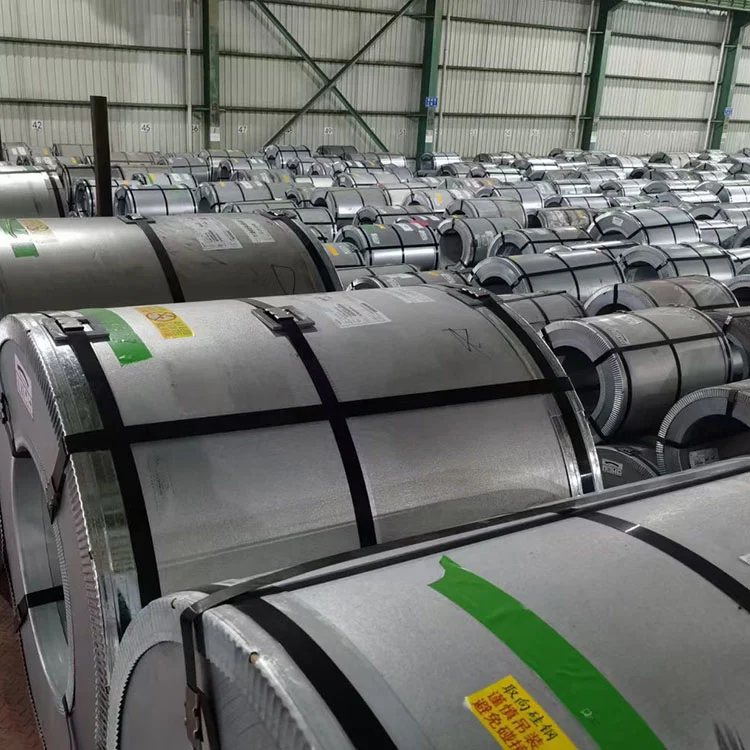
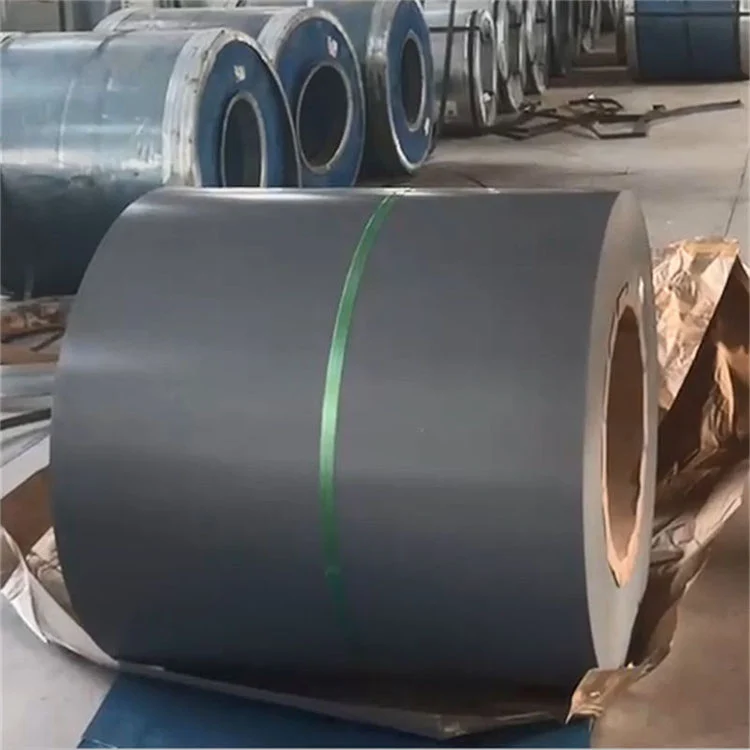
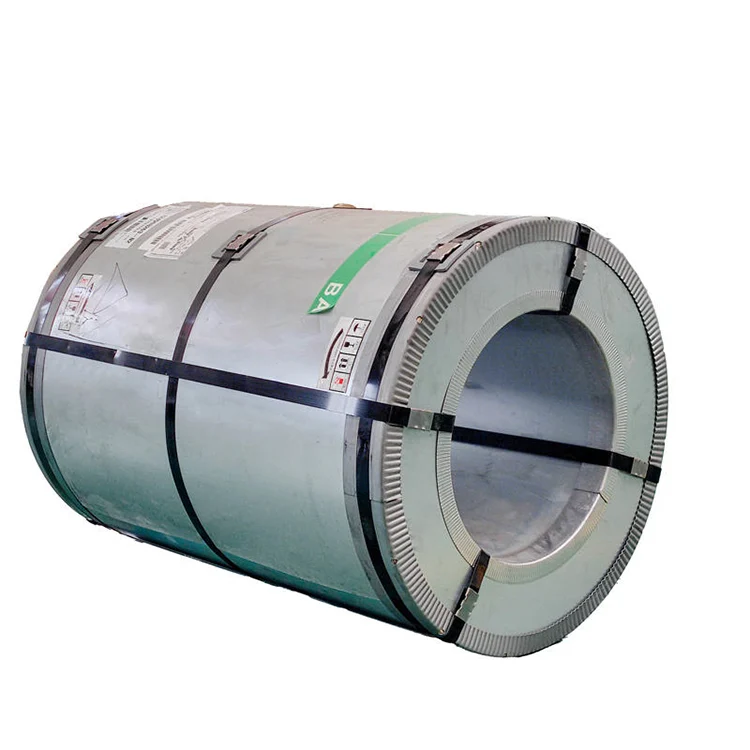
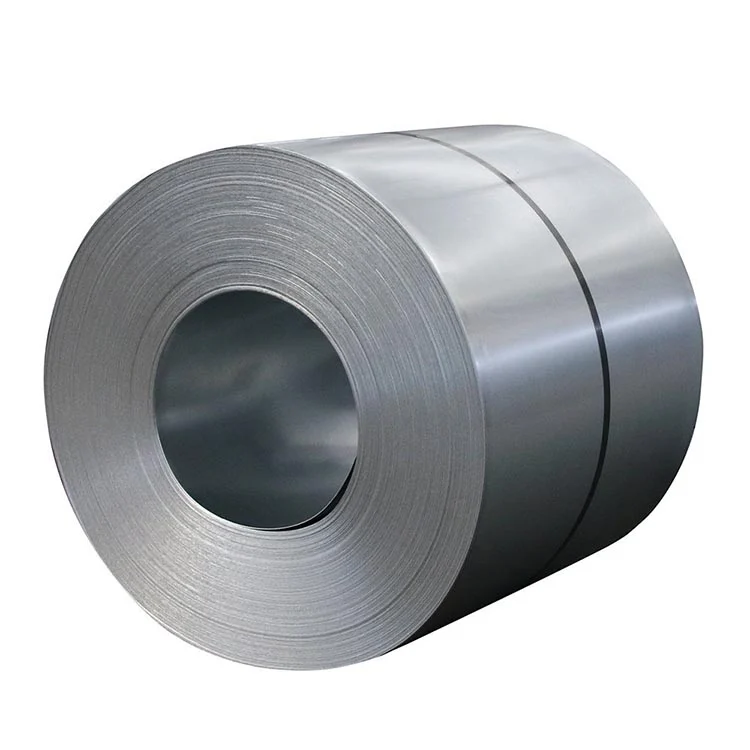
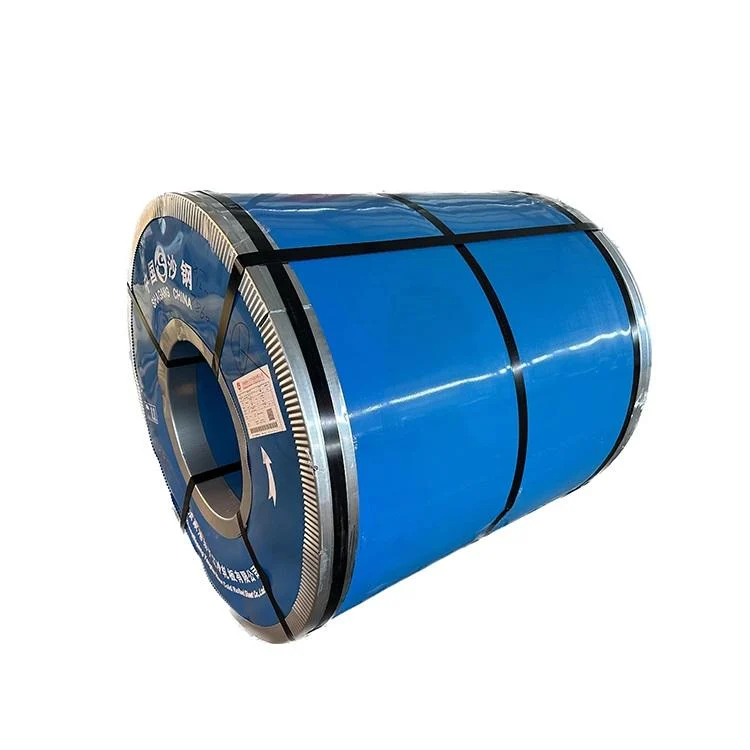
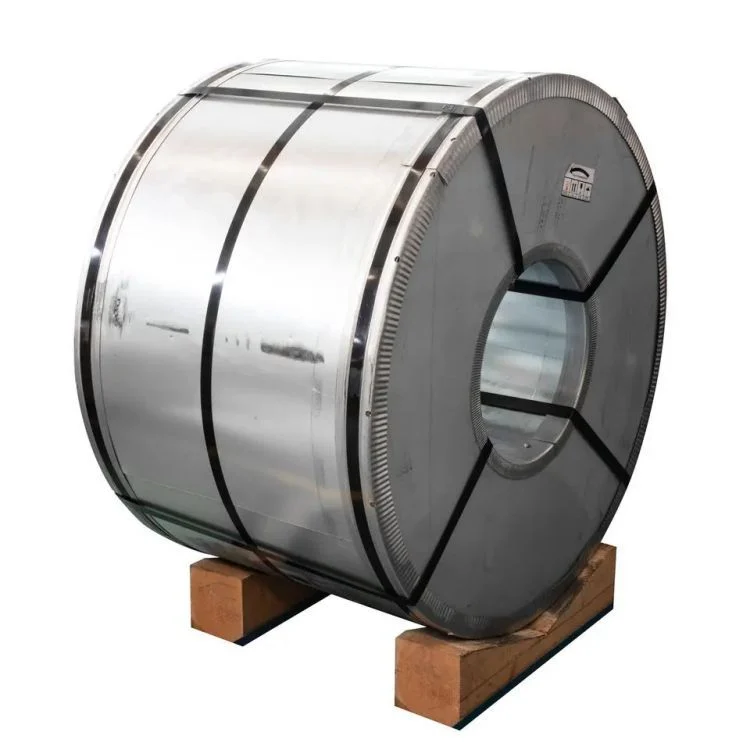
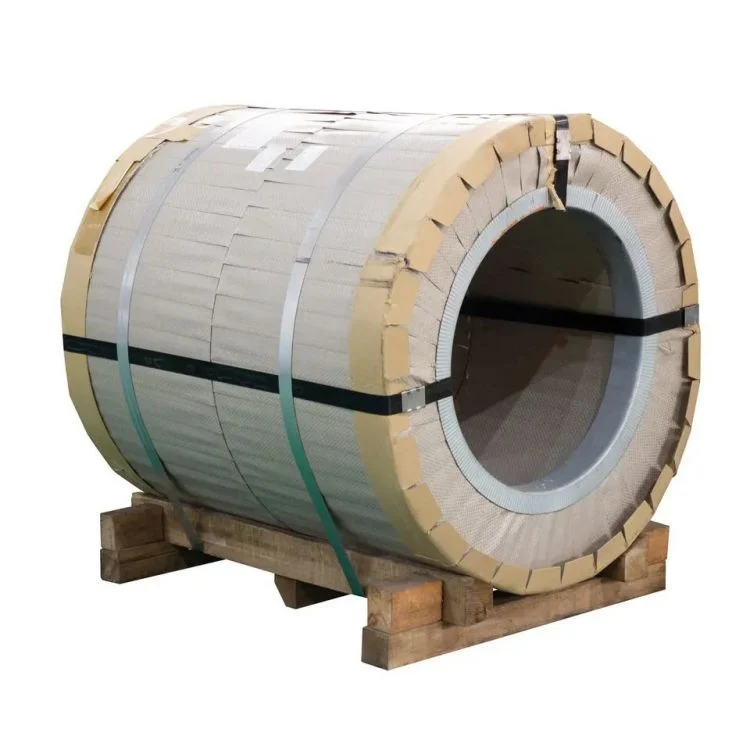
Non-Oriented Silicon Steel (N.O. Si Steel), also known as non-oriented electrical steel, is typically supplied in coils and sheets and can be processed by stamping, shearing, punching, laminating, welding, etc. It is an iron-silicon alloy with a silicon content of 0.5%–4.5%. After special rolling and heat treatment processes, it exhibits a uniform grain orientation distribution and is widely used in manufacturing cores of electromagnetic equipment such as motors, generators, and compressors.
What is the Material Composition of Non-oriented Silicon Steel?
The typical structure of non-oriented silicon steel consists of an iron matrix, silicon, and trace alloying elements, with an insulating coating usually applied on the surface. The addition of silicon increases resistivity, reduces core loss, and decreases magnetic anisotropy; elements such as aluminum and manganese further optimize magnetic properties. The insulating coating provides inter-laminar insulation to prevent eddy current losses.
- Matrix composition: Iron (Fe) balance, Silicon (Si) 0.5%–4.5%, Aluminum (Al) ≤1.5%, Manganese (Mn) ≤0.5%, Carbon (C) ≤0.005%, Sulfur (S) ≤0.005%.
- Types of insulating coatings: Organic coating (improves stampability), semi-organic coating (good heat resistance), inorganic coating (withstands high-temperature stress relief annealing).
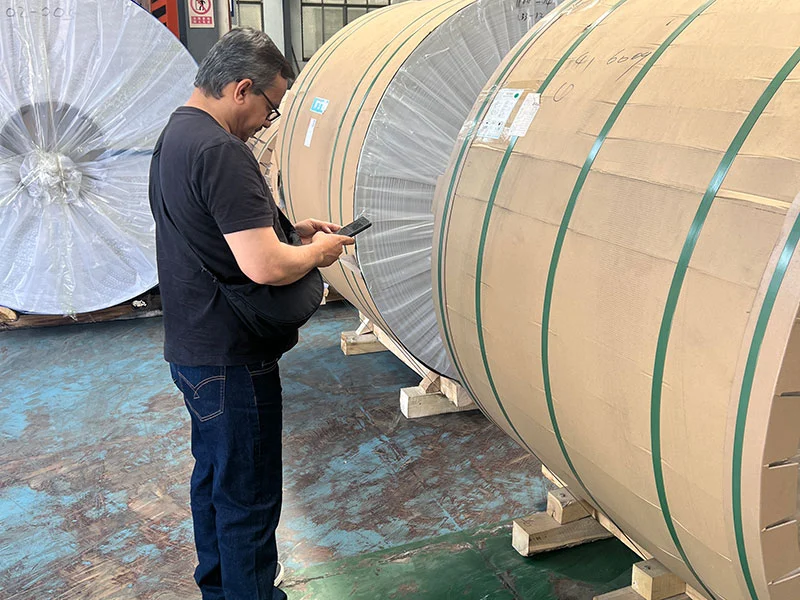
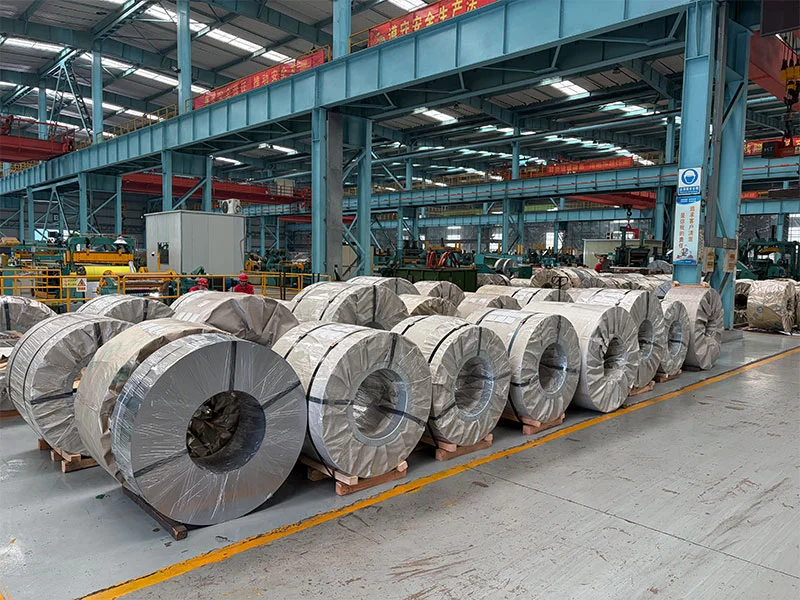
Zhongxin Special Steel produces and sells non-oriented silicon steel products with thickness ranging from 0.35 to 1.0 mm and width from 800 to 1250 mm, including non-oriented silicon steel coils, sheets, cut-to-length laminations, stamped cores, etc. Products are available according to magnetic performance grades (e.g., 35W270, 50W600, 65W1300) and coating types.
What are the Properties of Non-oriented Silicon Steel?
Non-oriented silicon steel combines high magnetic permeability, low core loss, and good workability, making it the core material for power conversion equipment. Compared with ordinary cold-rolled steel sheets, it has significant advantages in electromagnetic performance.
- Low core loss (P1.5/50): Core loss as low as 1.5–6.0 W/kg (50 Hz, 1.5 T), significantly reducing motor heating and improving energy efficiency.
- High magnetic permeability (μ): Maximum permeability up to 10,000–60,000, easy to magnetize and demagnetize, improving electromagnetic conversion efficiency.
- Low coercivity (Hc): Coercivity generally ≤100 A/m, low hysteresis loss, suitable for high-frequency alternating magnetic fields.
- Excellent stampability: Moderate hardness (HV 120–200), long die life, suitable for high-speed stamping and lamination.
- Insulating coating reliability: High inter-laminar resistance (≥200 Ω·cm²/sheet), prevents eddy current losses, heat resistance class up to 800°C (after stress relief annealing).
- Environmentally friendly & lead-free: Compliant with RoHS directive, free of lead, mercury, and other hazardous substances.
What are the Applications of Non-oriented Silicon Steel?
Non-oriented silicon steel offers advantages such as low core loss, high magnetic flux density, good workability, good temperature resistance, and high cost-effectiveness. It is the preferred electromagnetic material for high-efficiency energy-saving motors, household appliances, new energy vehicles, industrial equipment, and other fields.
- Household appliances: Air conditioner compressors, refrigerator compressors, washing machine motors, fan motors, vacuum cleaner motors, etc.
- Industrial motors: Three-phase induction motors, servo motors, permanent magnet synchronous motors, explosion-proof motors, pump motors, etc.
- New energy vehicles: Drive motor stator/rotor cores, generators, electric compressors, oil pump/water pump motors.
- Power generation equipment: Small hydroelectric generators, diesel generator sets, wind power auxiliary motors.
- Transformers: Small distribution transformers, reactors, instrument transformers (non-oriented silicon steel can be used for low-end or special structures).
- Power tools: High-speed motors for drills, saws, angle grinders, etc.
What are the Manufacturing Processes for Non-Oriented Silicon Steel?
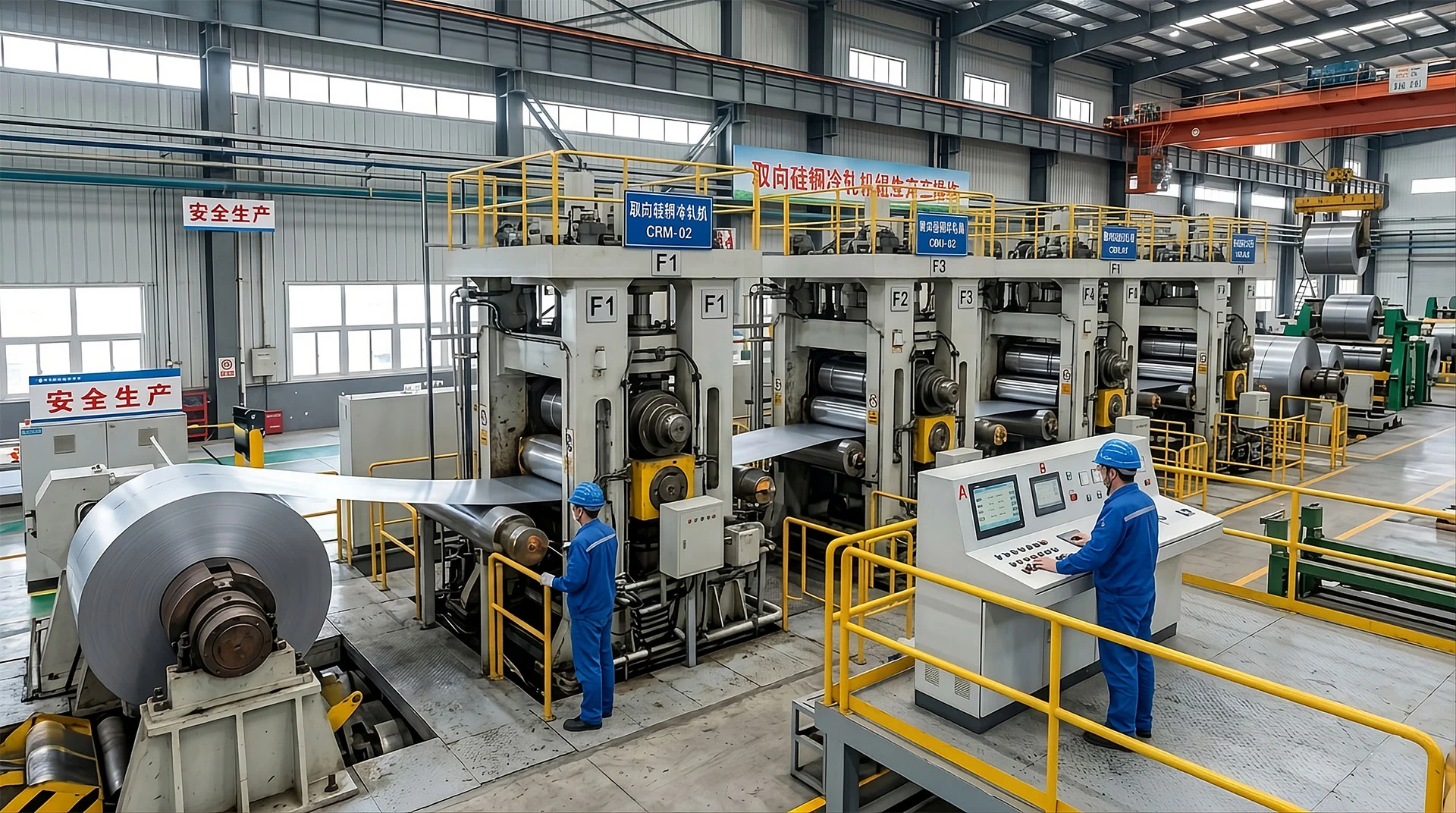
The production process of non-oriented silicon steel includes: Hot metal pretreatment → Steelmaking → Continuous casting → Hot rolling → Pickling → Cold rolling → Continuous annealing → Insulating coating → Finishing → Quality inspection.
- Steel making & continuous casting: Control impurities such as carbon, sulfur, and nitrogen; add silicon, aluminum, manganese; cast into slabs.
- Hot rolling: Reheat slab to 1100–1250°C, rough and finish roll into 2.0–2.5 mm hot-rolled coil.
- Pickling: Remove hot-rolled scale.
- Cold rolling: Single or multiple cold rolling to target thickness (0.35–1.0 mm), with intermediate annealing for softening if necessary.
- Continuous annealing: Recrystallization annealing in protective atmosphere (H₂+N₂), grain growth, stress relief, texture optimization.
- Insulating coating: Apply organic, semi-organic, or inorganic coating and cure by baking.
- Finishing & slitting: Edge trimming, slitting, punching, or laminating as required.
What International Standards and Certifications apply to Non-oriented Silicon Steel?
Zhongxin Special Steel, as a professional supplier of non-oriented silicon steel, provides products that comply with GB/T, IEC, ASTM, JIS, and other international standards, and supports third-party inspections such as SGS and BV.
- Base material standards: GB/T 2521 (China), IEC 60404-8-4 (International), ASTM A677 (USA), JIS C 2552 (Japan), EN 10106 (Europe).
- Core loss grades: Generally classified by P1.5/50 (W/kg), e.g., 350, 470, 600, 800, 1300, etc.
- Insulating coating standards: GB/T 2522, IEC 60404-11 (inter-laminar resistance, heat resistance class).
- Environmental certifications: RoHS, REACH, compliance with EU Ecodesign Regulation (EU 2019/1781).
Non-oriented Silicon Steel vs. Grain-oriented Silicon Steel vs. Ordinary Cold-Rolled Sheet
Non-oriented silicon steel, grain-oriented silicon steel, and ordinary cold-rolled sheet (SPCC) are common core materials. Grain-oriented silicon steel has extremely low core loss but high cost and strong magnetic anisotropy, suitable for transformers. Non-oriented silicon steel is isotropic, suitable for rotating machines. Ordinary cold-rolled sheet is only suitable for low-frequency, low-demand applications.
| Product | Non-Oriented Si Steel | Grain-Oriented Si Steel | Ordinary Cold-Rolled Sheet (SPCC) |
| English | Non-Oriented Si Steel | Grain-Oriented Si Steel | Cold Rolled Carbon Sheet |
| Silicon content | 0.5%–4.5% | 3.0%–3.5% | 0% |
| Grain orientation | Random distribution | Highly aligned (Goss texture) | No special requirement |
| Core loss P1.5/50 | 2.0–10.0 W/kg | 0.5–1.5 W/kg | >20 W/kg |
| Magnetic permeability | Isotropic, high | Extremely high in rolling direction, low transverse | Low |
| Price | Medium | High | Low |
| Main applications | Motors, generators, compressors | Transformers, reactors | General electromagnets, low-frequency devices |
| Workability | Good stamping, laminatable | Poor stamping, edge cracking | Very good stamping |
How to Select a Non-oriented Silicon Steel Supplier?
Purchasing directly from a non-oriented silicon steel manufacturer offers more competitive prices and stable quality. Factory-direct sourcing ensures quality control at the source, cost optimization, and reliable supply chain.
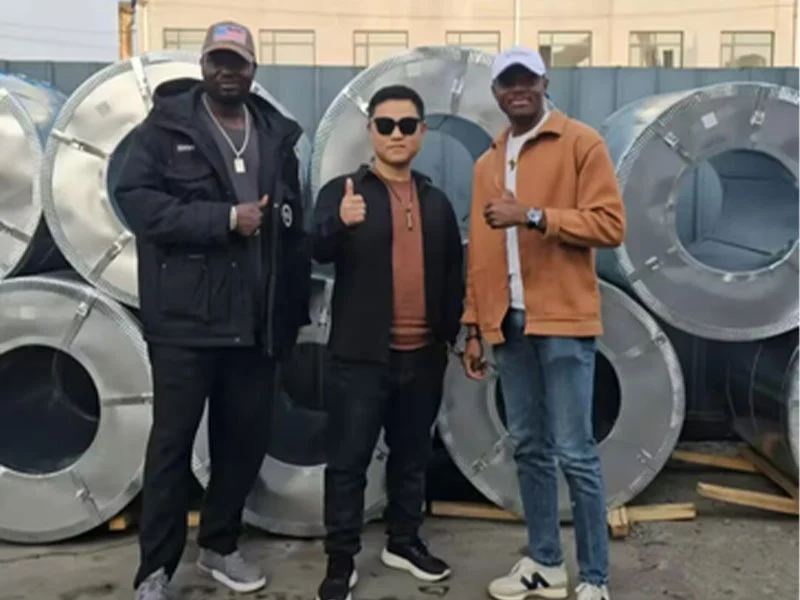
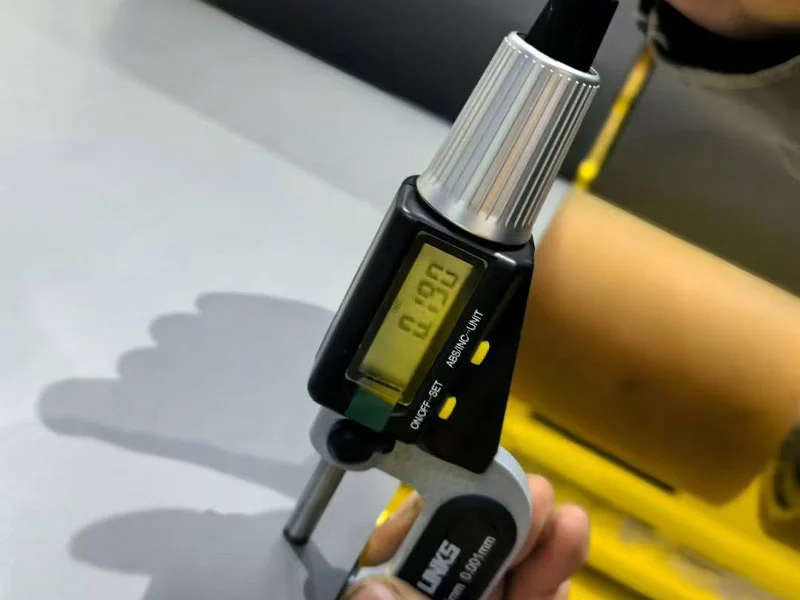
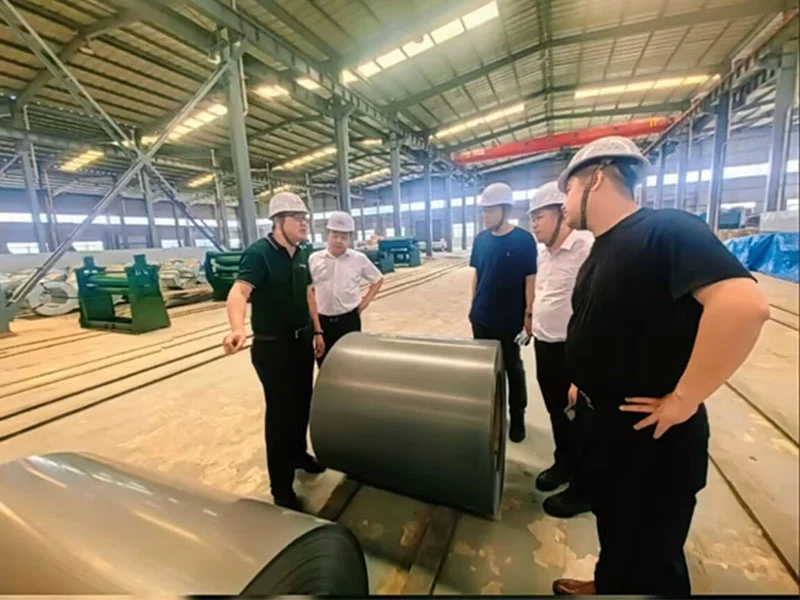
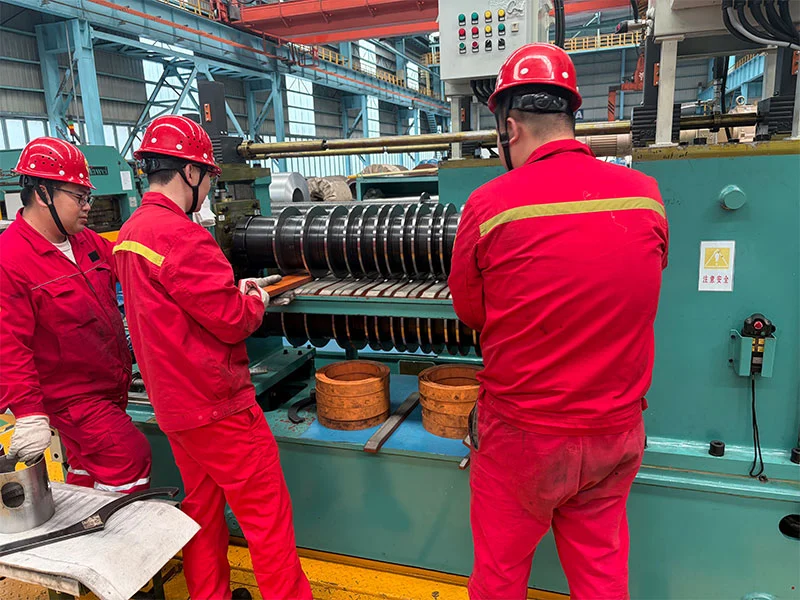
Key Evaluation Points for Non-oriented Silicon Steel Factories
- Steelmaking department: Availability of vacuum degassing (RH), continuous casting electromagnetic stirring to ensure ultra-low carbon and low inclusions.
- Hot rolling line: Control accuracy of finishing temperature and coiling temperature to avoid corrugation defects.
- Cold rolling & annealing: Shape control, atmosphere dew point, annealing temperature uniformity.
- Coating line: Coating thickness uniformity (±0.1 μm), curing oven temperature profile.
- Testing laboratory: Magnetic properties (Epstein frame or single sheet tester), inter-laminar resistance, salt spray test equipment.
Zhongxin Special Steel Factory
- Certifications: ISO 9001, IATF 16949 (automotive grade), GB/T 2521-2017, IEC 60404.
- Capacity: 800,000 tons/year of non-oriented silicon steel.
- Lead time: 15–60 days (including custom coatings).
- Production lines: 2 pickling and cold rolling combined lines, 3 continuous annealing and coating lines, 1 recutting and slitting line.
Customization of Non-oriented Silicon Steel Products
We support full customization of non-oriented silicon steel in terms of dimensions, performance grades, coating types, and finished laminations. You can select the following parameters according to motor design requirements.
Specifications
- Thickness specifications: 0.35 mm / 0.50 mm / 0.65 mm / 0.80 mm / 1.0 mm (±5% tolerance).
- Performance grades: Classified by core loss P1.5/50: W200, W250, W350, W470, W600, W800, W1300 (and higher grades such as W150).
Coating types
- Inorganic coating (Type S): Withstands 800°C, suitable for stress relief annealing.
- Semi-organic coating (Type A): Withstands 450°C, good stampability.
- Organic coating (Type O): Withstands 200°C, suitable for high-speed stamping.
Finished forms
- Mill edge / trimmed edge coils
- Cut-to-length sheets (e.g., 300×400 mm)
- Stator and rotor laminations (loose or stacked/laminated cores)
- Custom stamped parts
Non-oriented silicon steel, with its electromagnetic properties of “high permeability + low core loss + isotropy”, along with excellent workability and insulating coating, has become the material foundation for high-efficiency motors. If you are looking for core materials for new energy vehicles, industrial motors, or household appliance compressors, then Zhongxin Special Steel’s non-oriented silicon steel is your ideal choice!