
Kornorientiertes Elektroband ist nicht vorhanden, Elektroband ohne Kornorientierung (NGOES, auch als CRNGO verkauft) ist der Siliziumstahl, der in Motor- und Generatorkernen verwendet wird, da seine magnetischen Eigenschaften in jede Richtung nahezu gleichmäßig sind — im Gegensatz zu kornorientiertem Stahl, der für eine Richtung optimiert ist und stattdessen für Transformatoren entwickelt wurde.
Ab diesem Monat lautet die ehrliche Antwort auf die Frage „kann NGOES einen Motor noch zu IE5 bringen?" oft ja, in den unteren und mittleren Leistungsbereichen, mit einer engeren Güteklasse und Blechstärkespezifikation, als ein IE4-Design benötigt — aber für einige Auslegungen reicht das Material allein nicht mehr aus.
Diese Frage ist gerade viel weniger theoretisch geworden. IE5 war nicht mehr nur eine Marketingbezeichnung für Nischenmotoren mit Reluktanzanlauf und wurde zur formal definierten Klasse in IEC 60034-30-1:2025, dem internationalen Standard, nach dem Motorhersteller tatsächlich auslegen — mit neuen Tabellen 11 und 12, die nominale IE5-Effizienzbegrenzungen für einstufige Motoren von 0,12 kW bis 1.000 kW festlegen. Niemand muss es noch erfüllen. Aber Käufer können es jetzt spezifizieren, und das verändert das Gespräch mit Ihrem Stahllieferanten.
Wir erhielten eine Version dieser Frage von einem Pumpenmotorkunden im Juli, noch bevor die Aktualisierung des Standards weit bekannt war: Sein Konstruktionsteam hatte „IE5" in eine Spezifikation geschrieben, und als wir fragten, gegen welche Tabelle sie testeten, wusste tatsächlich niemand auf ihrer Seite — die Angabe kam aus einer Konkurrentenbroschüre, nicht aus einem Standard. Diese Lücke ist genau das, was dieser Artikel schließen soll.
Wichtigste Erkenntnisse
- IEC 60034-30-1:2025 (Ausgabe 2.0) hat nominal IE5-Effizienzbegrenzungen in den neuen Tabellen 11 und 12 formal hinzugefügt, mit Motoren von 0,12 kW bis 1.000 kW — eine Änderung, die branchenweit erst vor kurzem am 19. August 2026 gemeldet wurde.
Was Elektroband (nicht-kornorientiert) tatsächlich ist
CRNGO ist eine kaltgewalzte Silizium-Eisen-Legierung, typischerweise 1,5–3,5% Silizium nach Gewicht, verarbeitet so, dass seine Kornstruktur Magnetfluss ungefähr gleich in jede in-ebene Richtung trägt. Diese Isotropie ist genau das, was ein rotierendes Feld in einem Motor oder Generator benötigt — ein Transformatorkern sieht dagegen nur in eine Richtung Fluss, weshalb kornorientiertes Elektroband dort stattdessen verwendet wird und CRNGO in dieser Rolle deutlich schlechter abschneiden würde.
Wir liefern unsere Elektroband-Linie (nicht-kornorientiert) über drei Stufen: Standardstärken von 0,35–0,65 mm für Industriemotoren, hochfeste Varianten über 600 MPa Streckgrenze für schnelllaufende EV-Traktionsläufer und ultradünne Sorten von 0,05–0,20 mm für Hochfrequenz- und Premium-Effizienz-Designs. Welche Stufe ein Design benötigt, hängt fast vollständig von der angestrebten Effizienzklasse ab — und genau hier ändert IE5 die Rechnung.
IE5 ist nun eine echte IEC-Klasse — was sich geändert hat
Wirkungsgradklassen für Drehstrommotoren umfassen seit der Ausgabe 2014 der IEC 60034-30-1 die Klassen IE1 bis IE4. IE5 existierte zuvor informell – hauptsächlich als Begriff, den Hersteller für synchrone Reluktanz- und hochwertige Permanentmagnetausführungen verwendeten, die IE4 deutlich übertreffen – doch es gab keine standardisierte Wirkungsgradtabelle für Tests, weshalb „IE5" eher eine Behauptung als eine Spezifikation war.
Das änderte sich mit IEC 60034-30-1:2025 (Ausgabe 2.0, Dezember 2025), die die Tabellen 11 und 12 hinzufügt und damit nominale IE5-Wirkungsgradgrenzen für einspannige, netzgespeiste Motoren mit Nennleistungen von 0,12 kW bis 1.000 kW, bei 50–1.000 V und mit 2, 4, 6 oder 8 Polen definiert. Berichte in der Fachpresse zur Aktualisierung – einschließlich eines Berichts vom 19. August 2026 – beschreiben sie als die Norm, die endlich mit einer Technologie „Schritt hält", die Hersteller bereits bauten, aber nicht formal gegen einen gemeinsamen Maßstab zertifizieren konnten.
Das bedeutet nicht: Kein Regulator hat IE5 bisher irgendwo zur Pflicht gemacht. Es bedeutet, dass ein Käufer nun „IE5 gemäß IEC 60034-30-1:2025" in eine Bestellspezifikation aufnehmen kann und von jedem konformen Motorhersteller eine testbare, vergleichbare Antwort erhält – statt einer herstellerspezifischen Wirkungsgradbehauptung ohne gemeinsamen Referenzpunkt.
| Wirkungsgradklasse | Typische Verlustreduktion ggü. IE3 | Typischerweise erreicht durch | Regelungsstatus (Mitte 2026) |
|---|---|---|---|
| IE3 | Baseline | Standard-NGOES-Sorten, etablierte Kerngeometrie | Obligatorisch in der EU und China für die meisten 0,75–1.000 kW Motoren |
| IE4 | ~15–20% niedrigerer Verlust | Niedrigverlust-NGOES-Qualität, dünnere Bleche oder größerer Eisenkern | In der EU für das Band 75–200 kW verpflichtend; in China incentiviert |
| IE5 | ~30–40% niedrigerer Verlust | Premium-NGOES + Designänderungen oder Topologie-/Materialwechsel | Noch nicht verpflichtend; jetzt formal definierbar und prüfbar |
Von IE3 zu IE4 war ein Stahlproblem. IE5 ist ein anderes Problem
Wir haben bereits über die Stahlwechsel von IE3 zu IE4 geschrieben, die Hersteller durchführen mussten — niedrigverlust-Qualitäten, dünnere Messungen oder größere Eisenkerne, in irgendeiner Kombination. Dieser Schritt war echte Ingenieurarbeit, blieb aber innerhalb der Grenzen von konventionellem NGOES: bessere Qualitäten desselben Materials in einem Motor mit weitgehend derselben Architektur.
IE5 fordert mehr von denselben drei Hebeln, und das ist genau das Problem. Jeder Hebel hat eine Grenze:
- Silizium-reichere Qualitäten (über etwa 3,0% Si) reduzieren den Ummagnetisierungsverlust weiter, werden aber schwerer kalt zu walzen und spröder zum Stanzen — Streckgrenze und Verformbarkeit tauschen sich gegen magnetische Leistung ab, und diese Grenze überschreiten die meisten Hütten nicht bei Standardproduktionsläufen.
- Dünnere Messungen reduzieren die Wirbelstromverluste ungefähr mit dem Quadrat der Dicke, weshalb ultradünner Stahlbleche unter 0,20mm in Premium-Designs vorkommen — aber dünneres Band kostet mehr zum Walzen, Schneiden und Stapeln, und der Stapelfaktor sinkt, wenn die Isolationsbeschichtungsschichten einen größeren Anteil der Gesamtdicke ausmachen.
- Größere Kerne erreichen Effizienz, indem sie denselben Fluss über einen größeren Querschnitt verteilen, aber die Rahmengröße eines Motors ist normalerweise durch die Anwendung vorgegeben — Sie können einen IE5-Motor nicht einfach 20 % größer machen und ihn als Drop-in-Ersatz bezeichnen.
Wenn alle drei Hebel gleichzeitig eingesetzt werden, können mittelgroße Industriemotoren (ungefähr 7,5–75 kW) oft IE5 mit hochwertigem konventionellem NGOES erreichen. Darüber hinaus oder bei kompakten Hochdrehzahl-Konstruktionen, bei denen die Rahmengröße bereits begrenzt ist — demselben Bereich, in dem hochfeste CRNGO-Sorten für die Rotorfestigkeit verwendet werden — benötigt das Material zunehmend Unterstützung durch die Auslegung des magnetischen Kreislaufs des Motors, nicht nur durch die Stahlsorte.
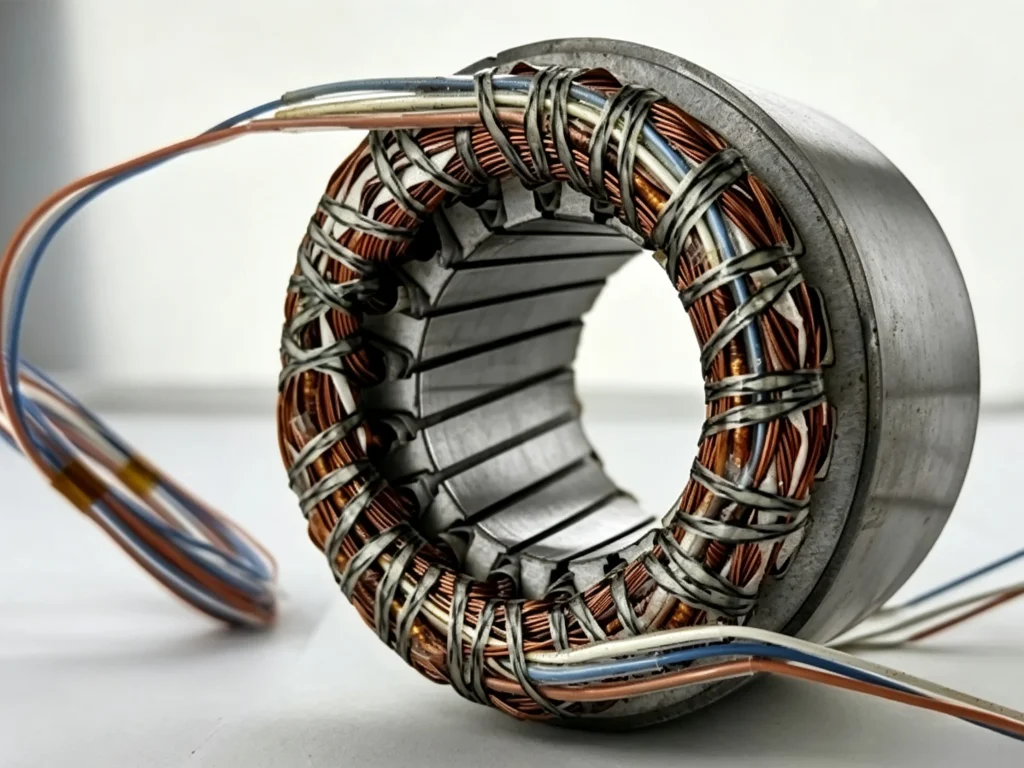
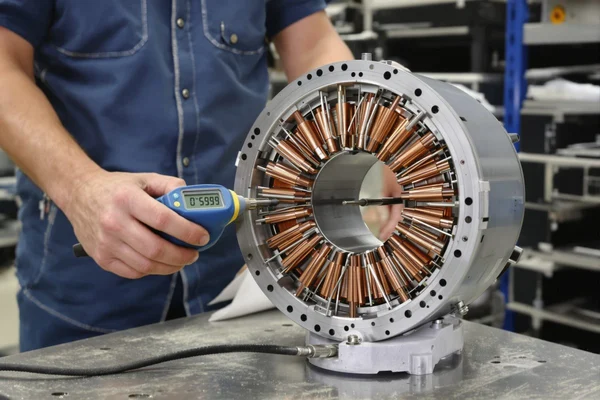
Kann nichtorientiertes Stahlblech tatsächlich IE5 erreichen? Drei Wege, die Einkäufer abwägen
Sprechen Sie mit genug Motorenherstellern, die gerade IE5 anstreben, und das Gespräch spaltet sich in drei Lager auf, nicht eins.
Weg 1: Konventionelles NGOES an seine Grenzen treiben. Kombinieren Sie eine hochsilizium-, niedrig-kernverlust-Sorte mit einer Blechstärke unter 0,20 mm und akzeptieren Sie die Kostensteigerung. Dies funktioniert für einen bedeutsamen Teil des Markts — besonders dort, wo die Rahmengröße gewisse Flexibilität bietet — doch es ist ein Spiel mit abnehmendem Ertrag. Jede zusätzliche 0,02 mm Blechstärkeverringerung bringt weniger Effizienzgewinn als die vorherige, während die Kosten mit der Verarbeitungskomplexität linear steigen.
Weg 2: Das Kernmaterial auf amorphe Legierung wechseln. Amorphes Band kann die Leerlaufverluste auf etwa ein Drittel dessen reduzieren, was nichtorientiertes Stahlblech im Transformatorbetrieb erreicht, und die Physik, die dies ermöglicht — eine amorphe, nichtkristalline Struktur mit sehr niedrigen Hystereseverlusten — gilt auch für Motorkerne. Das Problem ist die Herstellbarkeit, die nachstehend ausführlich behandelt wird.
Weg 3: Motorkonzeption statt Stahlsorte ändern. Synchronreluktanzmotoren (SynRM) und hochwertige Permanentmagnetausführungen erreichen IE5-Effizienz mit konventionellem NGOES, da der Effizienzgewinn aus der Geometrie des Magnetkreises und der Steuerungsstrategie resultiert und nicht aus einer Leistungssteigerung des Blechmaterials selbst. Dies ist möglicherweise der Weg mit dem geringsten Stahlbeschaffungsrisiko, erfordert aber eine andere Motorkonzeption — nicht nur eine Änderung der Spezifikation eines vorhandenen Designs.
Die meisten Hersteller, mit denen wir sprechen, verfolgen eine Mischung aus Weg 1 und 3: die Stahlspezifikation so konventionell wie zulässig halten und sich auf Konzeptionsänderungen verlassen, um die verbleibende Lücke zu schließen. Weg 2 bleibt Anwendungen vorbehalten, wo die Effizienzanforderung streng genug ist oder der Betriebszyklus lang genug, dass sich die Fertigungskomplexität wirtschaftlich rechnet.
| Weg | Effizienzgrenze | Fertigungsrisiko | Am besten geeignet für |
|---|---|---|---|
| 1. Hochwertiges konventionelles NGOES | Erreicht IE5 bei den meisten mittleren Baureihen mit Baugröße-Flexibilität | Niedrig — vorhandene Stanzlinien, etablierte Lieferkette | Allgemeine Industriemotoren mit Baugröße-Spielraum |
| 2. Amorphe Legierungskerne | Höchste theoretische Verlustreduzierung im Leerlauf | Hoch — gewickelte oder lasergeschnittene Bauweise, enge Lieferantenbasis | Langzeit-Betrieb, hohe Effizienzprämium-Anwendungen |
| 3. Topologieänderung (SynRM/PMSM) | Erreicht IE5 mit konventionellem NGOES | Mittel — neue Motorkonzeption, kein einfacher Spezifikationswechsel | Baugröße-begrenzte oder kompakte Hochdrehzahl-Designs |
So betrachtet geht es nicht wirklich um die Frage „welcher Werkstoff ist effizienter" – sondern um „welches Risiko kann Ihr Programm besser absorbieren: eine teurere Stahlspezifikation, einen neuen Herstellungsprozess oder ein neu konstruiertes Motoregehäuse." Die meisten Beschaffungsteams finden diese Frage leichter zu beantworten als den reinen Effizienzvergleich allein.
NGOES versus amorphe Kerne für Motoren: Ein direkter Vergleich
Die Kennzahlen hinter Variante 2 sind wertvoll, um sie nebeneinander zu sehen, denn „amorph ist effizienter" wird der Tatsache nicht gerecht, wie unterschiedlich die beiden Werkstoffe in der praktischen Verarbeitung sind.
| Eigenschaft | Konventionelles NGOES | Amorphes Legierungsmaterial |
|---|---|---|
| Typische Blechdicke | 0,20–0,65 mm | ~0,025 mm (etwa 1/10 der Dicke) |
| Vorteil bei Eisenverluste | Referenzwert | Deutlich niedrigere Leerlaufverluste bei gleicher Frequenz |
| Herstellungsverfahren | Gestanzte/geprägte Lamellierung, gestapelt | Gewickeltes Endlosband oder Laser-/Drahtzuschnitt – kann nicht gestanzt werden ohne zu reißen |
| Relative Materialkosten | Referenzwert | Etwa das 1,3-Fache von konventionellem Siliziumstahl heute, früher etwa 4,5-fach vor dreizehn Jahren |
| Stanzfaktor | 92–97 % typisch | Deutlich niedriger – mehr physisches Volumen erforderlich für gleichen Stahlanteil |
| Lieferbasis | Breit gefächert, mehrere Hüttenwerke weltweit | Eng – nur eine Handvoll Hersteller weltweit |
Der Kostengap hat sich dramatisch verringert, was die eigentliche Geschichte des vergangenen Jahrzehnts ist. Aber „günstiger als früher" und „austauschbar mit gestanztem NGOES" sind unterschiedliche Aussagen.
Wir haben das Stanzproblem amorphous-blechiger Kerne auf der Transformatorenseite ausführlich behandelt, und die gleiche Sprödheit gilt für den Motorstator: amorphes Band verträgt keine konventionelle Stanzform, daher erfordert der Aufbau eines amorphen Stators Wickel- oder Laserschneidkonstruktion mit anderer Werkzeugtechnik und einer kleineren Lieferantenbasis — es ist nicht einfach ein Materialwechsel auf einer bestehenden Produktionslinie.
Für die meisten Motorfertiger, die IE5 bewerten, ist diese Fertigungslücke — nicht die absolute Effizienzziffer — das entscheidende Kriterium dafür, ob amorphes Material bei einem gegebenen Programm überhaupt in Frage kommt oder eine langfristige Option, die erst später revisited wird, sobald Werkzeugtechnik und Versorgung reifer sind.
China und die EU sind nicht im gleichen IE5-Zeitplan
Ein Detail geht in der Berichterstattung verloren, die IE5 als einen einzigen globalen Meilenstein behandelt: Chinas eigener Motoreffizienzstandard GB 18613-2020 definiert bereits eine Klasse 1 mit Anforderungen, die grob 20 % niedrigere Verluste als Klasse 2 (IE4-Äquivalent) fordern — eine Schwelle, die eng mit dem korrespondiert, was die IEC jetzt IE5 nennt. Diese Klasse existiert als freiwilliges Spitzenniveau in Chinas Kennzeichnungssystem seit 2020, lange vor der Zeit, als die IEC dem Rest der Welt eine standardisierte Testmethode gab.
Die EU-Ökodesign-Verordnung (EU) 2019/1781 erzählt eine andere Geschichte. IE3 ist seit 2021 für die meisten Drehstrommotoren von 0,75–1000 kW verpflichtend, und IE4 ist bereits für Motoren in der Leistungsklasse 75–200 kW erforderlich — aber die Verordnung enthält kein IE5-Mandat, und die Überprüfung der Regel durch die Europäische Kommission läuft als Evaluierungs- und Folgenabschätzungsstudie bis Frühjahr 2027, bevor eine Ausweitung entschieden wird.
Die praktische Auswirkung für Käufer: Ein chinesisches Motorenblatt, das die höchste inländische Klasse angibt, erfüllt möglicherweise bereits die IE5-Äquivalenz nach der neuen IEC-Definition, obwohl dies die EU oder die USA noch nicht regulieren. Es lohnt sich, dies ausdrücklich zu überprüfen, anstatt anzunehmen, dass „IE5" in jedem Markt, in den ein Käufer liefert, das gleiche regulatorische Gewicht hat.
Wohin die Marktnachfrage tatsächlich geht
All dies geschieht nicht vor dem Hintergrund einer flachen Nachfrage. Der Markt für nichtkornorientiertes Elektroband wird 2026 auf etwa USD 20 Milliarden geschätzt, wobei die meisten veröffentlichten Prognosen es in der Früh-2030er Jahren im Bereich USD 25–30 Milliarden sehen – das Wachstum konzentriert sich speziell auf Motoranwendungen statt auf den breiteren Stahlmarkt.
- Motoren machen bereits Ende 2025 knapp die Hälfte der gesamten Elektrobandnachfrage aus, wobei EV-Traktionsmotoren und IE4/IE5-Klasse-Industrieantriebe als die zwei am schnellsten wachsenden Segmente in diesem Anteil genannt werden.
- Die EV-spezifische Nachfrage wächst schneller als der NGOES-Markt insgesamt, was widerspiegelt, wie viele Einzelmotoren eine moderne EV-Plattform im Vergleich zu einem konventionellen Fahrzeug nutzt.
- Keine der überprüften Marktprognosen modelliert, dass amorphe Kerne einen signifikanten Anteil der Motornachfrage verdrängen – die Wachstumsgeschichte dreht sich vollständig um bessere Elektrobandsorten, nicht um eine Materialsubstitutionswelle.
Dieser letzte Punkt ist für die Beschaffungsstrategie wichtig: Die kurzfristige IE5-Gelegenheit ist für die meisten Käufer überwiegend ein „besseres Elektroband-Spezifikations"-Problem, kein „anderes Material"-Problem – Pfad 2 oben bleibt für die absehbare Zukunft ein Minoritätenpfad, keine unmittelbar bevorstehende Hauptverschiebung.
| Nachfragesegment | Entwicklungsrichtung bis Anfang 2030er | Treiber |
|---|---|---|
| Elektromotoren für Elektrofahrzeuge | Am schnellsten wachsendes Segment | Mehr Motoren pro Fahrzeugplattform, steigende EV-Durchdringung |
| Industrielle IE4-/IE5-Antriebe | Wachstum, gekoppelt an behördliche Übergangsphasen | EU- und China-Effizienzvorschriften erweitern sich nach Leistungsbereich |
| Generatoren und Generatorensätze | Stabil, gleichmäßige Austauschfrage | Weniger empfindlich gegenüber Effizienzklassen-Verschiebungen als Motoren |
| Transformatoren (GOES, separater Markt) | Durch Kapazität begrenzt, nicht durch Nachfrage | Netzausbau und KI-Rechenzentrum-Lastenwachstum |
Bei Betrachtung dieser Tabelle ist die interessante Erkenntnis nicht, welches Segment am größten ist – sondern dass drei von vier Wachstumstreibern regulatorisch oder infrastrukturgetrieben sind und nicht rein kommerzieller Natur, was bedeutet, dass sie gegen kurzfristige Preisschwankungen relativ geschützt sind. Dies macht eine langfristige Kapazitätsplanung mit einem Lieferanten zuverlässiger, als es zunächst den Anschein haben mag.
Bevor Sie Ihre nächste Motorblechanfrage absenden
Ein Datenblatt, das nur „IE5" ohne weitere Details angibt, lässt Ihren Lieferanten raten, welchen der drei oben genannten Wege Sie tatsächlich benötigen – wir haben dieses Jahr mehr als ein Angebot an einen Käufer zurückschicken müssen, nur um nachzufragen, welche Tabelle oder Güte gemeint ist. Vor dem Absenden der Anfrage:
- Klären Sie, welcher Standard mit „IE5" gemeint ist. IEC 60034-30-1:2025, GB 18613-2020 Grade 1 und eine herstellereigene Effizienzangabe sind nicht automatisch derselbe Schwellenwert – fordern Sie die spezifische Tabelle und Prüfmethode an.
Unser eigener umfassender Blechdickenleitfaden behandelt die oben erwähnten Wirbelstrom- und Stapelfaktor-Kompromisse detaillierter, und die Verifizierung von Lieferanten-Testdaten zeigt, welche Dokumentation einer Charge tatsächlich beigefügt sein sollte, bevor sie versendet wird – was mit zunehmend strengeren Spezifikationen nicht an Bedeutung verliert, sondern eher noch wichtiger wird.
Häufig gestellte Fragen
Ist IE5 irgendwo bereits verpflichtend?
Nein. Ab Mitte 2026 ist IE5 in der EU, den USA oder China keine behördliche Anforderung. IEC 60034-30-1:2025 hat es erstmals zu einer prüfbaren, standardisierten Klasse gemacht, und Chinas GB 18613-2020 hat seit 2020 eine ungefähr gleichwertige freiwillige Spitzenklasse, aber kein Land schreibt sie derzeit vor.
Kann Standard-Elektroband ohne Kornorientierung IE5 überhaupt erreichen?
Für viele Motoren mittlerer Größe ja — mit einer Premium-Niedrigverlustgüte, einer dünneren Blechstärke und manchmal einem größeren Kern als ein IE4-Design verwenden würde. Im oberen Leistungsbereich oder bei platzbegrenzten Designs reicht konventionelles NGOES allein oft nicht aus, ohne einen Topologiewechsel oder einen amorph kristallinen Kern.
Was ist der tatsächliche Unterschied zwischen IE4-Anwendung und IE5-Anwendung?
IE3 zu IE4 war überwiegend ein Stahlgüteanpassung innerhalb derselben Motorarchitektur. IE5 fordert eine weitere Reduktion der Verluste um 30–40 % gegenüber IE3, was über das hinausgeht, was Güteklasse und Blechstärkenänderungen allein in jedem Leistungsbereich zuverlässig liefern können — für manche Designs erfordert es jetzt einen Motortopologiewechsel, nicht nur ein besseres Blech.
Macht amorph kristalline Legierung als kurzfristige Alternative zu NGOES für Motoren Sinn?
Für die meisten Standard-Motorenprogramme noch nicht. Amorph kristallines Band kann nicht gestanzt werden — es muss gewickelt oder mit dem Laser geschnitten werden, was andere Werkzeuge und eine schmalere Lieferantenbasis bedeutet. Es ist eine echte Option für Anwendungen mit strengen Effizienzanforderungen oder lange andauernden Dauerbetrieb, bei denen die fertigungstechnische Komplexität es wert ist, keine universelle Ersatz.
Bedeutet die Angabe „IE5" in meiner Motorspezifikation dasselbe in China wie in Europa?
Nicht zwangsläufig. Ein nach GB 18613-2020 Grad 1 bewerteter chinesischer Motor erfüllt möglicherweise bereits oder übertrifft bereits das, was IEC 60034-30-1:2025 als IE5 definiert. Bestätigen Sie jedoch immer, gegen welchen Standard und welche Tabelle ein Lieferant prüft — die Bezeichnungen sind nicht ohne Überprüfung austauschbar.
Fazit
IE5 war jahrelang ein Anspruch ohne gemeinsamen Maßstab. IEC 60034-30-1:2025 hat ihm einen gegeben, und das verwandelt „Können wir IE5 erreichen?" von einer Marketingfrage in ein Gespräch über Spezifikationen, an dem Ihr Elektroband-Lieferant von Anfang an beteiligt sein muss — nicht erst nachdem das Motordesign festgelegt ist. Bei den meisten Projekten führt der Weg immer noch über verbessertes kornorientiertes Elektroband, nicht über einen Materialwechsel. Im übrigen Fall ist es wertvoll, das frühzeitig zu wissen, anstatt es in der Prototypphase zu entdecken.
Referenzen
- Envirotec Magazine — IE5 motor efficiency class enters IEC standard
- IEC Webstore — IEC 60034-30-1:2025
- EUR-Lex — Ecodesign requirements — electric motors and variable speed drives
- Design Solutions Magazine — Updated IEC 60034-30-1 framework provides clearer guidance on specifying high-efficiency motors


