On 27 March 2026 the European Commission opened a safeguard investigation into imports of grain-oriented electrical steel (GOES), and — unusually — into the laminations and cores made from it. If it ends in measures, the likely form is a tariff-rate quota, not a duty. That distinction changes how you plan orders, not just what they cost.
A duty is a fixed cost per tonne you can put in a spreadsheet. A quota is a race: volume inside the ceiling clears at the normal rate, volume above it pays a penalty rate, and the ceiling refills on a calendar you don’t control. Buyers who have only ever dealt with anti-dumping duties tend to model a safeguard as “another percentage” and miss the scheduling problem underneath it.
We ran into this framing gap in August. A transformer builder in Central Europe asked us to hold Q4 tonnage at a fixed landed cost “including any safeguard.” We could hold the mill price, but nobody can promise which side of a quota line a shipment clears on when the quota hasn’t been set yet. That conversation is what this article is meant to shorten.
Key Takeaways
- The EU safeguard investigation on GOES was initiated on 27 March 2026 and covers grain-oriented flat-rolled silicon-electrical steel plus steel laminations and cores, under CN codes 7225 11 00, 7226 11 00 and 8504 90 13.
- GOES imports into the EU rose from 91,362 tonnes in 2021 to 191,056 tonnes in the July 2024–June 2025 investigation period, a 109% increase; laminations and cores rose 82% over the same window. That import surge is the legal basis for the case.
- A safeguard is not anti-dumping. It targets all origins at once, is usually applied as a tariff-rate quota (TRQ), and runs on fixed terms rather than company-specific margins.
- The EU already runs anti-dumping measures on GOES from China, Japan, Korea, Russia and the US, structured as a minimum import price. With market prices above those floors, the measures currently bite very little — which is part of why a safeguard was opened.
- The EU’s separate, economy-wide steel measure — Regulation (EU) 2026/1384, in force 1 July 2026 — cut tariff-free quotas by about 47% and doubled the out-of-quota duty to 50%. It is the template a GOES-specific quota would most likely follow.
- Country-specific quota shares are allocated on a 2022–2024 reference period and a 5% import-share threshold. A buyer who moved volume to a new-origin supplier in 2024–2025 may have no quota history to draw on.
- From 1 October 2026 the EU steel measure requires “melt and pour” origin evidence — the country where the steel was first cast, not where it was last processed.
What the EU Actually Launched on 27 March 2026
The Commission published a notice of initiation opening a safeguard investigation on GOES. The product scope is defined in two parts: grain-oriented silicon steel in flat-rolled form, and the steel laminations and cores obtained by further processing that steel for use in power transformers. The customs codes named are CN 7225 11 00, 7226 11 00 and 8504 90 13.
The legal trigger for any safeguard is a sharp, recent increase in imports causing or threatening serious injury to EU producers. The notice sets out the numbers. GOES imports climbed from 91,362 tonnes in 2021 to 191,056 tonnes in the investigation period of 1 July 2024 to 30 June 2025 — a 109% rise. Laminations and cores rose from 33,163 tonnes to 60,334 tonnes, up 82%. The Commission attributes the pressure to global overcapacity, and to imports from China in particular.
The procedural clock matters for anyone who wants a say. Interested parties had 15 days from publication to register, and 21 days to submit questionnaire responses and evidence. A safeguard investigation must normally conclude within nine months of initiation, extendable by two months in exceptional circumstances — so a final determination is due around late December 2026, and by February 2027 at the latest. Provisional measures, if the case warrants them, can come sooner.
Safeguard vs. Anti-Dumping vs. Countervailing: Why This One Is Different
The three EU trade-defence instruments get lumped together in buyer conversations, but they behave differently at the purchase-order level. If your supplier’s country is already covered by an anti-dumping order, adding a safeguard on top is not just “more of the same.”
| Feature | Anti-dumping | Countervailing | Safeguard |
|---|---|---|---|
| Targets | Specific exporting countries found to dump | Specific countries found to subsidise | All origins at once (with some FTA and developing-country carve-outs) |
| Legal basis | Injurious dumping | Injurious subsidisation | Injurious surge in imports |
| Usual form | Duty or minimum import price, often company-specific | Duty, often company-specific | Tariff-rate quota: normal rate inside the quota, penalty rate above it |
| Duration | 5 years, renewable via expiry review | 5 years, renewable | Up to 8 years including extensions, must be progressively liberalised |
| What you plan around | A per-tonne cost | A per-tonne cost | A volume ceiling on a calendar |
The row that changes buyer behaviour is the last one. Anti-dumping and countervailing duties are costs: unpleasant, but predictable once you know the rate. A safeguard TRQ introduces a quantity limit — and quantity limits create timing games, allocation risk and quarterly cliffs that a flat duty never does. Our purchasing contacts who have only handled anti-dumping cases before tend to be caught out by exactly this.
For background on why the underlying material is scarce in the first place, our explainer on the global GOES shortage covers the capacity side. The trade measures sit on top of that scarcity, not instead of it.
Anti-Dumping Duties Are Already on GOES — and Barely Biting
The EU has had anti-dumping measures on GOES since 2015, covering imports from China, Japan, South Korea, Russia and the United States. In January 2022 the Commission extended them for a further five years. They are not conventional percentage duties. They take the form of a minimum import price (MIP): if the landed price is at or above the MIP, no duty is owed; if it is below, the duty is the gap between the two, capped at somewhere between 21.5% and 39% depending on the product type.
That design was built for a low-price market. The last few years have been the opposite. GOES prices rose through the post-2021 transformer boom, and for most transactions the import price has sat above the MIP thresholds — so the anti-dumping measures have been collecting little or no duty. EU producers have effectively been unprotected in a high-demand market, which is the argument behind the safeguard.
The existing measures are due for an expiry review around January 2027. So the realistic picture for a European buyer is not “one new measure” but a possible stack: a safeguard quota decided in late 2026, sitting alongside an anti-dumping review running into 2027. For a fuller picture of how a parallel case plays out elsewhere, see our analysis of India’s anti-dumping investigation on the same product.
How the EU Now Designs a Steel Quota: Regulation (EU) 2026/1384
The GOES safeguard is a separate, product-specific action. But the EU already rewrote its main steel safeguard this year, and that regulation is the clearest guide to how the Commission now designs a quota.
Regulation (EU) 2026/1384 replaced the previous steel safeguard when it expired on 30 June 2026, and applies from 1 July 2026. Its headline changes:
- Tariff-free quota volumes cut by an average of about 47% versus the prior measure, to roughly 18.3 million tonnes a year across all covered categories.
- The out-of-quota duty doubled from 25% to 50% ad valorem, applied on top of any anti-dumping duty already owed.
- A “melt and pour” rule from 1 October 2026: importers must document the country where the steel was first produced in liquid form and cast, using mill certificates. Processing in a third country no longer changes the origin for quota purposes.
- By 30 June 2028 the Commission will assess whether melt-and-pour country should become the primary basis for quota allocation.
GOES is not inside the 2026/1384 category list — that is exactly why it got its own investigation. But if the GOES case ends in a quota, expect the same architecture: a sharply set ceiling, a 50%-class penalty above it, quarterly management and melt-and-pour origin. When customers ask us what to prepare for, this is the shape we point them at, even though the GOES-specific numbers are still months away.
Why a Quota Is a Scheduling Problem, Not a Cost Problem
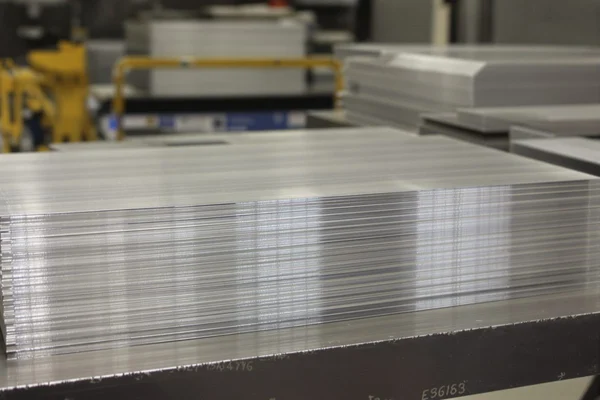
Here is the mechanic that catches buyers out. A TRQ is not one annual number — it is split into quarterly tranches, and each tranche opens on the first day of the quarter. Importers whose goods clear customs early in the quarter draw the low in-quota rate. Once that quarter’s volume is exhausted, everything else waits until the next quarter opens or pays the penalty rate immediately.
In tight categories under the existing EU steel measure, some quarterly quotas have been exhausted within days of opening. When that happens, the cost of a shipment depends less on the price you negotiated and more on the hour your customs entry was lodged. That is not a variable most steel purchasing teams have ever had to manage.
Carry-over softens the edges, but only partly. Under Regulation (EU) 2026/1384, unused volume in a quarter rolls into the next quarter during the first year (July 2026 to June 2027). After that, whether carry-over continues is decided category by category through an implementing act, weighted toward categories where quota utilisation runs above 80%. In other words, the more sought-after a category is, the less carry-over cushion it gets.
A rough worked example shows the size of the effect. Say the out-of-quota rate lands at the 50% class used in the wider steel measure, and your landed price for a container of coil is €40,000. Inside the quota, you pay the normal applied rate — call it a few percent. Outside it, that same container carries roughly €20,000 in additional duty. The negotiated mill price barely moved; the customs-entry date moved everything.
That is why buyers who have lived only with anti-dumping duties tend to under-plan for a safeguard. An anti-dumping minimum import price rarely swings a shipment by 50% of its value overnight. A missed quota tranche can.
For a buyer, the practical consequences are:
- Order timing becomes a cost lever. Splitting an annual requirement into four quarterly shipments, each lodged early in its quarter, can be worth more than a small price concession.
- Spot buying gets riskier. If you need material mid-quarter and the tranche is gone, your options are the penalty rate or a wait you may not have.
- Long lead times and quota calendars interact badly. GOES already ships on long lead times; if the production slot and the quota window don’t line up, you can be on time for one and late for the other.
The Reference-Period Trap for Buyers Who Diversified
This is the part least covered in the trade-press write-ups, and the part most likely to surprise a buyer who did everything the market told them to do.
Safeguard quotas are usually divided into country-specific shares plus a shared residual pool. Under the EU’s 2026 steel measure, a country gets its own dedicated share only if it held at least a 5% average share of EU imports in that category over the 2022–2024 reference period. Countries below that line compete for the residual pool — and the residual pool is typically the first thing to run out each quarter.
Now overlay the last three years of sourcing advice. Through the shortage, buyers were told — including by us — to qualify second and third suppliers, to spread origin risk, to not depend on a single mill. Many did exactly that in 2024 and 2025, moving volume to newer suppliers and newer countries.
Under a 2022–2024 reference period, that recently added origin may have close to zero import history. It won’t clear the 5% threshold, so it won’t get a country-specific share. Your diversified supply base lands in the residual pool — the crowded, first-to-exhaust bucket — precisely because the diversification is recent. The buyer who never moved and stayed with a large traditional-flow origin is, perversely, better positioned on quota access.
Picture two buyers with identical 2026 requirements. Buyer A stayed with one long-standing European or FTA-partner mill throughout the shortage. Buyer B, following standard risk advice, split the same volume across three suppliers in 2024 and 2025, including one in a country that barely exported GOES to the EU before 2024.
If a quota takes the shape of the wider steel measure, Buyer A’s origin likely holds a country-specific share; Buyer B’s newest origin competes in the residual pool and may be paying the out-of-quota rate by mid-quarter. Same product, same price negotiation, very different landed cost — driven entirely by import history.
The melt-and-pour rule tightens this further. From 1 October 2026, the origin that counts is where the steel was cast, not where it was slit, annealed or laser-scribed.
If part of your diversification strategy involved buying material processed in a country different from where the coil was melted, the quota system will look through that to the melting country. Our import customs guide covers the documentation side of proving origin.
None of this is a reason to re-concentrate your supply base. It is a reason to know, per supplier, which melting country your material actually originates in and whether that country is likely to hold a country-specific quota.
Laminations and Cores Draw on the Same Quota Pool
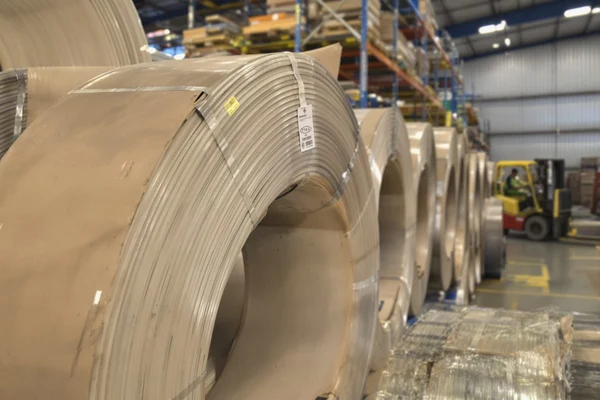
The GOES investigation explicitly reaches downstream to laminations and cores. That is deliberate: if a quota covered only coil, importers could bring in cut-and-stacked cores instead and bypass it. Including the processed forms closes that door.
The side effect matters for planning. If coil, laminations and cores sit in one product scope with one quota, then a transformer OEM importing finished cores and a service centre importing raw coil are drawing down the same ceiling. Their orders compete for the same quarterly tranche even though they are different businesses buying different things.
This is a different design choice from the US approach. The US Section 232 rules tax coil and finished laminations at different rates based on customs classification and value — the question there is “which tariff line and how much of the invoice is taxable.” Under an EU quota, the question is “how much of the shared ceiling is left this quarter.” One is a classification problem; the other is a capacity-allocation problem.
Buyers who import both coil and processed forms should map their total EU-bound volume across all three categories, not treat them as separate supply lines. Whether you buy Standard CRGO coil or finished cores, the quota draw is the same pool.
EU vs. India vs. US: One Product, Three Instruments
Three major markets are running trade actions on grain-oriented steel at the same time, using three different tools. A buyer sourcing globally has to track all three because they don’t work the same way.
| EU | India | US | |
|---|---|---|---|
| Instrument | Safeguard investigation (opened 27 Mar 2026); existing anti-dumping MIP | Anti-dumping investigation on GOES | Section 232 tariffs, restructured April 2026 |
| Applies to | All origins (safeguard); 5 named countries (AD) | Named countries under investigation | All origins, tiered by product form |
| Typical form | Tariff-rate quota expected; MIP for AD | Per-tonne or ad valorem duty | 25% / 50% ad valorem on full customs value; 15% transitional for some grid equipment |
| Downstream scope | Laminations and cores explicitly included | Coil-focused | Coil and finished laminations at different rates |
| Key date | Determination due ~Dec 2026 / Feb 2027 | Preliminary ruling expected late 2026 | Rules in force since April 2026 |
| What buyers plan around | Quarterly quota access | Duty rate on named origins | Customs classification and value basis |
The through-line: the same underlying scarcity is driving protectionist responses in every major consuming region, but each region’s mechanism demands a different piece of buyer homework. In the EU that homework is quota-calendar planning and origin verification.
What to Put in Your Contracts Before Q4
If you have EU-bound GOES, lamination or core volume for the next 12–18 months, a few provisions are worth adding before the safeguard determination lands.
- A trade-measure change clause. Spell out how any new safeguard duty or quota-related cost is shared between buyer and seller, and at what date it takes effect. “Price includes all duties” is not a workable term when the duty doesn’t exist yet.
- Quota-aware delivery scheduling. Where lead time allows, structure shipments to arrive early in a calendar quarter rather than bunched at quarter-end, and give your customs broker the flexibility to lodge entries on that timing.
- Melt-and-pour documentation as a delivery requirement. Require mill certificates that state the melting country for every heat, from 1 October 2026 onward. Make missing or unclear origin documents a rejection reason, not a paperwork footnote.
- Separate coil and processed-form lines. Track EU-bound coil, laminations and cores as distinct quantities against one shared quota assumption, so you can see your total exposure to a single ceiling.
- A named watch list of dates. Provisional-measure decision, final determination (~December 2026), the January 2027 anti-dumping expiry review, and the mid-2028 melt-and-pour allocation review. Assign someone to each.
For the supplier side of that documentation trail, our supplier verification steps produce the mill certificates and audit records a customs broker will ask for.
If efficiency-driven grade upgrades are also on your roadmap, factor quota exposure into the comparison when weighing Hi-B and laser-scribed grades against conventional material — the processing premium and the quota draw are separate line items.
Limitations of This Analysis
This article is written from public Commission and WTO documents as of early September 2026. A safeguard investigation can end without measures, with a quota, with a tariff-rate quota, or with measures narrower than the investigation scope. The quota volumes, country allocations and rates for GOES — if any are adopted — are not yet published, and the figures cited from Regulation (EU) 2026/1384 describe the separate economy-wide steel measure, used here only as a design reference.
Nothing here is legal or customs advice. Product classification, origin determination and duty calculation for a specific shipment should be confirmed with a licensed customs broker or trade counsel in the destination country. Trade-measure scope and timelines change during an investigation; verify the current position before making a sourcing commitment.
FAQ
What did the EU launch on 27 March 2026?
A safeguard investigation into imports of grain-oriented electrical steel, and into the steel laminations and cores made from it, under CN codes 7225 11 00, 7226 11 00 and 8504 90 13. It is a separate action from the EU’s existing anti-dumping measures on GOES and from the economy-wide steel safeguard.
How is a safeguard different from an anti-dumping duty?
Anti-dumping duties target specific countries found to be dumping and are usually a per-tonne or percentage cost. A safeguard responds to a surge in imports from all origins and is usually applied as a tariff-rate quota — a volume ceiling with a normal rate below it and a penalty rate above it. You plan around a calendar, not just a cost.
Are laminations and cores really included?
Yes. The investigation scope names steel laminations and cores obtained by further processing GOES for power transformers. If a quota results, coil and processed forms would likely draw on the same ceiling.
When could measures take effect?
A safeguard investigation must conclude within nine months of initiation, extendable by two months — so a final determination is due around December 2026, and February 2027 at the latest. Provisional measures can be adopted earlier if the case warrants.
Does the EU already have duties on grain-oriented steel?
Yes. Anti-dumping measures on GOES from China, Japan, South Korea, Russia and the US have been in place since 2015 and were extended in January 2022. They take the form of a minimum import price, and because market prices have been above that floor, they currently collect little duty. They are due for an expiry review around January 2027.
I recently added a new supplier to spread risk. Does that help or hurt under a quota?
It can hurt quota access in the short term. Country-specific quota shares under the EU’s 2026 steel measure are based on 2022–2024 import history and a 5% share threshold. A supplier or origin you added in 2024–2025 may have too little history to get a dedicated share, leaving that volume in the crowded residual pool. Knowing each supplier’s melting country is the first step to assessing this.
Can Chinese mills still supply GOES to Europe?
As of early September 2026 the investigation is open and no safeguard measures are in force. Trade continues under the existing anti-dumping minimum-import-price regime. A safeguard quota, if adopted, would set volume terms rather than block imports outright, and its structure won’t be known until the determination.
Bottom Line
The EU’s GOES safeguard investigation is not “another tariff.” If it produces a quota, the work it creates for buyers is scheduling work: mapping EU-bound volume across coil, laminations and cores against one quarterly ceiling, timing shipments to the start of each tranche, and verifying the melting country behind every supplier so you know which quota pool your material falls into.
The buyers who came to us in August wanted a fixed all-in number for Q4. The honest answer was that the number depends on a quota that doesn’t exist yet — but the planning doesn’t have to wait for it. Build the watch list, add the contract clauses, and get origin documentation in order now, so that whatever the Commission decides in December is an adjustment rather than a scramble.
References
- European Commission — Commission initiates safeguard investigation into imports of grain-oriented electrical steel
- EUR-Lex — Notice of initiation of a safeguard investigation concerning imports of grain-oriented electrical steel (C/2026/1848)
- WTO — EU launches safeguard investigation on grain-oriented electrical steel
- Council of the EU — Steel overcapacity: Council greenlights new rules to protect the EU steel market from global overcapacity
- Crowell & Moring LLP — EU Steel Overcapacity Regulation 2026/1384: 50% Out-of-Quota Duty, Melt and Pour Rules & What Importers Must Do Now
- European Commission — Commission extends anti-dumping duties on grain-oriented flat rolled products of silicon-electrical steel (GOES)
- EUROMETAL — EU launches safeguard investigation into imports of grain-oriented electrical steel