
Gulf-region utilities and industrial developers have been adding grid and captive-power capacity faster than their local core manufacturing base can absorb, which means more of that lamination stamping gets done by transformer makers importing coil rather than buying finished cores locally. That shift is what brought this particular buyer to us: a distribution transformer core manufacturer scaling up a Gulf-facing production line who needed coil pre-slit to their tooling widths rather than a single generic size.
This profile walks through how that order actually moved — from which mill the raw coil came from, through in-house slitting across five widths, to the export packaging built for a longer, hotter port transit than a shorter regional route would need.
Multi-width orders like this one have become more common on our order book generally, not just for Gulf-region buyers. As transformer manufacturers expand into new markets or add core designs, ordering coil pre-slit to each design’s width is increasingly the default rather than an exception request — it shifts a specialized process to whichever supplier already runs it at scale, rather than each buyer standing up their own slitting capability.
Core Key Points
- 38 tons of standard CRGO electrical steel coil, custom-slit to the customer’s coil width, ordered by a distribution transformer core manufacturer serving Gulf-region utility and industrial projects.
- Core loss specified at ≤1.30 W/kg at 1.7T/50Hz (M130-27S5 class), with B8 ≥ 1.85T — a conventional grade chosen for cost efficiency on standard-duty distribution cores rather than a Hi-B upgrade.
- Raw coil sourced from a first-tier domestic mill and slit in-house to five custom widths ranging from 142mm to 210mm, eliminating a separate subcontracted slitting step.
- Full mill test certificate plus independent third-party inspection report bundled before shipment, per the buyer’s import compliance requirement.
- Export packaging built for Gulf transit conditions: moisture-barrier wrap, edge protection, and a 40ft container loaded to axle-safe weight distribution.
Customer Requirements
A distribution transformer manufacturer supplying utility and industrial projects across the Gulf region approached us needing a mid-size order of CRGO electrical steel coil split across several widths — not a single standard size. Their factory stamps laminations for three different core designs from the same standard CRGO grade, and ordering pre-slit widths directly saves them a manufacturing step and a second vendor relationship.
| Specification | Customer Requirement |
|---|---|
| Product Type | Standard CRGO electrical steel coil (M130-27S5 class) |
| Order Quantity | 38 tons |
| Core Loss | ≤1.30 W/kg at 1.7T/50Hz |
| Magnetic Induction (B8) | ≥1.85T |
| Thickness | 0.27mm |
| Coil Widths | 142mm / 165mm / 180mm / 195mm / 210mm (5 widths, split across order) |
| Coating | C5 insulation coating |
| Coil Weight | 2.5–4 tons per coil, sized for the buyer’s mandrel |
| Inner Diameter | 508mm |
| Documentation | EN 10204 3.1 mill test certificate + independent inspection report |
| Delivery Terms | FOB Shanghai, 40ft container |
| Lead Time | 30 days from deposit to vessel loading |
The detail buyers in this position most often underestimate isn’t the core loss number — it’s the width tolerance across five separate slit widths in one order. A slitting line that holds tight tolerance on a single width doesn’t automatically hold it across five knife-gap resets in the same production run, and a supplier who can’t show width-consistency data per width is asking you to take that on faith.
Why Five Widths, Not One
The buyer’s factory runs three core designs off the same grade of steel, and each design uses a different lamination width. Buying a single wide master coil and slitting to width themselves would mean adding a slitting line to their own factory — capital and floor space they’d rather not commit to a process a supplier can already run at scale.
| Coil Width | Core Design | Typical Application |
|---|---|---|
| 142mm | Small distribution core | Pad-mount and pole-mount distribution transformers |
| 165mm / 180mm | Mid-size distribution core | Substation distribution transformers |
| 195mm / 210mm | Larger distribution core | Industrial and commercial distribution transformers |
Splitting the order this way means every coil that leaves our facility is already sized to a specific stamping die on their end — no secondary slitting step, and no scrap generated trimming a generic width down to size.
Sourcing and Production
We don’t produce raw electrical steel from scratch — no single processor in this segment does. What we control, and what actually determines whether an order like this ships on spec, is which mill the raw coil comes from and how tightly we manage everything downstream of that delivery.
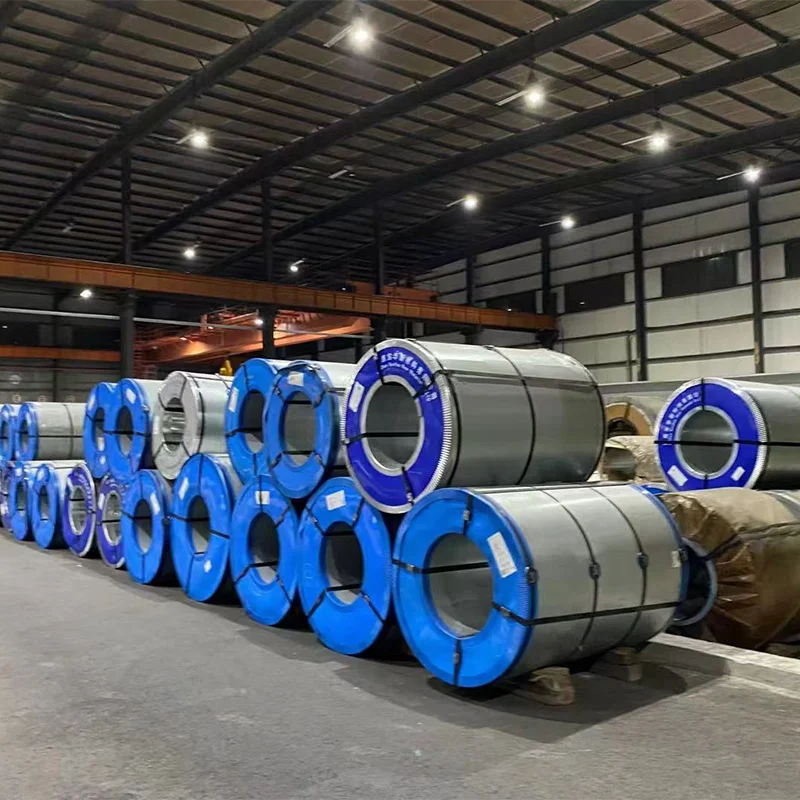
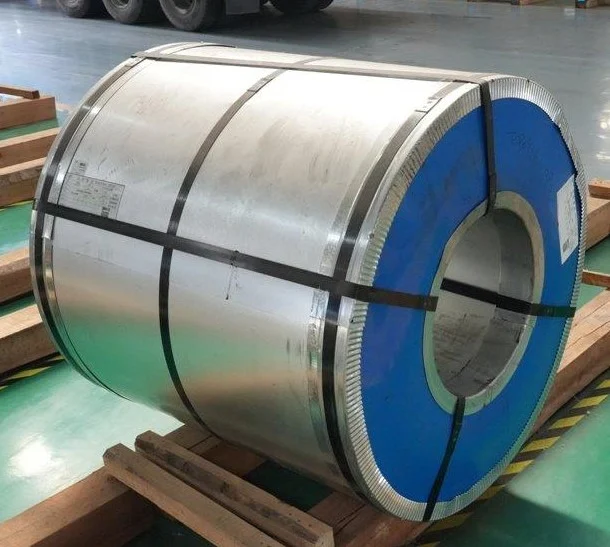
For this order, raw wide coil arrived from a first-tier domestic producer — the same class of mill supplying the grid-scale power transformer market, not a smaller regional rolling operation. Each incoming coil is logged against its own mill test certificate before it enters our slitting queue, which matters more on a multi-width order than a single-width one: a mis-tagged parent coil at this stage would carry its error into all five downstream widths.
Precision slitting happens on our own lines, not through a subcontracted slitter. That distinction is the same one we walked through in Texas slitting case study — keeping the slitting step in-house means width changeovers are scheduled on our production calendar, not queued behind a third party’s unrelated backlog.
Running five widths through one order means five knife-gap resets on the slitting line, and each reset is a point where width can drift if the line isn’t recalibrated correctly. We measure and log actual width against nominal for every coil, not a sample per batch — the customer’s transformer stamping tooling is set to each nominal width, and a coil running even a few tenths of a millimeter wide will bind or wrinkle going through the die.
Buyers sourcing standard CRGO for the first time sometimes assume “standard grade” means less production discipline than a Hi-B order. It doesn’t — the tolerance stack-up risk on a multi-width standard order is arguably higher than on a single-width Hi-B run, simply because there are more changeovers where something can go wrong.
Mill Selection and Traceability
Not every domestic rolling operation runs the same process discipline, and the gap shows up most on orders like this one where five widths are pulled from what should be the same parent coil chemistry. We source raw wide coil only from mills that provide a full mill test certificate per heat number, which lets us trace every slit width in this order back to a specific production heat rather than a generic “this grade, this month” batch average.
That traceability matters more once a coil has been slit five ways: if a width-tolerance or core-loss question comes up on one slit width months after delivery, we can trace it back to its parent coil and heat number rather than guessing which production run it came from.
Production Timeline
The 30-day lead time from deposit to vessel loading breaks down into four stages, each with its own bottleneck risk:
| Stage | Duration | What Can Slip |
|---|---|---|
| Raw coil procurement | 8–10 days | Mill backlog on the specific chemistry/thickness combination |
| Precision slitting (5 widths) | 6–8 days | Knife-gap changeover time between widths |
| Testing and documentation | 4–5 days | Per-width Epstein testing plus third-party inspection scheduling |
| Packaging and container loading | 3–4 days | Container availability at the departure port |
Running five widths adds real time to the slitting stage compared with a single-width order of the same tonnage — each changeover requires recalibrating and re-verifying the knife gap before production resumes, and we build that into the schedule up front rather than discovering it mid-run.
Quality Inspection
Every coil in this order went through full testing before packaging — not sample-based release, since a multi-width order gives us five separate populations to verify rather than one.
| Test | Standard | What It Confirms |
|---|---|---|
| Specific core loss | IEC 60404-2 (Epstein frame) | Actual W/kg against the 1.30 ceiling |
| Magnetic induction (B8) | IEC 60404-2 | Directional magnetic performance |
| Width and thickness | Laser gauge, per coil | Tolerance against each of the 5 nominal widths |
| Coating thickness and insulation resistance | ASTM A717 | Interlaminar insulation integrity |
| Surface quality | Visual + automated scan | Scratches, burrs, coating defects |
Our Epstein frame testing runs against every coil in the order, cross-checked against the mill’s own certificate rather than substituted for it.
The buyer also requested an independent verification pass, which is standard practice on Gulf-region imports where customs and end-user documentation requirements tend to be stricter than the mill certificate alone satisfies — we cover why that extra step matters in our SGS, BV, TÜV comparison.
Width data got logged separately by nominal size rather than averaged across the whole order — a 142mm coil running slightly wide and a 210mm coil running slightly narrow could average out to “on spec” in an aggregate report while both individually miss tolerance. That’s the failure mode a multi-width order needs to catch that a single-width order doesn’t.
Testing runs under our ISO 9001-certified quality system, in a CNAS-accredited lab, which is what the buyer’s own import compliance checklist required before releasing final payment. Where a buyer’s end customer also requires it, we can attach IATF 16949 process documentation and RoHS/REACH compliance data alongside the core test results — none of which substitutes for the Epstein frame and inspection data above, but all of which tends to be requested by the same import compliance teams that ask for it.
For orders headed to markets with stricter customs documentation review, having that accreditation already on file — rather than sourced after the fact — is what keeps the paperwork stage from becoming the delivery bottleneck.
Packaging and Export
CRGO headed to Gulf-region ports faces a packaging problem most buyers in temperate climates don’t think about: extended dwell time in high-heat, high-humidity port conditions before final inland transport, which is harder on moisture-barrier wrap than a direct sea-to-rail route.
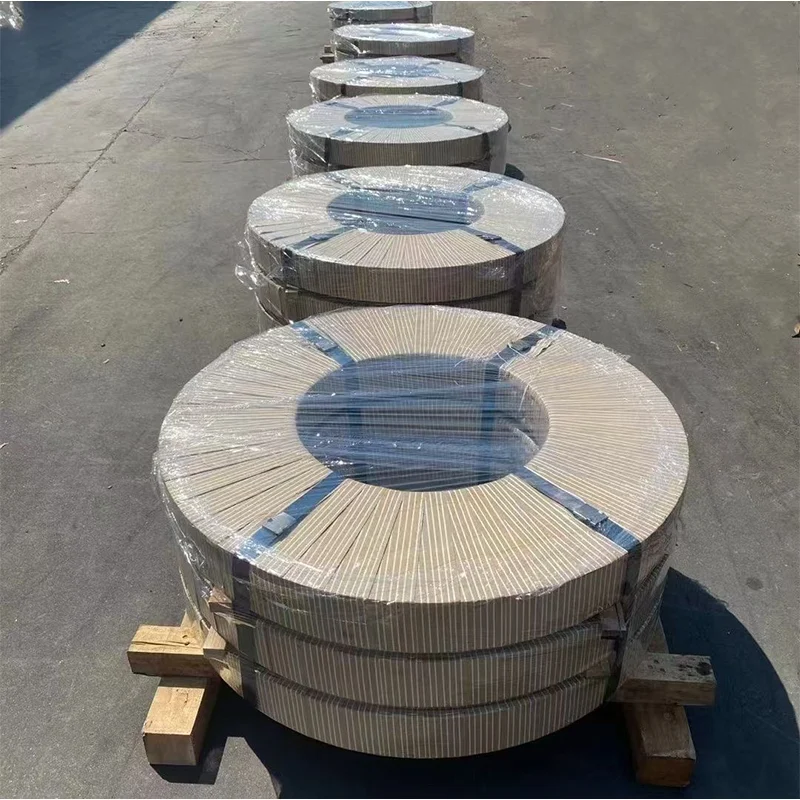
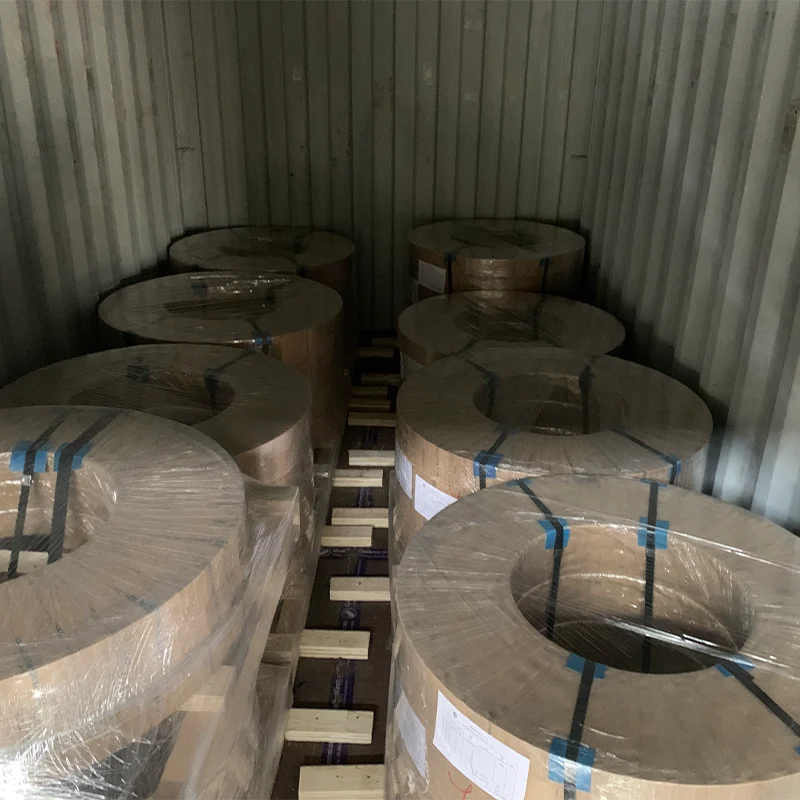
Each coil got wrapped in moisture-barrier paper under an outer plastic layer, with edge protectors at the coil face to prevent crushing from stacking pressure. Coils were then blocked and braced with wooden dunnage inside the container — visible in the loading photo above — so nothing shifts during the sea leg or the truck transfer at the destination port.
We sized this order for a single 40ft container rather than splitting across two, keeping weight distribution within axle limits for the inland trucking leg at the receiving end. Buyers importing into ports with stricter weight enforcement have told us this detail saves a customs delay that has nothing to do with the steel itself.
Loading sequence mattered too, given the five different coil widths and weights in this shipment. Heavier, wider coils went in first and low in the container to keep the center of gravity stable, with lighter narrow-width coils stacked and braced above — the same logic behind the dunnage bracing pattern visible in the loading photo, adapted for a mixed-width load rather than a uniform one.
Documentation traveled with the shipment rather than following separately by email: the EN 10204 3.1 mill certificate, the independent inspection report, and per-width test data, bundled so the buyer’s own import broker had everything needed at the border without a follow-up request. For a Gulf-region destination specifically, that bundling matters more than it would on a shorter route — a missing document discovered after the vessel departs can add weeks to customs clearance rather than days.
Why Buyers Choose Zhongxin
Multi-width orders without a second vendor. In-house slitting means a five-width order runs through one supplier relationship and one quality chain, not a mill for the coil and a separate slitter for width — and one fewer handoff where a spec detail can get lost between vendors.
Per-coil, per-width testing. Every coil is tested against its own nominal width, not folded into an order-wide average that can hide an out-of-tolerance outlier. For a buyer running three different core designs off one order, that’s the difference between catching a problem before it ships and finding out about it on the factory floor.
Documentation matched to destination requirements. We’ve shipped enough Gulf-region orders to know which documentation gaps cause customs delays before they happen, not after — the independent inspection report on this order was scheduled proactively, not requested reactively once the buyer’s broker flagged a gap.
Export packaging built for the actual transit route. Moisture-barrier wrap and bracing are specified for the humidity and dwell-time conditions of the destination port, not a generic export default that assumes a short, cool sea leg.
If you’re new to sourcing standard CRGO and want the fuller context on what to check before committing to a mill you haven’t bought from, our supplier verification process walks through the qualification steps we’d recommend running on any new relationship, including ours.
FAQ
Why order standard CRGO instead of Hi-B for a distribution transformer core?
Distribution transformers generally run at lower flux density and duty cycle than power transformers, so the tighter loss ceiling of Hi-B grade doesn’t translate into a proportional efficiency gain at that duty level. Standard CRGO at M130-27S5 class meets the core loss requirement at a lower per-ton cost, which is why it remains the default choice for this application unless a specific efficiency mandate says otherwise.
Can a single order really be split across five coil widths without a quality tradeoff?
Yes, provided each width is tested and logged separately rather than averaged across the order — that’s the practice that catches a single width drifting out of tolerance while the rest of the order looks compliant. It does add production time versus a single-width run, since each width change is a slitting-line reset.
What documentation should ship with a CRGO order bound for the Middle East?
At minimum, an EN 10204 3.1 mill test certificate. Many Gulf-region buyers additionally require an independent third-party inspection report, since customs and end-user compliance checks in the region tend to look for verification beyond the mill’s own paperwork.
How is CRGO packaged differently for a Gulf-region shipment versus a shorter route?
The core difference is dwell-time tolerance: packaging for a route with a longer or hotter port transfer window uses heavier moisture-barrier wrap and more conservative edge protection, since the coil sits in transit and port storage longer than it would on a direct regional route.
Does ordering five coil widths in one shipment cost more than a single-width order of the same tonnage?
It typically carries a modest premium over a single-width order, since each width change means a slitting-line reset and its own testing pass. Most buyers running multiple core designs still find it cheaper than adding a slitting line in-house or managing two separate vendor relationships for coil and width conversion.
Why source pre-slit coil widths instead of a single master width plus in-house slitting?
Adding a slitting line means capital investment, floor space, and a new quality-control discipline a transformer manufacturer may not want to take on for what is, for most buyers, a secondary process relative to their core business of winding and assembling transformers. Sourcing pre-slit widths shifts that specialized step — and its tolerance risk — to a supplier already running it at scale.
Lessons for Buyers Sourcing Multi-Width Orders
A few things about this order generalize to any buyer weighing a pre-slit, multi-width purchase over single-width sourcing or in-house slitting.
Ask for per-width data, not order-wide averages. A supplier who can only report one core-loss and width figure for the whole shipment can’t show you whether any single width in the order is drifting — request the breakdown by nominal width before you accept a test report as complete.
Confirm slitting happens in-house, not through a subcontractor. A subcontracted slitting step adds a handoff where specification details, and accountability if something goes wrong, can get lost between the coil supplier and the slitter.
Match documentation to the destination, not a generic export template. What clears customs smoothly on a short regional route can be insufficient for a longer, more heavily scrutinized import lane — confirm with your supplier what the specific destination has required on past shipments, not just what they normally include by default.
Size packaging for the actual transit conditions. Dwell time, humidity, and handling at the destination port should drive the packaging spec, not the packaging the supplier uses for their most common shipping lane.
Bottom Line
A 38-ton CRGO electrical steel order split across five coil widths is a small order by tonnage but not by production complexity — five slitting-line resets, five width populations to test, and export packaging built for a specific port’s transit conditions rather than a generic default. Sourcing the right grade is only the first decision; the multi-width handling and destination-matched documentation are what actually determined whether this order cleared customs on schedule.
For a Gulf-region buyer weighing whether to source pre-slit widths or take on slitting in-house, the calculus in this order was straightforward: one supplier relationship, one quality chain, and documentation built for the destination port from the start — rather than assembling that capability internally for a process that isn’t their core business.


