
Core Key Points
- A representative distribution-transformer order specifies standard CRGO, core loss 0.90-1.10 W/kg, magnetic induction 1.78-1.88T, thickness 0.27-0.35mm. The cost-efficient tier of CRGO — right for grid infrastructure builds where absolute lowest loss matters less than on a power transformer.
- Port congestion across Africa’s major gateways varies sharply. Mombasa averaged ~5.33 days of vessel waiting time as of June 2026. Durban ~2.0 days. Lagos a median of 1.17 days. Treat the whole continent as one congestion profile and you’ll get the packaging call wrong.
- Lagos specifically shows why vessel wait time alone is misleading — low vessel congestion, but road and gate bottlenecks at Apapa still prolong actual cargo dwell time once containers reach land.
- ISPM 15 wood packaging compliance applies across virtually every African import market. Some ports go further and require pre-shipment inspection certification before cargo is even cleared to load.
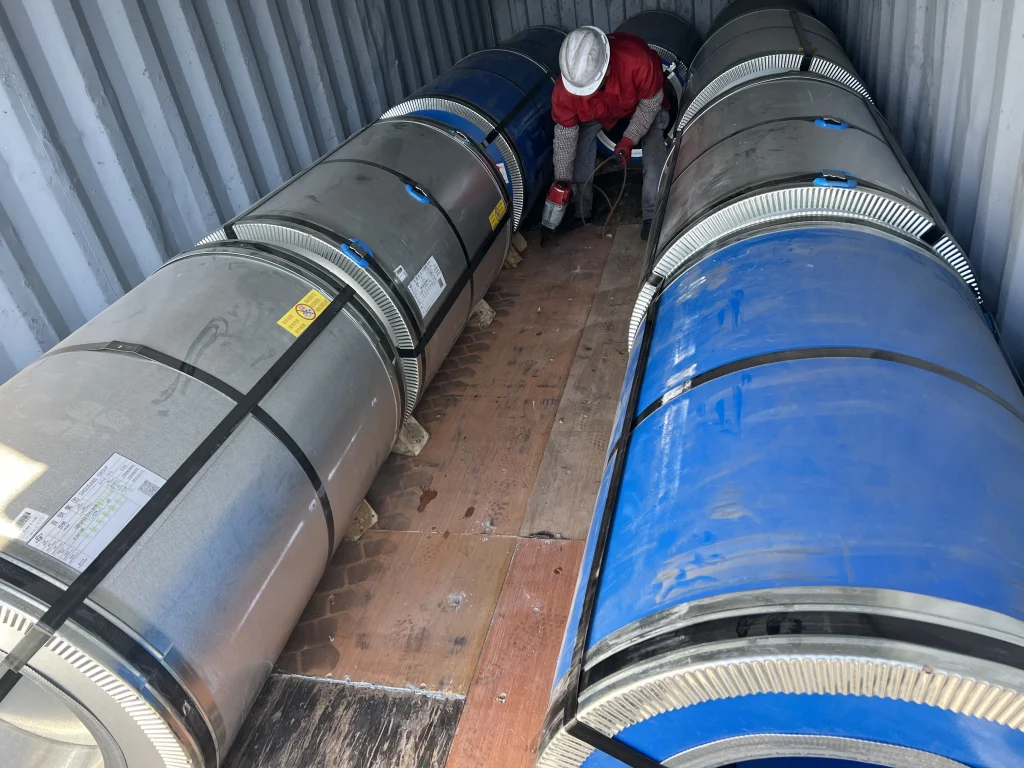
- A 35-tonne order typically ships as 5-7 coils. Reinforced strapping and doubled corrosion protection are the baseline for routes with uncertain total dwell time — Mombasa-bound cargo especially.
Order Profile: Standard CRGO for Distribution Transformers
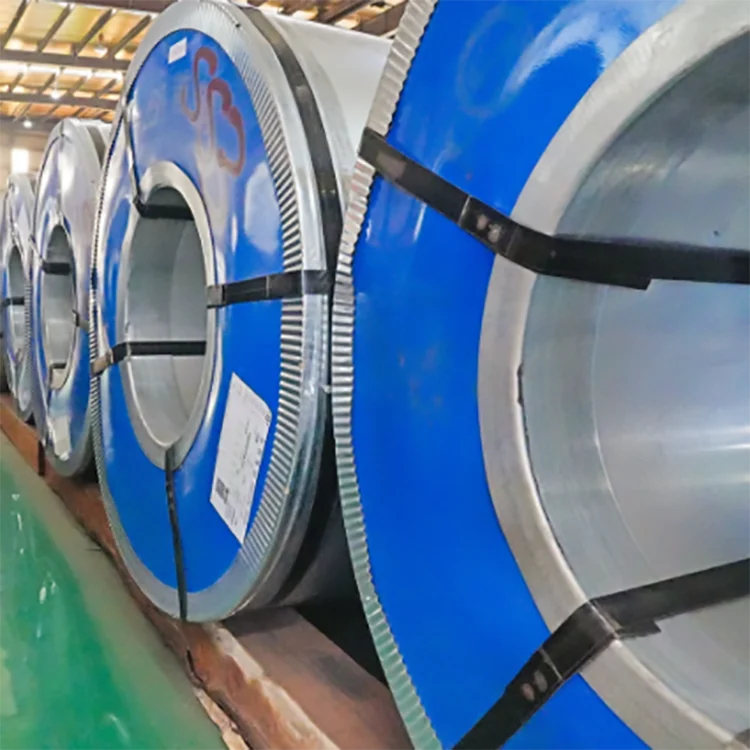
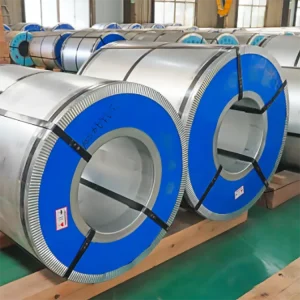
Grid infrastructure buildout across African markets tends to specify standard CRGO rather than Hi-B. Makes sense once you break down why: distribution transformers don’t carry the same continuous, decades-long duty cycle that makes Hi-B’s cost premium worth paying on a large power transformer. Standard-grade material still gets the directional loss benefit CRGO is built for, just at a lower per-tonne cost. A representative 35-tonne order looks like this:
- Product: CRGO Standard grade (Cold-Rolled Grain-Oriented)
- Order Size: 35 tonnes (approx. 5-7 coils)
- Core Loss: 0.90-1.10 W/kg at 1.7T/50Hz
- Magnetic Induction (B800): 1.78-1.88T
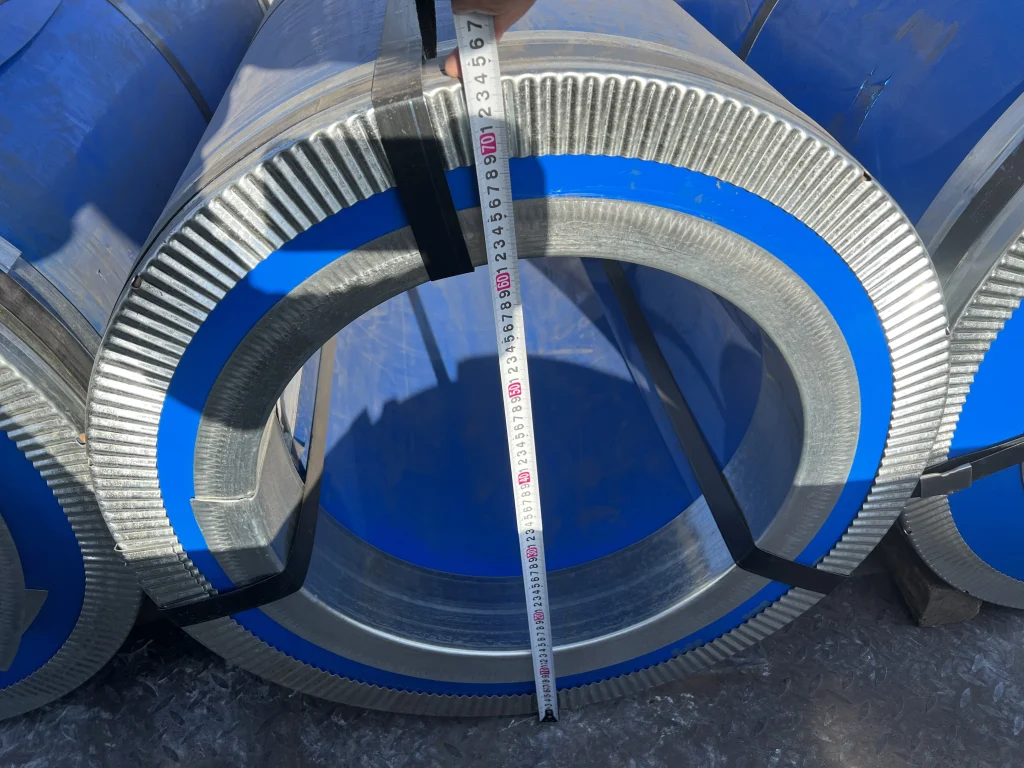
- Thickness: 0.27mm or 0.35mm
- Coating: C5 insulation coating
- Coil Weight: 5-7 tonnes
- Inner Diameter: 508mm standard
- Delivery Time: 25-35 days from confirmed PI
- Trade Term: FOB Shanghai/Ningbo standard
- Documentation: Mill Test Certificate (EN 10204 3.1 or 3.2), certificate of origin, pre-shipment inspection certificate where the destination port requires one
Here’s what we actually see go wrong on infrastructure-scale orders. It’s rarely the steel spec — buyers on these projects tend to write that carefully. It’s confirming which documentation requirement applies to their specific destination port before finalizing the shipping plan. That single gap changes both packaging and expected transit time more than people expect.
Quality Inspection
Every coil is tested on an Epstein frame per IEC 60404-2 for core loss and magnetic induction, through our CNAS-accredited lab under ISO 9001, results reported per coil on the Mill Test Certificate. Same discipline whether the order is Hi-B or standard grade — we don’t relax testing because the grade costs less. See our certificate format guide for EN 10204 3.1 vs 3.2, and our SGS/BV/TÜV comparison. Worth arranging third-party pre-shipment inspection on infrastructure-scale orders even where the port doesn’t formally require it — the transit distances and stakes involved usually justify it.
Packaging: Why the Destination Port Matters More Than the Continent
This is where “Africa” as a single planning category breaks down. As of June 2026, Mombasa’s 7-day average vessel waiting time ran around 5.33 days — persistent congestion from vessel bunching and high yard utilization, not a one-off spike. Durban sat at a comparatively steady 2.0 days. Lagos is the clearest illustration of why vessel wait time alone doesn’t tell the story: its median vessel wait is a low 1.17 days, but road and gate congestion at the Apapa terminal keeps prolonging actual cargo dwell time once containers are on land. The bottleneck moved inland. It didn’t disappear.
For a 35-tonne CRGO order, that translates into real decisions, not abstractions. Reinforced strapping and doubled corrosion protection as the baseline for Mombasa-bound cargo, or any Lagos shipment where onward trucking timing isn’t locked down. Packaging margin built for extended yard exposure, not just ocean transit. An assumption of less consistent mechanized handling than you’d plan for a European or North American port. ISPM 15 wood packaging compliance applies regardless of which port is involved, and some ports layer on pre-shipment inspection requirements — confirm this destination-by-destination with your supplier rather than assuming one blanket answer covers all of it.
Why Buyers Choose Zhongxin
- We test what we ship — Epstein frame testing per coil, CNAS-accredited lab, results on the Mill Test Certificate regardless of order size.
- Packaging specced by actual destination port, not a blanket “African route” toughness upgrade. Mombasa, Durban, and Lagos get different treatment because their real conditions differ.
- Pre-shipment inspection support (SGS, BV, TÜV) for infrastructure-scale orders where independent verification matters, given the transit distances and stakes involved.
- English-language technical support across time zones, so a question about coil dimensions or documentation doesn’t add days to an already long transit.
FAQ
What grade should I specify for a distribution transformer project?
Standard CRGO — core loss 0.90-1.10 W/kg, magnetic induction 1.78-1.88T, at 0.27mm or 0.35mm thickness — is typically the right fit, reserving Hi-B’s cost premium for power transformers with a longer, more continuous duty cycle.
Is port congestion the same across Africa?
No. As of June 2026, Mombasa averaged around 5.33 days of vessel waiting time, Durban around 2.0 days, and Lagos a median of 1.17 days. Packaging and timeline planning should be based on the specific destination port.
Why does Lagos need careful packaging planning despite low vessel wait times?
Vessel wait is low, but road and gate congestion at the Apapa terminal prolongs actual cargo dwell time once containers reach land — total transit time, not just vessel-side congestion, is the better planning metric.
What’s a typical order size for this application?
A representative distribution-transformer order runs around 35 tonnes (5-7 coils), with 25-35 days lead time from a confirmed proforma invoice, shipping FOB Shanghai or Ningbo.
If your freight forwarder quotes one standard packaging spec for “Africa” regardless of which port your order actually transits, push back and ask for the port-specific breakdown. The gap between a Mombasa route and a Durban route is real enough to matter.

