A buyer once asked us to confirm a 10-day lead time for a custom-slit CRGO order — a number they’d gotten from a general steel trading site, not from a mill actually quoting the specific job. We had to explain, politely, that custom orders don’t move at commodity-steel speed. Standard coils off the shelf can ship fast. Anything involving custom slitting, a specific grade not already in inventory, or third-party certification takes real production time, and planning around the wrong number costs a lot more than the extra week or two it actually needs.
Core Key Points
- Standard, in-stock electrical steel coils can ship in roughly 3-4 weeks; custom orders (specific grade, slitting, or certification requirements) typically run 4-6 weeks, and large-volume orders can extend further depending on mill capacity, according to industry sourcing data.
- Lower minimum order quantities can actually cut lead time by 15-20% in some cases, since smaller runs queue differently on a production schedule than full-capacity orders — MOQ and lead time aren’t independent variables.
- Custom metal stamping tooling, when your order requires it, commonly runs 8-24 weeks depending on part complexity and current shop capacity — a separate and often longer lead time than the steel itself.
- The most common planning mistake we see is buyers anchoring their production schedule to a lead time quoted for standard commodity steel, then applying it to an order that actually requires custom slitting or third-party MTC verification.
- Booking a small trial order early, even before your full production schedule is finalized, buys real flexibility — it queues your relationship with the mill and surfaces any specification issues while there’s still time to adjust the full order.
What Actually Drives Lead Time
A handful of variables determine how fast a custom electrical steel order actually ships, and they compound rather than average out:
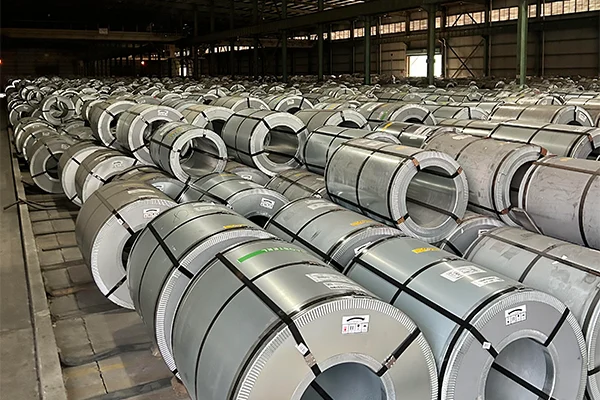
- Is the grade already in mill inventory, or does it need to be rolled to order? In-stock standard grades move fastest; anything requiring a fresh production run adds real weeks.
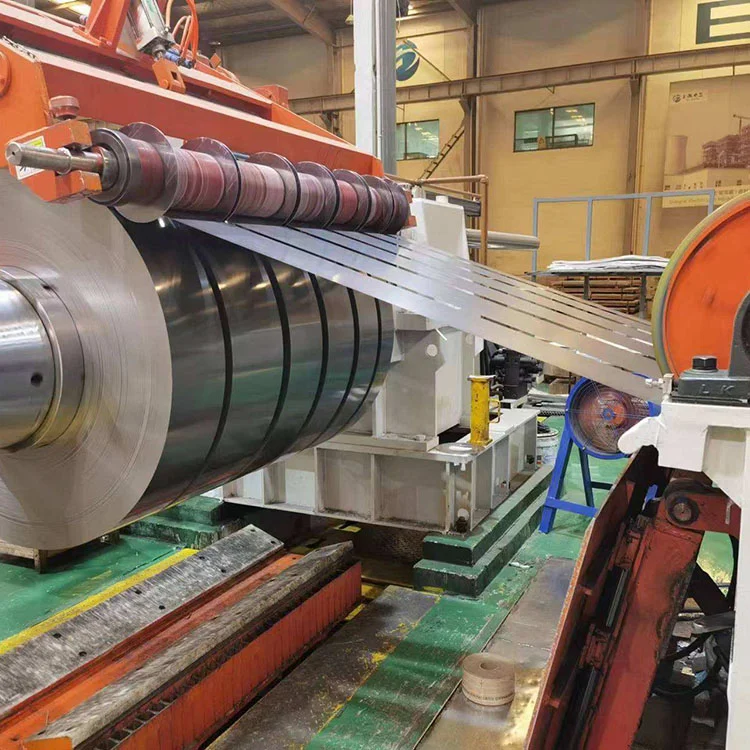
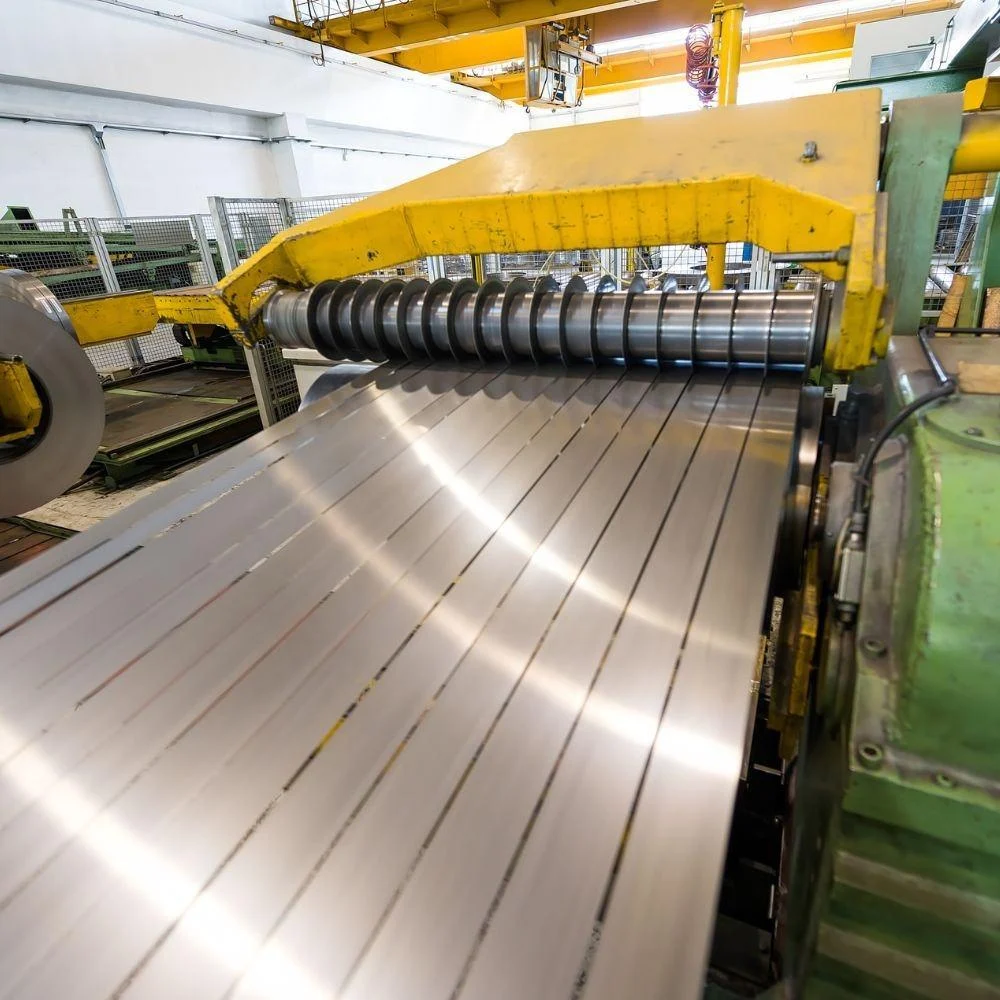
- Does the order need custom slitting to a specific width? Slitting adds a processing step after the base coil is produced, with its own queue on the production line.
- What MTC certification level is required? A 3.1 certificate from the mill’s own quality department adds minimal time. A 3.2 certificate, requiring independent third-party verification, adds real scheduling dependency on an outside inspector’s availability.
- What’s the order volume relative to current mill capacity? Larger orders queue longer, especially if they compete with other customers’ production slots at the same time.
Typical Lead Time Ranges
| Order Type | Typical Lead Time |
|---|---|
| Standard, in-stock coils | 3-4 weeks |
| Custom orders (grade, slitting, or certification) | 4-6 weeks |
| Large-volume orders | Longer, capacity-dependent |
| Custom stamping tooling (if required) | 8-24 weeks, separate from steel lead time |
Worth flagging specifically: if your project also requires custom stamping tooling, that lead time often exceeds the steel’s lead time by a wide margin, and the two run in parallel rather than one waiting for the other — plan your overall project timeline around whichever is longer, not around the steel alone.
Why MOQ Isn’t Just “the Minimum They’ll Sell You”
Minimum order quantity gets treated as a pure sales constraint, but it’s also a scheduling variable. Lower MOQs can cut lead time by roughly 15-20% in some cases, because smaller runs queue differently against a mill’s existing production schedule than large orders competing for the same capacity.
This cuts both ways for planning purposes: a smaller trial order isn’t just cheaper insurance against a specification problem — as covered in our buyer’s guide to sourcing electrical steel from China — it can also genuinely ship faster than you’d assume based on the lead time quoted for your eventual full-volume order, and it usually prices differently too, the way we break down in our CRGO pricing guide.
Planning Your Order Timeline
- Confirm whether your grade is in-stock or needs a fresh rolling run before assuming a lead time
- Separate the steel lead time from any tooling lead time — these often run on different, non-overlapping schedules
- Decide your MTC certification level early — a late decision to require 3.2 verification after the order is already queued can add real delay
- Book a trial order first if this is a new supplier relationship, both for quality verification and to get real visibility into how that specific mill’s current queue is running
- Build in buffer for large-volume orders specifically — capacity-dependent lead times are the least predictable of the variables above
FAQ
How long does a custom electrical steel order typically take?
Standard, in-stock coils can ship in roughly 3-4 weeks. Custom orders involving specific grades, slitting, or certification requirements typically run 4-6 weeks, and large-volume orders can extend further depending on mill capacity.
Does a lower MOQ actually get me faster delivery?
In some cases, yes — smaller runs can queue differently against a mill’s production schedule than large orders, cutting lead time by roughly 15-20% according to industry data. It’s not guaranteed, but it’s a real factor worth asking about.
Should I plan tooling lead time and steel lead time as one combined number?
No — treat them as separate, often parallel timelines. Custom stamping tooling commonly runs 8-24 weeks depending on complexity, frequently longer than the steel’s own lead time, and the two don’t necessarily wait on each other.
What’s the biggest lead-time planning mistake buyers make?
Anchoring their production schedule to a lead time quoted for standard commodity steel, then applying that same number to an order that actually requires custom slitting, a non-stock grade, or third-party MTC verification — each of which adds real time the standard-coil number doesn’t account for.
If you’ve got a hard production date and haven’t confirmed which of these variables apply to your specific order, that’s worth a five-minute conversation before you lock in a schedule around a lead time that might not match what you’re actually ordering.