
NON-ORIENTED ELECTRICAL STEEL FOR EV MOTOR
Service: OEM / ODM | Brand: Zhongxin Steel
The global electric vehicle (EV) market is expanding at an unprecedented rate. In 2024 alone, more than 17 million new EVs rolled off production lines worldwide, and the annual output is projected to exceed 40 million by 2030. Every electric vehicle is equipped with a core component – traction motor, and the material that determines the performance of traction motors above all else is non-oriented electrical steel (NGOES).
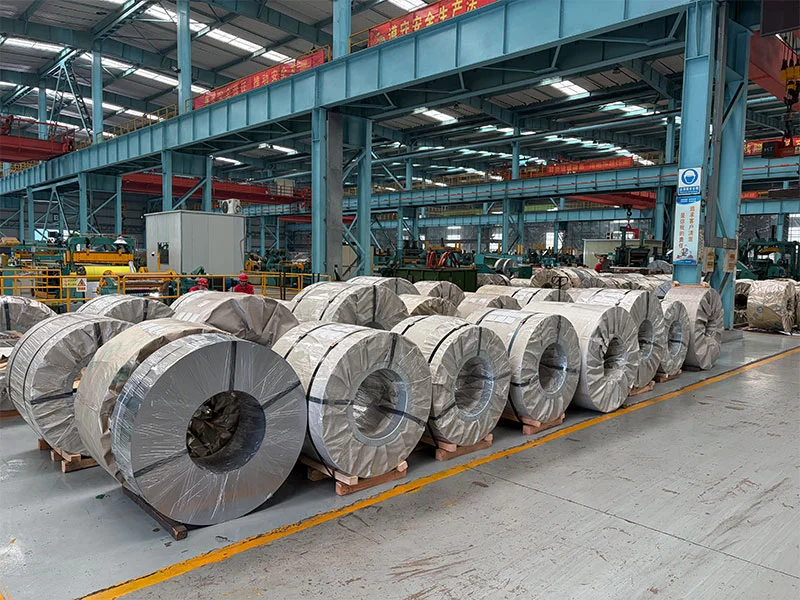
Non-oriented electrical steel is flat-rolled silicon steel with uniform magnetic properties in all directions, which makes it the only viable material for rotors and stators of EV traction motors. Zhongxin Steel develops premium NGOES grades specially optimized for EV motors, balancing low core loss, high permeability, thin gauge and excellent stamping performance to fully meet the demands of modern electric drive systems.
1. Why EV Motors Require Specialized Electrical Steel
Conventional electrical steel designed for 50/60Hz transformers cannot withstand the harsh operating conditions of EV traction motors.
EV motors operate across a wide frequency range: 200Hz for low-speed cruising and over 1,000Hz for high-speed acceleration, with rotating speeds reaching 15,000–20,000 rpm. This magnetic environment is fundamentally different from that of transformers. At high frequencies, overly thick steel triggers an exponential surge in eddy current loss, resulting in rapid core heating, reduced motor efficiency and heavier loads on cooling systems. For battery electric vehicles, energy loss directly impairs driving range and power performance, which cannot be overlooked.
NGOES addresses high-frequency loss challenges through three core advantages:
1. Outstanding high-frequency performance: EV-grade NGOES features thin gauges of 0.20–0.35mm and silicon content increased to 2.5–3.5% for higher resistivity, keeping eddy current losses under control at frequencies above 1,000Hz.
2. Isotropic magnetic properties: Unlike grain-oriented steel with unidirectional high permeability, NGOES delivers consistent magnetic conductivity across all planar directions, matching the continuously rotating magnetic flux paths inside motors.
3. Superior mechanical workability: Motor laminations are formed by high-speed stamping. Our NGOES is optimized in ductility and surface coating to produce burr-free clean cuts at over 100 strokes per minute without damaging dies or laminations.
2. Key Performance Indicators of EV-Grade NGOES
2.1 Thickness: The Most Critical Parameter
Thinner steel reduces eddy current loss and improves motor efficiency, yet thinner gauges come with higher material costs and greater stamping difficulty. The optimal thickness is determined by the maximum operating frequency of the motor:
| EV Motor Type | Operating Frequency | Recommended NGOES Thickness |
|---|---|---|
| Standard PMSM Drive Motor | 200 – 600 Hz | 0.27 – 0.35 mm |
| High-Speed Drive Motor | 600 – 1,000 Hz | 0.20 – 0.25 mm |
| Auxiliary Motor / BSG | 50 – 400 Hz | 0.30 – 0.50 mm |
Zhongxin Steel supplies full-range EV NGOES including 0.20mm, 0.25mm, 0.27mm, 0.30mm and 0.35mm, with tight thickness tolerance of ±0.01mm to guarantee stable performance of every lamination.
2.2 Core Loss: Bottleneck of Motor Efficiency
Core loss in motor cores consists of hysteresis loss and eddy current loss, both rising with frequency. EV-dedicated NGOES is formulated to minimize core loss under high-frequency conditions, tested under standard 1.0T / 50Hz and convertible to EV operating parameters.
| Grade Code | Thickness (mm) | Max Core Loss P1.0/50 (W/kg) | Typical Application |
|---|---|---|---|
| 35WW300 | 0.35 | 3.00 | Auxiliary vehicle motors |
| 35WW250 | 0.35 | 2.50 | Standard PMSM stators |
| 30WW270 | 0.30 | 2.70 | Medium & high-speed PMSM |
| 30WW230 ★ | 0.30 | 2.30 | Premium passenger vehicle traction motors (Recommended mainstream grade) |
| 25WW250 | 0.25 | 2.50 | High-speed motors above 800Hz |
| 25WW210 ★ | 0.25 | 2.10 | High-efficiency EV traction motors (Recommended mainstream grade) |
| 20WW200 | 0.20 | 2.00 | Ultra-high-speed motors above 15,000 rpm |
The two star-marked grades are the global mainstream choice for EV traction motors, offering the best balance of core loss performance, stamping productivity and overall cost.
2.3 Silicon Content and Resistivity
Higher silicon content increases steel resistivity and suppresses eddy currents effectively. Standard NGOES contains only 1.5–2.5% silicon. For motors operating above 400Hz, Zhongxin Steel recommends high-silicon grades with 2.8–3.5% Si, which deliver resistivity of 55–65 μΩ·cm – roughly 30% higher than standard grades, drastically cutting eddy current loss under high-frequency EV working conditions.
2.4 Punching & Stamping Performance
EV motor stators adopt 48-slot, 54-slot or 72-slot designs requiring precise, smooth stamped edges. Burrs, deformation or coating damage during stamping cause stress concentration, lower lamination factor and increase local eddy current loss. Zhongxin NGOES meets strict production standards:
– Smooth and uniform surface for stable insulation coating adhesion;
– Hardness controlled at 180–220 HV for clean shearing and reduced die wear;
– S2 and C2 insulation coatings available, providing stamping lubricity and inter-lamination insulation.
3. NGOES vs GOES: Why Only NGOES Works for EV Motors
This is the most frequently misunderstood point in EV motor material selection.
Grain-oriented electrical steel (GOES) is widely used in power transformers with highly directional magnetic properties. It achieves ultra-high permeability along the rolling direction, while magnetic performance drops sharply perpendicular to this direction.
The rotor of an EV traction motor rotates continuously, creating constantly changing magnetic flux with no fixed flux path. Applying GOES to such motors will only deliver good performance in one single direction and poor performance in all others, which is fundamentally incompatible with motor operation.
NGOES eliminates preferred grain orientation to deliver isotropic magnetic properties in all directions, making it the only practical material for rotating motor cores.
Exception: GOES can be applied to stator yokes of large industrial motors with relatively fixed flux paths. However, for EV traction motors requiring rotating flux, high speed and compact lightweight design, NGOES remains the sole rational choice.
4. NGOES Matching Solutions for Different EV Motor Architectures
4.1 Permanent Magnet Synchronous Motors (PMSM)
The dominant motor type for passenger vehicles. NGOES is adopted for both stators with alternating flux and rotors embedded with permanent magnets. Premium mainstream grades 30WW230 and 25WW210 with 0.25–0.30mm thickness are standard options. High stamping precision maximizes slot fill factor for copper windings.
4.2 AC Induction Motors (ACIM)
Widely used in early EV models (e.g. early Tesla Model S/X) and commercial vehicles. Rotors adopt aluminum or copper bars while stators use NGOES. Slightly thicker gauges of 0.30–0.35mm are acceptable thanks to lower flux density operation to control costs.
4.3 Switched Reluctance Motors (SRM)
An emerging EV motor solution featuring simple and robust structures without magnets or rotor windings. NGOES is only used for stators, with strict requirements on lamination flatness and low high-frequency core loss.
4.4 Heavy-Duty Commercial EV Motors (Trucks & Buses)
Larger-diameter motors with maximum operating frequency of 200–600Hz. 0.35mm grade 35WW250 can be selected for cost optimization; high-torque models prefer 0.30mm NGOES.
5. Zhongxin Steel EV-Grade NGOES Product Specifications
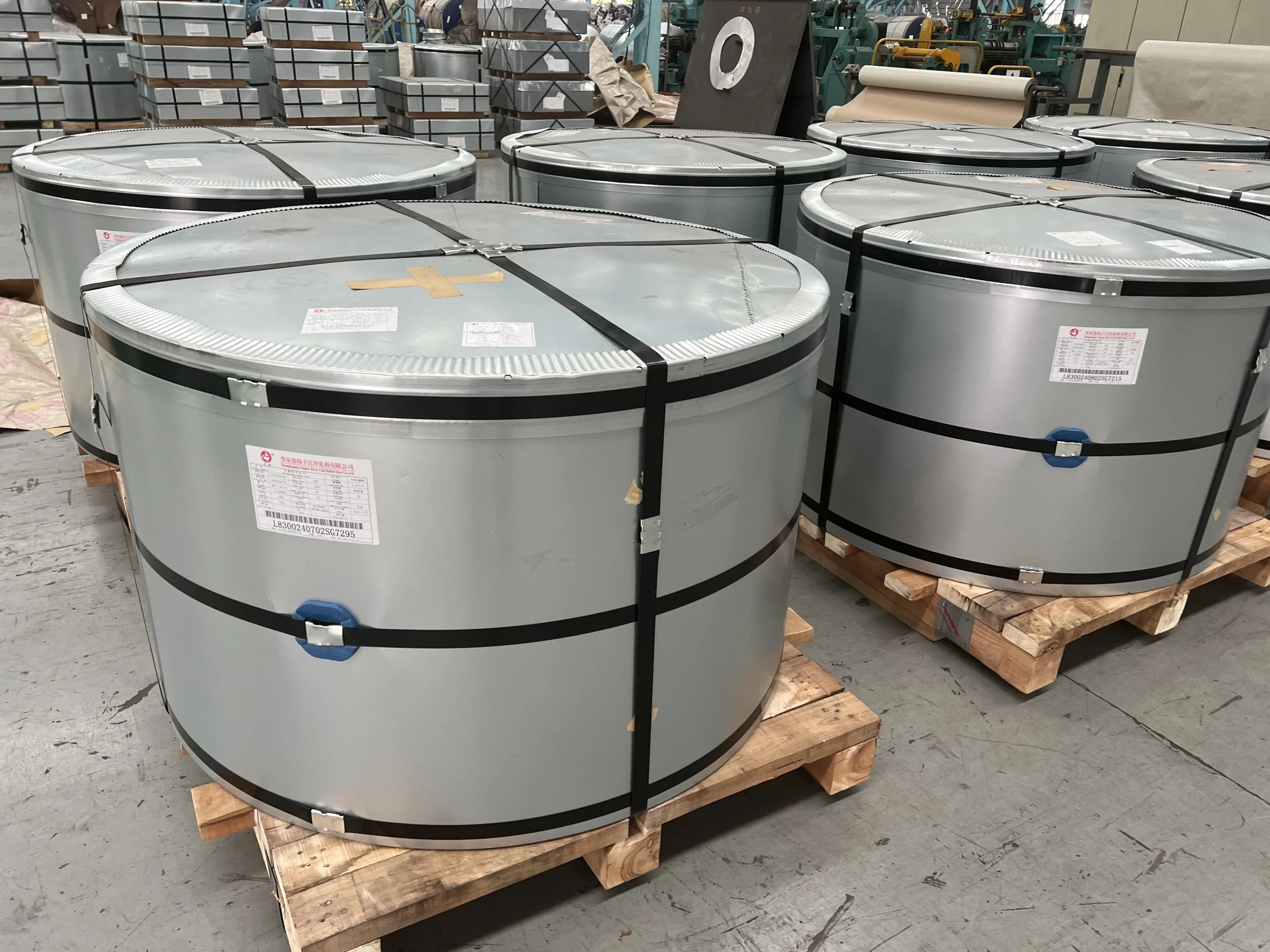
Zhongxin Steel builds dedicated production lines for thin-gauge high-silicon NGOES exclusively for EV and e-mobility industries. Standard product parameters are as follows:
| Parameter | Specification |
|---|---|
| Thickness | 0.05 / 0.08/ 0.1 / 0.15 / 0.2 mm |
| Coil Width | Base coil: 900 – 1250 mm, slittable to 20 – 500 mm narrow strips |
| Silicon Content | 1.8 – 3.5% (Standard & High-Silicon Series) |
| Core Loss P1.0/50 | 1.50 – 3.50 W/kg |
| Flux Density B50 | 1.56 – 1.70 T |
| Insulation Coating | S2 standard coating / C2 chromium-free eco coating (RoHS & REACH compliant) |
| Surface Finish | Bright surface, oil-free surface available on request |
| Applicable Standards | IEC 60404-8-4, JIS C 2552, ASTM A677M |
Custom grades are available upon request, including ultra-thin 0.15mm NGOES for aerospace e-motors and high-permeability grades for high-flux-density motor designs.
6. One-Stop Deep Processing Service for Motor Cores
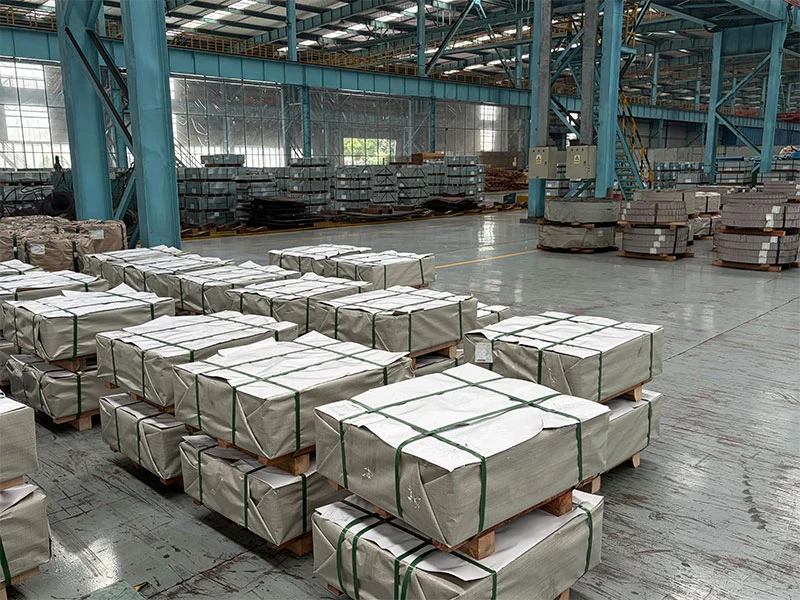
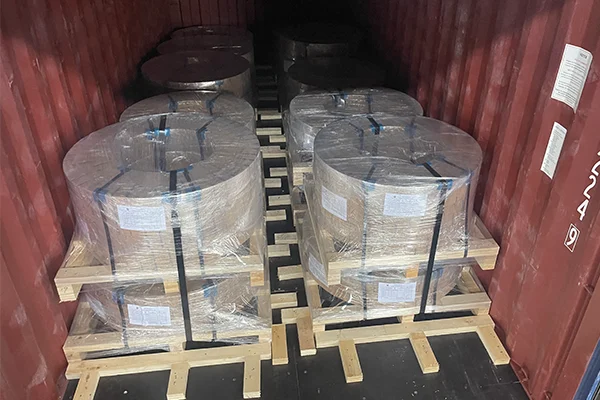
Zhongxin Steel provides complete motor core processing solutions, delivering finished lamination stacks ready for motor assembly directly from raw NGOES coils.
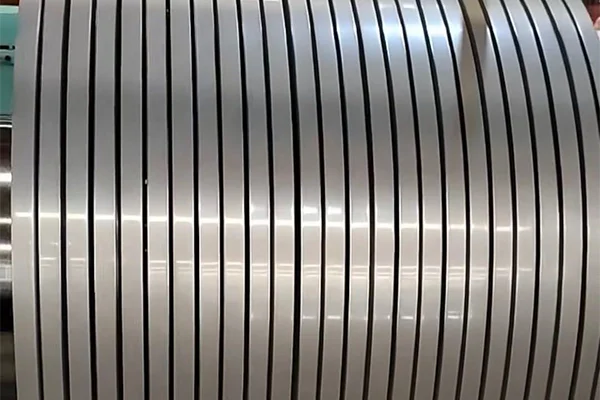
1. Precision Slitting: Narrow strips slitted to ±0.05mm tolerance with carbide cutters and tension control to ensure burr-free edges and intact coating.
2. Annealing: Stress relief annealing at 650–750℃ under nitrogen protective atmosphere to eliminate stamping stress and restore original magnetic properties, an essential process for thin-gauge laminations.
3. Lamination Stacking: Step-lap or radial-lap stacking technology, guaranteed lamination factor ≥97%, ready for press fitting into motor housings.
4. Surface Insulation Coating: S2 phosphate standard coating and C2 chromium-free eco coating, coating adhesion meets IEC 60404-8-4 standards.
5. Full Batch Inspection: Every batch is tested via Epstein frame and single-sheet tester for core loss, permeability and flux density, with full test certificates attached to each shipment.
7. Core Advantages for EV OEMs & Tier 1 Suppliers
1. Specialized thin-gauge production line: Dedicated line focusing on premium EV gauges of 0.20–0.35mm with stable ±0.01mm thickness tolerance for consistent batch performance.
2. Full coverage of high-silicon grades: Silicon content up to 3.5% for high-speed motors over 15,000 rpm operating above 800Hz to reduce eddy current loss significantly.
3. Full traceability: Each coil is marked with heat number, batch code and complete magnetic test reports. Full PPAP documents and first article inspection reports are provided to match IATF 16949 automotive quality systems.
4. Flexible minimum order quantity: 500kg minimum for prototype trial orders, 3 tons minimum for mass production.
5. Rapid sample service: A4 sample sheets and slitted trial strips delivered within 7 working days to shorten customer prototype development cycles.
8. FAQ – Non-Oriented Electrical Steel for EV Motors
Q1: Which NGOES thickness is suitable for standard passenger vehicle PMSM?
For mainstream PMSM operating below 600Hz, 0.30mm grade 30WW230 is the top choice with optimal balance of core loss, stamping efficiency and material cost. High-performance models above 10,000 rpm adopt 0.25mm grade 25WW210.
Q2: What are the differences between standard NGOES and EV-grade NGOES?
EV-grade NGOES has stricter thickness tolerance (±0.01mm vs standard ±0.02mm), optimized surface roughness for coating adhesion and higher bending test standards. The key difference is the availability of 2.8–3.5% high-silicon variants, which are not offered in standard commercial grades.
Q3: Can Zhongxin Steel supply fully stacked and bonded finished lamination assemblies?
Yes. Our full processing service includes stamping, annealing, insulation coating, step-lap/radial stacking, bonding and dimensional inspection. Finished core assemblies can be directly press-fitted into motor housings.
Q4: What impact does high-silicon NGOES have on stamping dies?
Increased silicon content raises material hardness from 180HV to 220HV, shortening die maintenance cycles and reducing stamping speed by 10–15%. Nevertheless, the efficiency improvement from reduced high-frequency eddy current loss far offsets extra die maintenance costs. Our technical team provides customized die specification guidance for high-silicon materials.
Q5: Are test reports provided for every batch?
All batches are tested with Epstein frame or single-sheet tester in accordance with IEC 60404-8-4. Test reports cover P1.0/50, P1.5/50 core loss, B50 flux density, relative permeability and lamination factor.
Q6: What is the standard lead time for EV-grade NGOES?
– Standard coils (0.27–0.35mm): 15–25 working days
– Thin gauges (0.20–0.25mm): 20–35 working days
– Slitted, annealed and stacked finished assemblies: 25–45 working days
– In-stock items: 7–10 working days
Q7: Is NGOES applicable to EV motor rotors?
For PMSM rotors holding permanent magnets, mechanical and magnetic loads differ from stators. Generally 0.30–0.35mm NGOES or semi-processed steel is adopted. ACIM rotors with aluminum die casting also use NGOES with different grade specifications. Our engineers recommend targeted grades based on individual rotor designs.
Q8: Does Zhongxin Steel support IATF 16949 automotive quality requirements?
We hold ISO 9001, ISO 14001 and ISO 45001 certifications. For customers complying with IATF 16949, we provide complete PPAP documents, control plans, process FMEA and MSA reports, and can customize quality control schemes for specific demands.
Q9: How to request a quotation?
Please provide the following information: Grade & thickness (e.g. 25WW210, 0.25mm), width requirement (coil or slitted strip), monthly/order tonnage, coating type (S2 / C2), deep processing requirements (slitting / annealing / stacking), destination port & trade terms (FOB / CIF / EXW), and required quality documents (test reports / PPAP etc.).
9. Customer Cooperation Cases
Case 1: 120 Tons NGOES Shipped to Germany for Premium Passenger Vehicle Stator Cores
Customer Background
A leading Tier 1 electric drive supplier based in Stuttgart, Germany, producing PMSM stator cores for multiple mainstream European EV brands with an annual motor output of over 500,000 units. Their previous supplier failed to guarantee consistent thickness uniformity and on-time delivery, causing frequent die wear and production downtime. The client launched a global supplier evaluation covering steel mills across Asia and Europe.
Customer Requirements
1. Grade: 30WW230 NGOES, thickness 0.30mm
2. Monthly stable volume: 120 tons under a 12-month rolling purchase order
3. Slitted width: 580mm & 620mm, tolerance ±0.05mm
4. Guaranteed maximum core loss P1.0/50 ≤ 2.30 W/kg
5. Full IATF 16949 compliance, complete PPAP documents and first article inspection reports
6. C2 chromium-free insulation coating, RoHS & REACH compliant
7. Lead time: 8 weeks, trade terms FOB Shanghai or CIF Hamburg
Zhongxin Steel Solutions
A dedicated technical account manager was assigned for full-cycle coordination. Epstein frame testing was conducted on the first production batch with measured core loss of 2.18 W/kg, exceeding the customer’s upper limit standard. Precision slitting achieved width tolerance of ±0.03mm, tighter than the ±0.05mm specification. Complete PPAP documents were submitted within 3 weeks of order confirmation and approved on the first review. Goods arrived at the Stuttgart warehouse 6 weeks after order confirmation, 2 weeks ahead of the production deadline.
Cooperation Outcomes
1. Measured core loss 2.18 W/kg, passed inspection on first submission
2. Tighter slitting tolerance reduced die replacement frequency by 18%
3. PPAP documents approved without revisions on first submission
4. Delivery completed in 6 weeks vs required 8 weeks
5. 12-month rolling monthly order of 120 tons confirmed long-term cooperation
Reasons for Customer Selection
1. Full pre-sales technical transparency: Magnetic test data and slitted trial strips provided before formal PO, a service rarely offered by competitors.
2. Specialized thin-gauge production line delivering stable ±0.01mm thickness tolerance for challenging 0.30mm gauge.
3. Free full set of IATF 16949-aligned PPAP documents, control plans and process FMEA.
4. Fast sample delivery: Standard test strips and slitted trial coils shipped within 10 working days of initial inquiry.
5. All-in-one door-to-door quotation including ocean freight and insurance to Stuttgart warehouse.
Case 2: 80 Tons NGOES Shipped to Southeast Asia for High-Efficiency Electric Bus Drive Motors
Customer Background
A Thailand-headquartered commercial EV manufacturer focusing on electric buses and trucks for Southeast Asian markets. In 2024, the company won a landmark government tender to supply 500 electric buses to Bangkok public transport authority, requiring a minimum drivetrain efficiency of 92% (ECE R100.3 standard). Multiple international suppliers could not simultaneously meet stable volume, quality and delivery schedule demands for the specified 0.25mm thin-gauge NGOES for 200kW PMSM stators.
Customer Requirements
1. Grade: 25WW210 NGOES, thickness 0.25mm
2. Initial monthly volume: 80 tons, expanding to 120 tons in Phase 2
3. Slitted width: 490mm & 510mm, tolerance ±0.05mm
4. Guaranteed maximum core loss P1.0/50 ≤ 2.10 W/kg
5. Silicon content ≥ 2.8% to adapt to tropical ambient temperatures of 35–45℃
6. Deep processing: Annealed lamination stacks with lamination factor ≥97%
7. First batch lead time: 10 weeks, followed by regular monthly shipments
8. Cost competitiveness for government-funded procurement
Zhongxin Steel High-Temperature Optimization Solution
Under tropical conditions, EV motors operate at 35–45℃ ambient temperature with additional heat from regenerative braking. Standard NGOES suffers an 8–15% rise in core loss under such temperatures. We recommended high-silicon grade 25WW210 with 2.8–3.2% Si, reaching resistivity above 60 μΩ·cm to suppress eddy current loss at 400–800Hz typical for bus drive motors. Fully annealed lamination stacks were supplied after 720℃ nitrogen-protected annealing to fully eliminate stamping stress, with a measured lamination factor of 97.4% exceeding the minimum 97% requirement. All stacks were bonded with high-temperature epoxy and fully inspected for dimensional accuracy before shipment.
Cooperation Outcomes
1. Actual motor efficiency reached 93.1%, surpassing the 92% tender standard
2. Core loss measured at 2.05 W/kg under 40℃ ambient temperature, passed initial inspection
3. Lamination factor 97.4%, approved in first article inspection
4. First batch delivered in 9 weeks vs required 10 weeks
5. Client successfully secured the Bangkok public transport authority tender
6. Monthly order volume increased to 120 tons after the first year of stable operation
Reasons for Customer Selection
1. Custom high-silicon EV-grade formula developed specifically for tropical high-temperature motor working conditions.
2. Integrated finished lamination stack delivery: ready-to-assemble bonded cores save customer capital investment in annealing and stacking equipment.
3. Professional experience in government tender procurement, providing conformity certificates and COO declarations for compliance.
4. Competitive landed cost 12% lower than European steel mill alternatives.
5. Flexible MOQ supporting 3-ton trial lamination orders before mass order commitment.
Conclusion
Non-oriented electrical steel is the silent, indispensable core material inside every electric vehicle on the market.
Zhongxin Steel supplies a full portfolio of EV-grade NGOES to enable high-efficiency electric drive motors. Contact us for grade selection, sample provision or quotation requests.