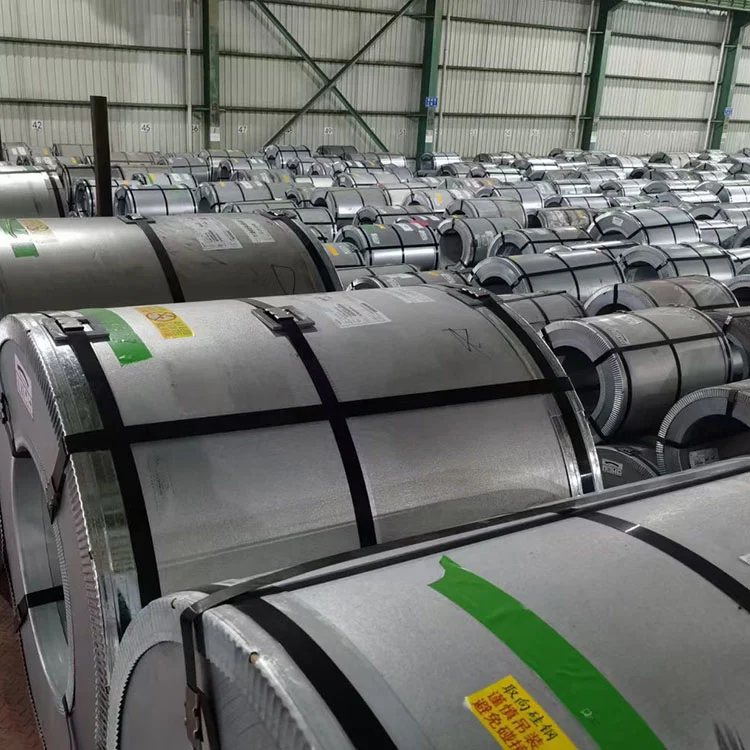
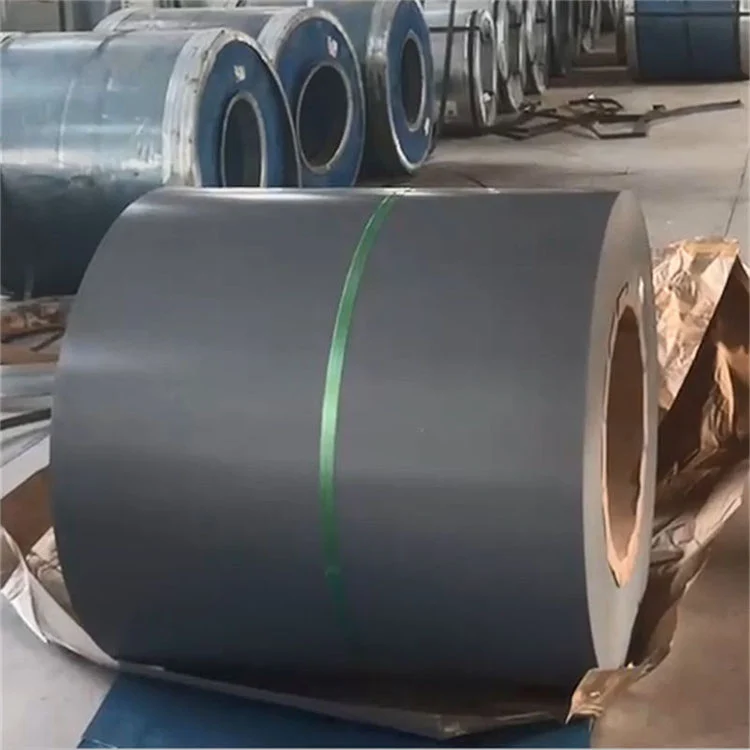
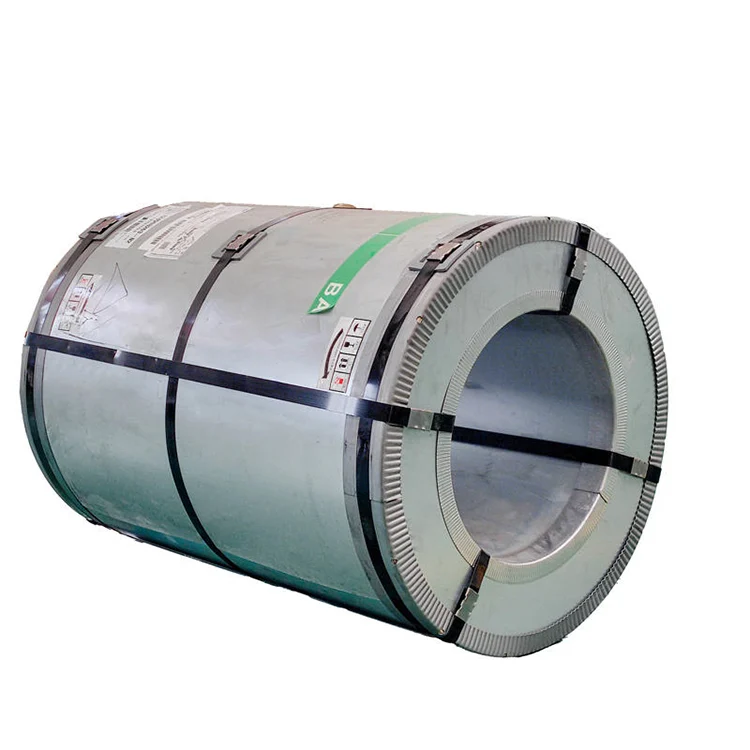
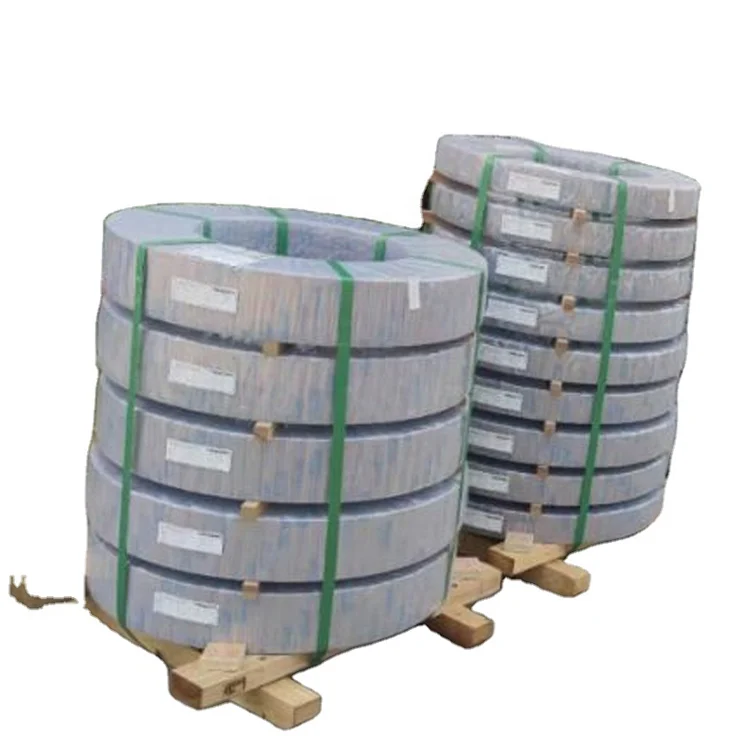
The global push toward AI data centers, renewable integration, and grid modernization has stretched transformer delivery lead times to three to five years in many markets. At the heart of every transformer sits a deceptively humble material — silicon steel — and overnight, it has been repriced from “ordinary industrial commodity” to “strategic resource.”
But open any mill catalog and you’ll find dozens of grain-oriented grades, thickness options ranging from 0.35 mm down to 0.08 mm, and amorphous alloy waiting in the wings. So which silicon steel actually belongs in your transformer?
At Wuxi Zhongxin Special Steel Co., Ltd., this is one of the most frequent questions we hear from transformer designers, OEMs, and procurement teams. This guide breaks down the selection logic from first principles — so you walk away with not just an answer, but the reasoning behind it.
The Short Answer
Almost every power and distribution transformer in service today uses grain-oriented electrical steel (GO, also called CRGO). Non-grain-oriented steel, ultra-thin silicon steel, and amorphous alloy each have their place — but for the vast majority of 50/60 Hz transformer applications, grain-oriented steel is the default and for good reason.
To understand why, we need to start with the physics of how a transformer differs from a motor.
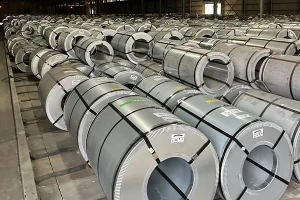
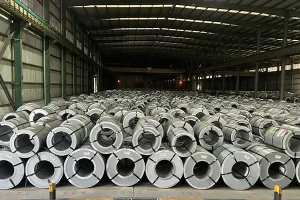
Why Transformers Demand “Grain-Oriented” Steel
Inside a transformer core, magnetic flux travels along the core limbs in a single, predictable direction, oscillating back and forth at line frequency. Inside a motor, by contrast, the rotor spins, and the flux inside the core rotates with it — sweeping through every direction across a full 360°.
This fundamental difference dictates the material choice:
- Motors need a core that performs reasonably in every direction. That calls for non-grain-oriented (NGO/CRNGO) steel, with randomly aligned crystal grains and roughly isotropic magnetic properties.
- Transformers can afford to optimize aggressively in one direction. Grain-oriented steel does exactly that — its grains are deliberately aligned so that the easy-magnetization axis points along the rolling direction (a microstructure metallurgists call the “Goss texture”).
The payoff is significant. Along the rolling direction, grain-oriented steel exhibits core losses roughly one-third of those measured in the transverse direction, and permeability about six times higher. Since transformer flux conveniently follows the rolling direction by design, you capture the full benefit.
Putting non-grain-oriented steel into a transformer is like asking Usain Bolt to compete in the decathlon — technically possible, uniformly mediocre, and you’d be leaving an enormous amount of efficiency on the table.
Three Generations of Grain-Oriented Steel: CGO, Hi-B, and Domain-Refined
“Grain-oriented” is not a single product. It’s a family with three distinct technology tiers, separated by decades of metallurgical innovation.
1. CGO — Conventional Grain-Oriented Steel
The original generation, invented by Armco in the United States in the 1930s. Its texture control is comparatively coarse, so core losses are higher — but the process is mature, yields are stable, and the price is the lowest among grain-oriented options. CGO still finds use in cost-sensitive distribution transformers, current/voltage instrument transformers, reactors, and non-critical industrial transformers.
Representative grades: B27G120 (0.27 mm thickness, guaranteed core loss P₁.₇/₅₀ ≤ 1.20 W/kg), B30G130.
2. Hi-B — High-Permeability Grain-Oriented Steel
Developed by Nippon Steel in 1961 by switching the grain-growth inhibitor from MnS alone to an AlN+MnS combination, Hi-B delivers a much sharper Goss texture, a higher induction value (B₈), and noticeably lower core loss than CGO. Today Hi-B is the workhorse of power transformer cores worldwide.
Representative grades: B30P105 (0.30 mm, ≤ 1.05 W/kg), B27P090.
3. R-Grade — Domain-Refined Hi-B (Laser- or Mechanically Scribed)
The current state of the art. By scoring the surface of Hi-B steel with finely spaced laser or mechanical lines, magnetic domains are subdivided, and another slice of core loss is shaved off. R-grade is the priciest tier but also the lowest-loss option in commercial production. It is the default for transformers above 330 kV and for any application where lifetime energy savings justify the premium.
Representative grades: B27R090, B23R085.
Reading the Grade Codes
Most Chinese mills follow the same naming convention. Using a Baosteel grade as an example:
B 27 R 090
│  │  │  └── Guaranteed core loss × 100 (P₁.₇/₅₀ ≤ 0.90 W/kg)
│  │  └───── Type code: G = CGO, P = Hi-B, R = domain-refined Hi-B
│  └──────── Thickness × 100 (0.27 mm)
└─────────── Mill prefix (B = Baosteel)
Once you’ve internalized this pattern, virtually any Chinese grain-oriented grade becomes readable at a glance.
How to Choose Thickness — and Why Thinner Isn’t Always Better
Standard thickness options for grain-oriented steel are 0.35 / 0.30 / 0.27 / 0.23 / 0.20 / 0.18 mm. Below that lies the realm of ultra-thin silicon steel (0.10 / 0.08 / 0.05 mm).
The physics that matters here is eddy-current loss, which scales with the square of sheet thickness. In theory, cutting thickness from 0.30 mm to 0.15 mm reduces eddy losses by 75%. So why doesn’t every transformer use the thinnest possible sheet?
Three reasons hold thickness in check:
- Price climbs sharply. A 0.23 mm R-grade sheet can cost more than twice as much per ton as a 0.30 mm CGO sheet.
- Stacking becomes inefficient. Thinner sheets are floppier and harder to handle. To build the same core cross-section, you need to stack and bond many more laminations, raising labor and tooling costs.
- Frequency is the real driver. At 50/60 Hz, 0.27–0.30 mm is more than adequate. Eddy-current loss only becomes the dominant loss mechanism when the operating frequency rises into the hundreds or thousands of Hertz — and only then does thinner steel pay for itself.
A useful rule of thumb: the higher the operating frequency and the tighter the efficiency target, the thinner the sheet you should specify.
| Application & Frequency | Recommended Thickness |
|---|---|
| 50/60 Hz, standard distribution | 0.30–0.35 mm |
| 50/60 Hz, high-efficiency power transformer | 0.23–0.27 mm |
| 50/60 Hz, EHV/UHV ultra-low-loss | 0.18–0.23 mm (R-grade) |
| 400 Hz and medium-frequency applications | 0.10–0.20 mm |
| kHz-range switching converters | 0.05–0.10 mm, or consider amorphous/nanocrystalline |
Selection Matrix by Transformer Type
Once you classify a transformer by voltage, capacity, and duty, the material choice usually becomes obvious.
Distribution Transformers (10 kV, 30–2500 kVA)
The highest-volume, most price-competitive segment. Two paths are common:
- Cost-driven: CGO (B30G120, B30G130) with conventional stacked cores.
- Efficiency-driven (Tier 1 / Tier 2 efficiency): Hi-B (B27P090, B27P100) with wound or stereo-wound cores.
China’s GB 20052 energy efficiency standard has tightened steadily, and CGO has lost substantial share to Hi-B in new installations as a result.
Medium Power Transformers (35–220 kV)
Hi-B dominates, typically at 0.27–0.30 mm. Where noise and loss requirements are stricter, designers move up to R-grade.
Large Power Transformers (330–500 kV)
R-grade is the standard, usually at 0.23 mm. Single-unit losses on this class of transformer run into tens of kilowatts, so any material improvement translates into hard currency over the asset’s 30-year lifetime.
UHV Transformers (±800 kV DC, 1000 kV AC)
The most demanding application: thinnest gauge, highest induction, finest laser scribing. R-grade at 0.18 mm is typical. Domestic Chinese mills have now closed the gap with Japanese and Korean suppliers in this tier, ending what was once a near-total import dependency.
Dry-Type Transformers
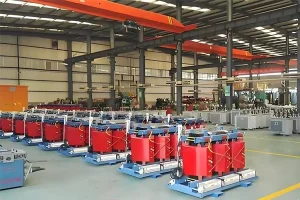
Same material tier as oil-immersed units, but the relative importance of low loss is higher because dry-type units have less margin on cooling and insulation. Hi-B is the typical baseline.
Traction Transformers (High-Speed Rail, Metro)
Operating frequency stays at line frequency (50 Hz or 16.7 Hz on some rail systems), but weight, footprint, and especially noise matter — passengers sit right above the unit. Hi-B or R-grade at 0.23–0.27 mm is standard.
Medium-Frequency Transformers (PV Inverters, BESS, EV Chargers)
Operating frequencies range from several hundred Hz up to a few kHz. This is where ultra-thin grain-oriented silicon steel (0.10–0.20 mm) earns its keep. Beyond ~10 kHz, the playing field shifts to amorphous and nanocrystalline materials.
Solid-State Transformers (SST) and HVDC Power Electronics
Nvidia’s 800 V HVDC architecture has put solid-state transformers squarely on the data-center roadmap. Internal switching frequencies of tens of kHz push silicon steel beyond its comfort zone, and most SST designs favor amorphous or nanocrystalline cores. However, intermediate-frequency stages (1–10 kHz) remain a strong fit for ultra-thin grain-oriented silicon steel.
[GDC_row]
[GDC_column size=”half”]
[/GDC_column]
[GDC_column size=”half”]
[/GDC_column]
[/GDC_row]
The Regulatory Backdrop: Energy Efficiency Standards
China’s GB 20052 standard for transformer efficiency was revised in 2013, 2020, and again in 2024, each iteration tightening loss limits. Compared to GB 20052-2013, the 2020 revision cut allowable no-load losses on Tier 1 silicon-steel distribution transformers by roughly 20%. A core design that comfortably passed Tier 1 under the older standard may only qualify for Tier 3 under the new one.
In practice, this has pushed Hi-B and R-grade into segments that used to be served by CGO. With Chinese grain-oriented capacity approaching 450 million tons by end-2025 and projected to exceed 500 million tons in 2026, Hi-B and R-grade account for the bulk of that growth.
Similar tightening cycles in the EU (Ecodesign Tier 2), the US (DOE 2027 standards), and India (BIS Star rating) are pulling the global market in the same direction.
Grain-Oriented Silicon Steel vs. Amorphous Alloy
A question we field often: amorphous alloy has no-load losses 60–70% lower than silicon steel — shouldn’t it just replace grain-oriented steel entirely?
The honest answer is: not really. The two are complementary, not substitutes.
Amorphous strengths:
- Dramatically lower no-load loss — ideal where the transformer sits lightly loaded most of the time (rural feeders, commercial buildings on time-of-use tariffs).
Amorphous weaknesses:
- Load losses are comparable to silicon steel — no edge.
- Higher audible noise and harder to dampen.
- Lower mechanical robustness, making core fabrication tricky.
- Lower saturation flux density (~1.56 T versus 2.0 T+ for silicon steel) — so for the same capacity, the core must be larger, requiring more copper.
- Lower short-circuit withstand strength.
The practical split: urban distribution and main grid transformers stay on Hi-B; rural networks, solar farm step-up transformers, and lightly loaded customer-side units increasingly turn to amorphous.
What’s Coming Next
Looking out three to five years, four trends will reshape transformer material selection:
- Thinner R-grade. Mainstream thickness for top-tier R-grade is migrating from 0.23 mm toward 0.20 and 0.18 mm.
- Lower noise. Data centers and residential adjacency drive tighter audible noise limits, demanding better magnetostriction control and refined core geometries.
- Frequency goes up. HVDC architectures and solid-state transformers push transformer operating frequencies into the kHz range, expanding the addressable market for ultra-thin grain-oriented steel.
- Supply chain regionalization. With Chinese mills having closed the technology gap across the full grade spectrum — from 1000 kV UHV down to 0.08 mm ultra-thin — buyers worldwide now have credible alternatives to the traditional Japanese and Korean sources.
Quick-Reference Selection Table
If you take away just one image from this article, make it this one:
| Transformer Type | Recommended Silicon Steel | Typical Thickness | Example Grade |
|---|---|---|---|
| Standard 10 kV distribution | CGO / Hi-B | 0.30–0.35 mm | B30G130 / B30P105 |
| High-efficiency 10 kV distribution | Hi-B | 0.27 mm | B27P090 |
| 35–220 kV power transformer | Hi-B / R-grade | 0.27–0.30 mm | B27P090 / B27R090 |
| 330–500 kV large power transformer | R-grade | 0.23 mm | B23R085 |
| 800–1000 kV UHV transformer | R-grade (premium) | 0.18–0.23 mm | B18R065 |
| Dry-type transformer | Hi-B | 0.27–0.30 mm | B27P090 |
| Traction transformer | Hi-B / R-grade | 0.23–0.27 mm | B27R090 |
| PV / BESS medium-frequency transformer | Ultra-thin GO | 0.10–0.20 mm | B10AHV series |
| Solid-state / high-frequency stage | Amorphous / nanocrystalline | — | — |
Closing Thoughts
“What silicon steel should I use for my transformer?” sounds like a narrow technical question. In reality it touches energy efficiency, total lifecycle cost, supply chain security, and even the physical limits of AI compute expansion.
Grain-oriented silicon steel — particularly Hi-B and R-grade — will remain the default choice for the vast majority of power and distribution transformers through the next decade. But as HVDC, solid-state transformers, and new grid architectures mature, the boundary between ultra-thin grain-oriented steel and amorphous/nanocrystalline materials will keep being redrawn. For design engineers, buyers, and investors alike, understanding the boundaries between these material families matters more than memorizing any single grade code.
About Wuxi Zhongxin Special Steel Co., Ltd.
Headquartered in Wuxi, China — at the heart of the country’s electrical-steel supply network, neighboring Baosteel, ZPSS, Bao Xin, and DKSS — Wuxi Zhongxin Special Steel Co., Ltd. supplies a full range of electrical steel coils, stainless steel sheets, plates, nickel alloys, and precision strips to customers across the transformer, motor, and electronics industries. We maintain deep inventory across the most-used grades and thicknesses, accept no minimum order quantity on stock items, and offer slitting and processing services up to 2,130 mm in width.
If you’d like grade-specific recommendations for your transformer project — or a quote on Hi-B, R-grade, or ultra-thin grain-oriented coils — contact us . We’d be glad to help you find the right specification for the job.