
Transformer steel laminations are the thin, insulated sheets of grain-oriented electrical steel stamped or wound into a transformer’s core — the component that determines how much energy the core loses as heat. Since April 2026, they’re also at the center of a tariff dispute that changes landed cost math for anyone importing finished cores or coil into the United States.
That dispute is colliding with a shortage most buyers already know about. Lead times on large power transformers have stretched to four years, and the same grain-oriented electrical steel (GOES) at the heart of that shortage is now taxed differently depending on whether it crosses the border as raw coil or as a finished, stamped lamination. Few buyers have mapped that distinction onto their actual purchase orders yet.
We noticed this the hard way: a US-bound customer asked us in June why a quote for finished laminations came back with a landed cost their broker hadn’t flagged before. It turned out nobody on either side had confirmed which HTS subheading the shipment would actually clear under — a gap this article exists to close.
Key Takeaways
- Section 232 tariffs restructured April 6, 2026 now apply to the full customs value of steel derivative articles, not just the metal content — a change that hits finished laminations harder than raw coil in most classification scenarios.
- Finished transformer laminations face a three-tier rate structure: 50% for near-pure steel articles, 25% for derivative steel articles, or a transitional 15% if classified as electrical grid equipment through December 31, 2027.
- An April 20, 2026 Presidential Determination under Defense Production Act Section 303 named “electrical core steel” explicitly among supply chains now treated as a national defense priority.
- This isn’t the first time regulators have scrutinized the coil-vs-lamination boundary: a 2020 Section 232 investigation targeted GOES laminations specifically over circumvention concerns, and that precedent shapes how classification gets enforced today.
- The Cleveland-Cliffs Butler Works mill remains the sole US domestic GOES source, with expansion capacity not coming online until July 2028 — meaning tariff exposure on imports isn’t going away on any near-term timeline.
What Transformer Steel Laminations Are
A transformer core isn’t a solid block of steel — it’s built from hundreds of thin sheets, each coated with an insulating layer and stacked or wound together. That lamination is what suppresses eddy currents, the circulating losses that would otherwise turn a solid core into a space heater.
We’ve covered the mechanics of that stack elsewhere — how stacking factor and coating thickness interact, and how gauge selection varies by frequency. This article assumes that background and asks a different question: what it now costs to get laminations across the US border, and why that cost hinges on a classification most purchase orders never specify.
The April 2026 Section 232 Overhaul
On April 2, 2026, the administration issued a proclamation restructuring Section 232 tariffs on steel, aluminum, and copper, effective for goods entered for consumption on or after April 6, 2026. The change that matters most for laminations buyers: tariffs now apply to the full customs value of a covered article, not just the value of the metal it contains.
Under the prior framework, a derivative product’s tariff was calculated only against its metal content — a stamped lamination with modest processing value added on top of the raw steel paid duty on the steel portion alone. That distinction is gone. The full invoice value is now the tariff base, regardless of how much of it is metal.
| Classification Tier | Rate | Basis |
|---|---|---|
| Articles entirely/almost entirely steel | 50% | Full customs value |
| Derivative steel articles (includes laminated goods, HTS 7326.90.86.30) | 25% | Full customs value |
| Metal-intensive industrial/electrical grid equipment | 15% (through Dec 31, 2027) | Full customs value |
| Grid equipment made with US metal inputs | 10% | Full customs value |
| Articles under 15% steel/aluminum/copper content by weight | Exempt from Section 232 | — |
The 15% transitional rate for electrical grid equipment expires January 1, 2028, after which covered products revert to the 25% derivative rate. Transformers are cited by name as an example of qualifying grid equipment — but the annexes don’t explicitly resolve whether a stamped lamination shipped separately from an assembled transformer qualifies for that lower tier, or falls back to the 25% derivative-article rate.
A worked example. Take a $200,000 shipment of finished CRGO laminations — roughly the size of the order that prompted our customer’s question in June. At the 25% derivative-article rate, the duty bill is $50,000. If the same shipment qualifies as electrical grid equipment at 15%, duty drops to $30,000 — a $20,000 swing on one order, before any freight or brokerage cost. Run that gap across several shipments a year and it stops looking like a rounding error fast.
That gap is also why the calculation basis matters as much as the rate itself. Under the old metal-content basis, a lamination with $140,000 of steel value and $60,000 of stamping/processing value paid duty only on the $140,000 portion. Under the 2026 full-value basis, the entire $200,000 is taxable regardless of how much of it is processing labor rather than metal — which is precisely why finished laminations now carry more tariff exposure per dollar than an equivalent value of raw coil.
Coil vs. Finished Lamination: Why Classification Is the Real Cost Lever
That ambiguity isn’t new. In May 2020, the US Commerce Department opened a Section 232 investigation specifically into GOES transformer laminations and wound cores, petitioned by AK Steel (now part of Cleveland-Cliffs) and members of Congress. AK Steel’s argument: overseas producers were shipping GOES coil to Mexico and Canada, cutting and forming it into laminations there, then importing the finished component to sidestep duties assessed on raw coil.
AK Steel called this pattern “blatant circumvention activity,” tying it to over 1,400 jobs at its Pennsylvania and Ohio plants, and called itself the last remaining GOES producer in North America. This case wasn’t on our radar until a customer’s broker raised it this spring — a six-year-old dispute, but one that establishes a live enforcement question buyers should still register: “where does the cutting and stamping happen” isn’t a technicality.
The 2026 full-customs-value rule closes that loophole differently — a lamination stamped abroad now pays duty on its whole invoice value regardless of where the underlying coil originated, weakening the incentive for the tolling arrangement AK Steel flagged in 2020. It doesn’t remove the classification question itself. A buyer importing finished laminations still needs to know whether that shipment reads as a 25% derivative article or a 15% grid-equipment component — and that isn’t automatic.

Buyers sourcing Standard CRGO coil rather than finished laminations face a comparatively simpler classification path, since raw coil sits more clearly within established HTS categories for cold-rolled grain-oriented electrical steel. The complexity concentrates specifically at the point where coil becomes a cut, stamped, or wound component — which is exactly the boundary the 2020 investigation was about, and exactly where the 2026 rate tiers diverge most sharply.
| Import Form | Typical HTS Path | Classification Ambiguity | 2026 Rate Exposure |
|---|---|---|---|
| Raw CRGO/CRNGO coil | 7225.11 / 7226.11 (established) | Low | 25% derivative or 50% steel-article, depending on processing history |
| Slit coil (uncut widths) | Same coil headings | Low-moderate | Generally tracks coil classification |
| Stamped/cut laminations | 7326.90.86.30 (laminated goods) | High | 25% derivative, or 15% if grid-equipment status is established |
| Wound/assembled cores | Component of finished transformer | High | Depends on whether shipped standalone or within assembled equipment |
Why This Collided With the AI Data Center Bottleneck
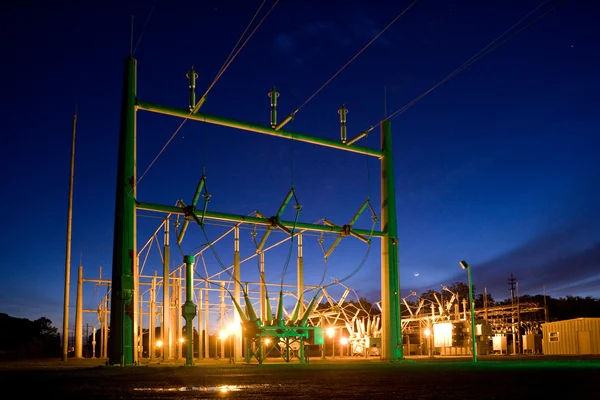
None of this is happening in a quiet market. On April 20, 2026, the White House issued a Presidential Determination under Section 303 of the Defense Production Act, naming grid infrastructure — including transformers, substations, high-voltage circuit breakers, and electrical core steel by name — essential to national defense, with $323 million in FY2026 DPA funds authorized to expand domestic capacity.
The determination followed, rather than caused, a supply crunch already underway. Demand for generator step-up transformers rose 274% between 2019 and 2025; substation transformer demand rose 116% over the same window. Lead times for large power transformers have stretched from roughly 12 months to 48–60 months, driven substantially by AI data center buildouts — tech companies are projected to spend over $650 billion on AI infrastructure in 2026 alone.
| Metric | Figure |
|---|---|
| GSU transformer demand growth (2019–2025) | +274% |
| Substation transformer demand growth (2019–2025) | +116% |
| Large power transformer lead time (2026) | 48–60 months |
| US data centers at delay/cancellation risk | Nearly half of 2026-planned projects |
| Domestic GOES capacity expansion (Cleveland-Cliffs) | Not operational until July 2028 |
Cleveland-Cliffs’ Butler Works remains the only domestic GOES mill, and its $195 million expansion won’t add capacity until July 2028 — meaning import exposure to the new tariff tiers isn’t a short-term problem buyers can wait out. A separate, narrower bottleneck sits upstream of that: custom high-permeability lamination orders were already running 8–14 weeks out at the mill level before factoring in the finished-transformer queue, a mill-capacity constraint distinct from the multi-year assembly backlog.
DOE’s Efficiency Rule Adds a Third Variable
A third policy thread complicates sourcing further. The Department of Energy has been revisiting a 2024 distribution transformer efficiency rule set to take effect in 2029, which would push a larger share of transformers toward amorphous steel cores instead of conventional GOES. DOE’s amended final version preserved GOES eligibility for roughly 75% of covered transformer types as a compromise, down from an original proposal that would have pushed nearly all distribution transformers toward amorphous cores.
In July 2026, electric utilities filed comments broadly opposing further DOE changes to the rule, while at least one steelmaker urged DOE to proceed with revisions that preserve GOES utilization, warning that the 2024 standards as written would weaken domestic supply chains and discourage further GOES capacity investment. That fight is unresolved, and its outcome will shift how much of the coming decade’s lamination demand goes to GOES versus amorphous cores.
For buyers, this means a sourcing strategy locked entirely to GOES laminations carries regulatory exposure on two fronts — Section 232 classification risk on the tariff side, and a 2029 efficiency-standard shift that could reweight demand toward amorphous alternatives. We’ve written separately about what that amorphous core mandate means for manufacturing; the tariff question compounds it rather than replacing it.
Laser-Scribing Adds Another Wrinkle to Classification
Separately from tariffs, the lamination market itself is shifting toward more processed material. Industry tracking puts laser-scribed and high-permeability laminations at roughly 30% of total volume today, rising past 45% by 2035 as utilities chase lower core losses. Baosteel’s recent push into ultra-thin laminations has cut core losses by up to 15% compared with earlier grades, using thinner gauge and additional domain-refinement processing.
That trend matters for tariff exposure specifically because more processing steps make a stronger case for “derivative article” classification, not a weaker one. A laser-scribed lamination has more value added beyond the base steel than a plain stamped one — which, under a full-customs-value tariff basis, means more of that added value now sits inside the taxable base rather than outside it, unlike under the old metal-content-only calculation.
Buyers weighing Hi-B or laser-scribed grades for their efficiency gains should factor that classification reality into the cost comparison against conventional CRGO, not just the core-loss improvement. The performance upside is real; the tariff basis doesn’t care how the value got added, only that it’s there.
Does This Affect Buyers Outside the US?
The Section 232 changes are a US import mechanism specifically — they don’t apply to shipments landing in the EU, Middle East, or other markets, which run their own separate duty regimes (the EU’s roughly 53.8% residual anti-dumping rate on CRGO being the most significant example elsewhere). Buyers sourcing for non-US production don’t face this particular exposure.
They’re not insulated from the underlying dynamics, though. Global GOES capacity is the same constrained pool regardless of destination market, and a US tariff structure that makes finished-lamination imports less attractive can redirect mill capacity and pricing pressure toward whichever markets remain comparatively open — a spillover effect worth watching even for buyers who never touch a US customs entry.
Before Your Next Purchase Order: A Buyer’s Checklist
The tariff tier a shipment lands in isn’t determined by the product description on your PO — it’s determined by HTS classification, and getting it wrong shows up as a landed-cost surprise months after the order is placed, not before.
- Get a written HTS determination, not a verbal assurance. Ask your customs broker for the specific HTS subheading your laminations will be entered under, and whether that subheading falls in the 25% derivative tier or the 15% grid-equipment tier — don’t assume “transformer parts” is close enough.
- Model landed cost at both rates, not just the one you expect. A 10-point gap between 15% and 25% on a full-value basis is material on any order size worth qualifying a supplier for.
- Separate coil purchases from finished-lamination purchases in your sourcing plan. The two carry different classification paths and, increasingly, different risk profiles — mixing them in one blanket PO makes the tariff exposure harder to isolate later.
- Watch the January 1, 2028 sunset on the 15% rate. Any multi-year supply agreement priced against the transitional rate needs a renegotiation clause for that date, not an assumption the rate holds.
- Confirm supplier documentation supports your classification, not just theirs. The same verification steps that catch quality gaps also produce the paper trail a customs broker needs to defend an HTS position if it’s challenged.
None of this replaces a licensed customs broker’s determination — it’s the internal groundwork that makes that determination faster and cheaper to get right the first time.
FAQ
What is a transformer steel lamination, in one sentence?
A transformer steel lamination is a thin, insulated sheet of grain-oriented electrical steel — typically 0.23–0.35mm for conventional cores — stacked or wound to form a transformer core while suppressing eddy-current losses.
Are transformer laminations subject to the new 50% or 25% Section 232 rate?
It depends on classification. Laminated steel goods generally fall under the 25% derivative-article tier on full customs value, though a shipment classified as electrical grid equipment may qualify for the transitional 15% rate through December 31, 2027 — this is determined by HTS subheading, not by product description alone.
Why does it matter whether laminations are cut abroad versus imported as raw coil?
A 2020 Section 232 investigation specifically targeted this boundary after GOES coil was allegedly routed through Mexico and Canada for cutting into laminations to reduce duty exposure. The April 2026 full-customs-value rule changes the incentive structure around that practice, but the underlying classification question — coil versus finished component — still determines which tariff tier applies.
How does the AI data center shortage change classification urgency?
More urgent. With transformer lead times running 48–60 months and domestic GOES capacity not expanding until mid-2028, buyers can’t simply wait out either the shortage or the tariff structure — orders placed now carry multi-year exposure to whichever classification and rate apply at signing.
Will the DOE’s 2029 efficiency rule change lamination tariff treatment?
Not directly — the DOE rule governs transformer efficiency standards and GOES-versus-amorphous core requirements, while Section 232 governs import tariffs. But a shift toward amorphous cores would change what buyers are importing, which could shift which HTS classifications and tariff tiers apply to a given order.
Do laser-scribed or Hi-B laminations face different tariff treatment than standard CRGO?
Not by grade name — the tariff tiers are based on HTS classification and processing form, not metallurgical grade. But laser-scribed laminations typically carry more processing value added beyond the base steel, which under the full-customs-value basis introduced in April 2026 means more of that added value sits inside the taxable base than it would have under the old metal-content-only calculation.
Does the Section 232 restructuring apply to laminations imported into the EU or other markets?
No. Section 232 is a US-specific import tariff mechanism. Buyers sourcing for EU, Middle East, or other non-US production face separate duty regimes — the EU’s anti-dumping rate on CRGO, for example — that operate independently of the US tariff tiers described here.
Bottom Line
Trade tariffs and grid-equipment demand used to move on separate tracks. They’re colliding now, directly on transformer steel laminations. The April 2026 Section 232 restructuring didn’t just raise rates — it changed the tariff base to full customs value and left a real classification question open between the 25% derivative tier and the 15% grid-equipment tier.
We didn’t fully appreciate how open that question was until a customer’s quote landed differently than either of us expected. Don’t let the same gap sit in your next purchase order — get the HTS determination in writing before you sign, not after the invoice arrives.
References
- The White House — Fact Sheet: President Donald J. Trump Strengthens Tariffs on Steel, Aluminum, and Copper Imports
- Federal Register — Presidential Determination Pursuant to Section 303 of the Defense Production Act on Grid Infrastructure, Equipment, and Supply Chain Capacity
- Utility Dive — Trump adjusts metal tariffs, sets 15% rate for some electrical grid equipment
- Association for Iron & Steel Technology — GOES Transformer Components Focus of New Section 232 Investigation
- pv magazine USA — U.S. transformer market faces severe supply constraints as lead times extend to four years
- Utility Dive — DOE mulls changes to Biden-era transformer rule, raising utility concerns


