
Key Takeaways
- Generator sets use non-grain-oriented (CRNGO) steel in the alternator core, because the rotating magnetic field inside a genset alternator needs isotropic performance, not the single-direction efficiency CRGO is built for.
- ISO 8528 defines four generator duty ratings — standby, prime, continuous, and limited-time running power — and the one your genset is rated for should be the starting point for grade selection, not an afterthought.
- A standby genset might run 50-200 hours a year during outages. A continuous-duty genset at a remote mine site or off-grid facility can run 8,000+ hours a year. That gap changes how much core loss actually costs you over the unit’s service life.
- Engine speed sets alternator pole count, which sets electrical frequency independent of grid frequency — a 1,800 RPM diesel genset alternator and a 3,000 RPM gas turbine-driven unit are not interchangeable steel specs.
- The most common sourcing mistake: reusing a standby-duty core steel spec on a prime or continuous-duty genset program, because “it’s the same alternator size” — it isn’t the same economic calculation.
Why Gensets Run on CRNGO, Not CRGO
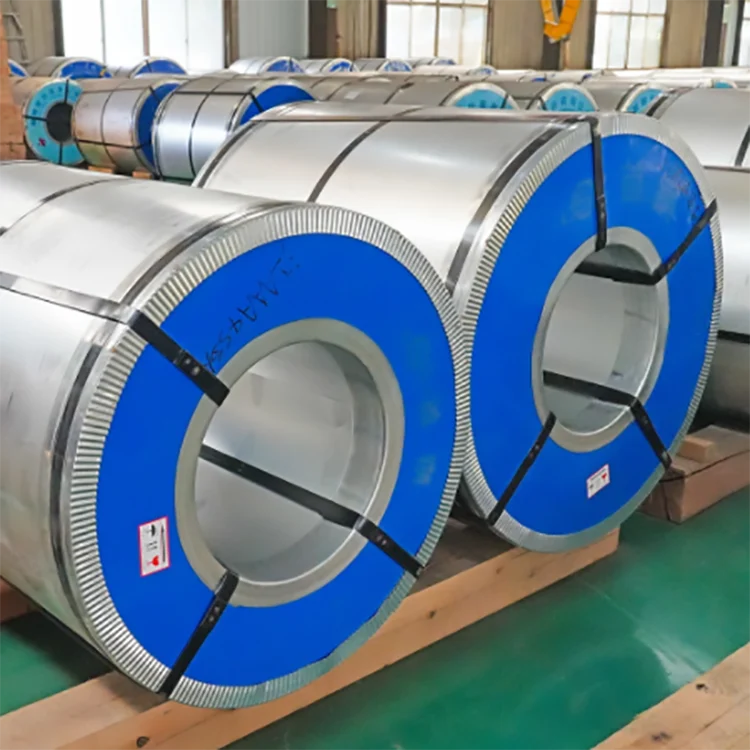
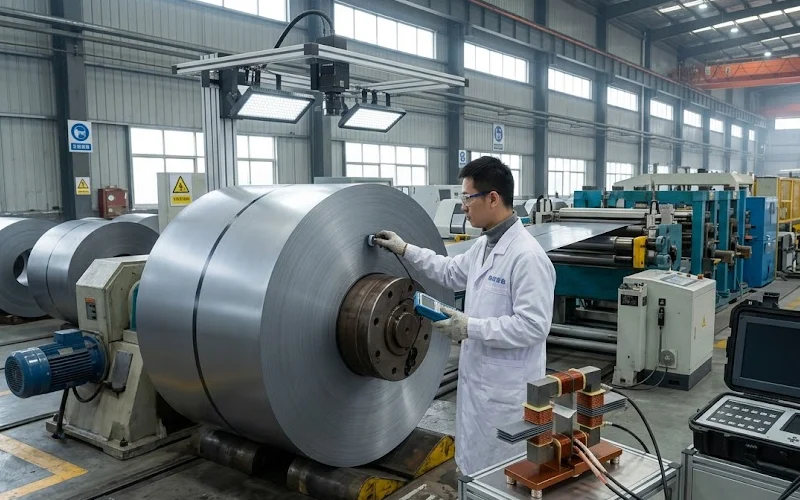
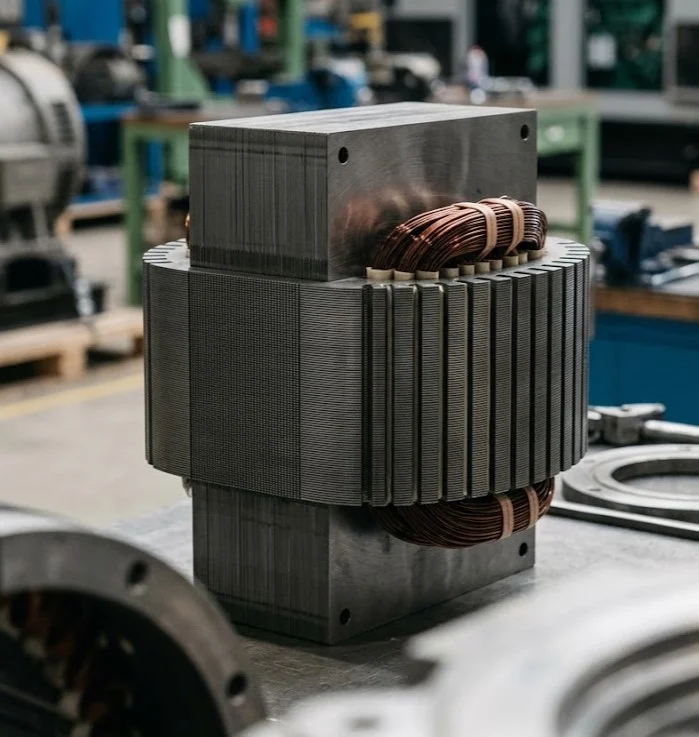
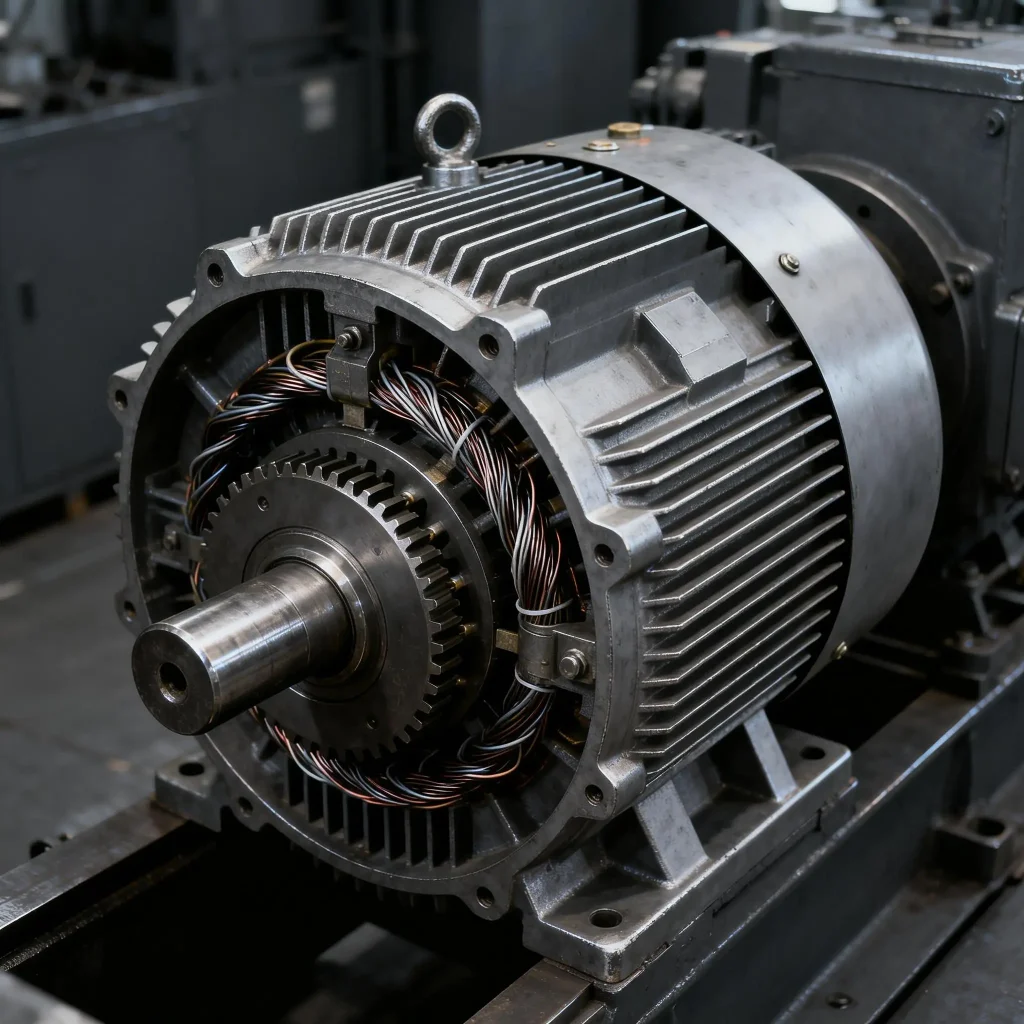
A generator set alternator has a rotor spinning inside a stator core, and the magnetic field inside that stator rotates with it — constantly changing direction as the rotor turns. That’s the opposite condition from a transformer core, where flux flows predictably in one direction and grain-oriented steel’s directional efficiency pays off. Inside a spinning alternator, CRGO’s single-direction advantage mostly disappears, while CRNGO’s isotropic magnetic properties — consistent performance regardless of flux direction — actually match how the machine operates.
This isn’t a genset-specific quirk. It’s the same logic that puts CRNGO in motors generally. A generator set is, electrically, a motor running in reverse — mechanical power in, electrical power out — and the core steel requirement follows the machine’s rotating-field physics rather than its role as a source instead of a load.
Duty Class Changes Everything: Standby, Prime, and Continuous
Here’s what most grade discussions skip entirely: two gensets can share an identical frame size, alternator design, and power rating on paper, and still call for meaningfully different core steel priorities — because of how many hours a year they actually run.
ISO 8528 is the international standard framework for generator set ratings, and it defines several duty classes that matter here:
- Standby power (ESP) — for emergency backup during utility outages. Typically limited to somewhere in the range of 200-500 hours a year, often far less. A hospital backup genset or a data center’s emergency unit fits here.
- Prime power (PRP) — for facilities without reliable grid access, running as the primary source with variable load, for as many hours as needed, but with a defined average load factor limit over any 24-hour period.
- Continuous power (COP) — for constant, unvarying load, unlimited hours. Think a remote mine site or an off-grid industrial facility running its own power plant around the clock.
A standby genset spends most of its life switched off, sitting idle, waiting for a grid outage that might not happen for months. A continuous-duty genset runs — and its core stays energized and its alternator keeps generating — essentially all the time. That’s the same “hours per year” math that separates distribution transformer core selection from power transformer core selection, just applied to a different machine class.
Matching Grade to Duty Class
| Duty Class | Typical Annual Run Hours | Core Loss Priority | Grade Guidance |
|---|---|---|---|
| Standby (ESP) | ~50-500 hours/year | Low — core loss cost accumulates over very little runtime | Standard CRNGO grade generally sufficient; efficiency premium rarely pays back |
| Prime (PRP) | Variable, potentially thousands of hours/year | Moderate — depends heavily on actual site load factor | Mid-tier CRNGO grade; worth running the numbers against your specific expected load profile |
| Continuous (COP) | 8,000+ hours/year | High — core loss runs essentially nonstop for the unit’s service life | Premium CRNGO grade justified; efficiency gains compound across near-continuous operation |
The standby-duty case is worth sitting with for a second, because it cuts against the instinct to always spec the best available grade. If a genset only runs 150 hours a year during actual outages, the lifetime cost difference between a standard and premium CRNGO grade is small enough that other factors — availability, lead time, price — often matter more than squeezing out marginal core loss gains nobody will notice on a bill that barely reflects the unit’s existence.
Engine Speed, Pole Count, and Why That Affects Your Gauge Choice
Alternator electrical frequency is set by engine speed and pole count, not by grid frequency directly — the genset has to produce 50Hz or 60Hz output, and it gets there through the combination of how fast the engine spins the rotor and how many magnetic poles the alternator is wound for. A 1,500 RPM diesel engine driving a 4-pole alternator produces 50Hz. An 1,800 RPM engine with the same pole count produces 60Hz. Higher-speed prime movers — gas turbines, high-speed diesel units — reach the same output frequency with fewer poles at higher RPM, or the same pole count at correspondingly higher frequency.
Why this matters for steel selection: higher electrical frequency pushes core loss up for a given gauge, the same way it does in any electrical steel application. A high-speed genset alternator running at an elevated electrical frequency benefits more from thinner-gauge CRNGO than a standard 1,500/1,800 RPM unit does, for the same reason high-frequency EV traction motors push toward thinner gauges than standard 50/60Hz equipment. Confirm your alternator’s actual electrical frequency — not just its power rating — before finalizing gauge.
Diesel vs. Gas Gensets: Does the Fuel Type Change the Steel Spec?
Not directly. The alternator doesn’t know or care what fuel is driving the engine — it responds to rotor speed and load, not combustion chemistry. Where fuel type indirectly matters is duty pattern: gas gensets are more commonly specified for continuous or prime power applications (pipeline compression stations, continuous industrial power, combined heat and power installations), while diesel gensets dominate the standby market because of fuel storage practicality and fast-start characteristics during outages.
So the real driver is still duty class, not fuel type — but if you’re specifying a gas genset, there’s a reasonable chance it’s headed for a continuous or prime application where core steel grade actually deserves more attention, purely because of what gas gensets tend to get used for.
A Common Mistake: Specifying Standby-Grade Steel for a Continuous Application
The most common sourcing error in this space isn’t picking the wrong steel category — it’s reusing a standby-duty grade spec on a program that’s actually prime or continuous duty, because the alternator frame size and nameplate rating look the same on paper. They’re not the same economic calculation. A grade that’s perfectly reasonable for 150 hours a year of runtime can leave real efficiency and long-term operating cost on the table across 8,000 hours a year of continuous operation, and nobody notices until someone runs the actual fuel-and-efficiency math a year or two into the program.
Before finalizing a genset core steel spec, confirm the actual duty class the unit will operate under — not just the frame and power rating carried over from a previous, possibly differently-rated program.
Applications and Related Grades
- Standby and prime power gensets — see non-oriented silicon steel for standard CRNGO grade options across common thickness ranges.
- Continuous-duty and off-grid industrial gensets — standard CRNGO electrical steel covers the mid-to-premium grade range worth evaluating for high-runtime applications.
- High-speed gas turbine or high-frequency alternator applications — thinner-gauge considerations follow the same logic covered in our ultra-thin silicon steel guidance for high-frequency equipment generally.
FAQ
Do generator sets use grain-oriented or non-grain-oriented electrical steel?
Non-grain-oriented (CRNGO). The rotating magnetic field inside a genset alternator needs isotropic magnetic performance, the same requirement that puts CRNGO in motors generally, rather than the single-direction efficiency CRGO provides for transformer cores.
What is ISO 8528 and why does it matter for steel selection?
ISO 8528 is the international standard defining generator set duty ratings — standby, prime, continuous, and limited-time running power. The duty class a genset is actually rated for should drive core steel grade selection, since it determines how many hours a year the alternator core is actually energized and generating, which directly affects whether a premium grade’s efficiency gains are worth the cost.
Is premium CRNGO worth the cost for a standby generator?
Usually not. Standby gensets typically run 50-500 hours a year during actual outages, which limits how much a premium grade’s core loss advantage can actually save over the unit’s service life. Standard CRNGO grades are generally the more economical choice for genuine standby applications.
Does engine speed affect the electrical steel gauge I should specify?
Yes. Engine speed and alternator pole count together determine electrical frequency, and higher electrical frequency increases core loss for a given gauge. High-speed gensets, including gas turbine-driven units, generally benefit from thinner-gauge CRNGO than standard 1,500/1,800 RPM diesel gensets running at 50Hz or 60Hz.
Should I use the same core steel grade for a standby and a continuous-duty genset of the same frame size?
Not automatically, even though the alternator frame and nameplate rating might look identical. Duty class — how many hours a year the unit actually runs — is the variable that should drive grade selection, and reusing a standby-duty spec on a continuous-duty program is one of the most common sourcing mistakes in this space.
Specifying core steel for a genset program? Contact Zhongxin Special Steel with your ISO 8528 duty class and expected annual run hours, and we’ll help match CRNGO grade to your actual duty cycle.

