
The short answer: it depends on the grade, and sometimes on how that specific piece of metal was formed. Austenitic grades — 304, 316, 316L, the ones you’ll find on most kitchen equipment, food processing gear, and marine hardware — are essentially non-magnetic in their normal annealed state. Ferritic grades (430, 409) and martensitic grades (410, 420) are magnetic by design, full stop.
And here’s the part that trips people up: cold working — bending, drawing, heavy machining — can make an otherwise non-magnetic austenitic grade pick up a noticeable pull on a magnet, without changing what grade it actually is.
That last fact is why a magnet test alone can’t reliably confirm or rule out a grade, and why it’s become less reliable, not more, as a fraud check in 2026.
We’re Wuxi Zhongxin Special Steel (ZHX Steel) — this site’s core business runs on CRGO electrical steel, a grade of steel engineered to be as magnetic as physically possible, since that magnetism is what makes a transformer core work. Stainless steel sits at the opposite end of that spectrum: most of it is engineered specifically to resist magnetism, which is exactly why a stray bit of it shows up unexpectedly.

Key Takeaways
- Austenitic stainless (304, 316, 316L) is essentially non-magnetic in the annealed state — but cold working can induce enough strain-induced martensite to make a magnet stick weakly, without changing the underlying grade.
- Ferritic (430, 409) and martensitic (410, 420) stainless grades are magnetic by crystal structure, regardless of how they were worked — that part of a magnet test is genuinely reliable.
- Research published in the Journal of Magnetism and Magnetic Materials measured over 50 samples of annealed 304 and found a small ferromagnetic fraction (typically under 1%) in almost every one, from residual delta ferrite — meaning even “clean” 304 isn’t perfectly non-magnetic to begin with.
- A magnet test cannot distinguish 304 from 316 with any reliability — both are weakly-to-non-magnetic annealed austenitic grades, and cold work affects both.
- Counterfeiters selling low-nickel SS201 as 304 have been documented engineering the substitute to stay non-magnetic specifically because they know buyers check with a magnet — which means a “pass” on the magnet test isn’t proof of anything anymore.
- The dependable alternatives are a quantified magnetic-permeability reading (a ferrite content meter), positive material identification (XRF or OES), and a mill test certificate tied to a heat number — not a qualitative “does it stick.”
What Makes Some Stainless Steel Magnetic and Some Not
The magnetism question comes down to crystal structure, not to how shiny or how expensive the steel is. Plain iron and most carbon steel form a body-centered cubic (BCC) lattice at room temperature — one iron atom at each corner of a cube plus one in the center — and that arrangement is inherently ferromagnetic.
Nickel changes that. When enough nickel is alloyed into steel, it stabilizes a different crystal structure — face-centered cubic (FCC) — and holds it at room temperature instead of letting the steel revert to BCC. FCC iron alloys are essentially non-magnetic. That’s the entire reason 304 and 316, both nickel-bearing austenitic grades, start out non-magnetic: the nickel content is doing the work, not the chromium.
This is also why “essentially non-magnetic” is the honest phrase rather than “completely non-magnetic.” A 2018 study in the Journal of Magnetism and Magnetic Materials measured more than 50 samples of properly annealed 304 stainless with a vibrating-sample magnetometer and found a small ferromagnetic phase — usually under 1% by volume — in almost every single one, attributed to residual delta ferrite left over from solidification.
The same paper puts the magnetic permeability of the pure austenite phase at 1.0033 ± 0.0003, which for context is barely above the permeability of empty space (1.0000) and nowhere close to actual ferromagnetic materials.
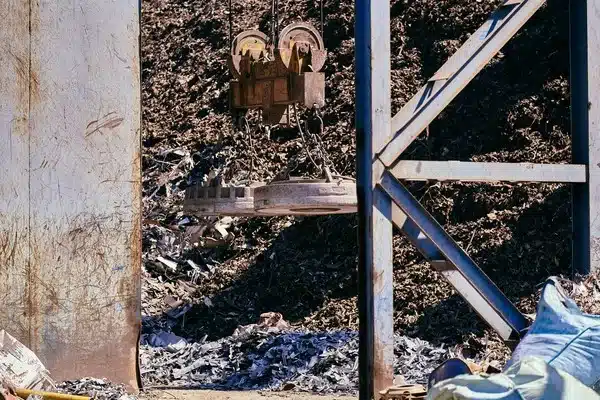
Cold working complicates the picture further. When austenitic stainless is bent, drawn, or heavily machined below a certain temperature threshold, the mechanical strain can locally convert some of that FCC austenite into a different structure called strain-induced martensite — which is body-centered tetragonal, closely related to the ferromagnetic BCC family.
That converted fraction is real magnetism, not a testing error, but it’s a property of that specific piece of metal’s processing history, not proof of which grade it started as.
Which Stainless Steel Grades Are Magnetic?
Stainless steel isn’t one family — it’s five, sorted by the crystal structure their alloying content locks in. Only two of those five are reliably non-magnetic, and even they come with the caveats above.
| Family | Example grades | Magnetic? | Why |
|---|---|---|---|
| Austenitic | 304, 316, 316L, 321 | Essentially non-magnetic (annealed); weakly magnetic after cold work | High nickel content locks in non-magnetic FCC structure |
| Ferritic | 430, 409, 439 | Magnetic — always | BCC structure, low nickel, magnetic regardless of processing |
| Martensitic | 410, 420, 440C | Magnetic — always | BCC/BCT structure, hardened by heat treatment, not nickel-stabilized |
| Duplex | 2205, 2507 | Moderately magnetic | Roughly 35-65% ferrite by design, blended with austenite |
| Low-nickel austenitic | 201, 202 | Non-magnetic when annealed, but transforms to martensite more readily than 304 under cold work | Manganese substitutes for some nickel, which lowers austenite stability |
That last row matters more than it looks. Nickel is what stabilizes austenite against transforming into martensite under stress — it’s the reason 304 tends to stay non-magnetic through moderate forming while a lower-nickel grade like 201 can pick up magnetism from the same amount of cold work. That difference is a real, physically grounded signal. It’s also exactly the signal that low-nickel substitutes engineered to defeat a magnet test are designed to erase — more on that below.
Duplex grades deserve a separate note: their moderate magnetism isn’t a flaw or a fraud signal, it’s the spec. Duplex stainless is intentionally produced with a target ferrite fraction (commonly 35-65%) to balance strength and corrosion resistance, and that ferrite content is exactly what a calibrated ferrite meter is built to quantify — the same tool a magnet-and-guess approach can’t replace.
The Magnet Test: What Cold Work (and Counterfeiters) Do to It
Run a magnet across a bar of properly annealed 304 sheet and it should show little to no pull. Run the same magnet across the cut edge of that same sheet, or across a spot that was heavily bent or machined, and you may well feel a faint tug. Nothing about the alloy changed — the mill certificate for both pieces would report identical chemistry. What changed is the local crystal structure at that one spot, from cold-work-induced martensite.
That’s the honest, non-fraud reason a magnet test misleads buyers. Real 304 and real 316 can both show localized magnetism depending on how a specific piece was formed, welded, or machined — which means “it stuck to my magnet” doesn’t prove a piece is secretly a cheaper grade, and “it didn’t stick” doesn’t prove it’s genuinely 316 rather than 304.
The fraud reason is more direct, and it’s the one that’s changed the calculus in the last few years. A documented substitution scheme sells 201 — a lower-nickel, manganese-substituted grade that’s meaningfully cheaper than 304 — mislabeled as genuine 304.
Because 201’s lower nickel content makes it more prone to picking up magnetism under cold work than real 304, an unmodified 201 substitute could actually fail a magnet test and give the fraud away. Suppliers running this substitution have specifically adjusted composition to keep the fake non-magnetic, engineering it to pass the exact check buyers are known to use.
That’s worth sitting with for a second: the more buyers rely on a magnet as their verification method, the more predictable it becomes for a supplier willing to cut corners to engineer around it. A test that’s public knowledge and easy to defeat stops being a meaningful check the moment enough people are checking for it.
Why This Matters More in 2026 Than It Used To
The economics behind grade substitution got more attractive in 2026, not less. Nickel and molybdenum — the two elements that separate 316 from 304, and 304 from 201 — both moved sharply this year: nickel swung as much as 14.5% in a single three-week stretch in April, and the 304-vs-316 price premium widened well past its historical 20-30% baseline into 90%-plus territory in some markets.
A wider price gap between grades is a bigger incentive to blur the line between them, whether that’s 201 sold as 304 or 304 sold as 316.
This isn’t a hypothetical. One documented case from a buyer review describes a cable ordered as 316 that began rusting within 60 days and, on closer inspection, turned out to be noticeably magnetic — a red flag the buyer only caught because they knew genuine 316 should show very little magnetic response. The mislabeling wasn’t caught by a mill certificate check; it was caught after the fact, by corrosion.
The price gap between 304 and low-nickel 201 substitutes can run even wider than the 304-vs-316 gap in dollar terms, because nickel is the dominant cost driver for both comparisons and 201 carries the least of it. That’s the gap that makes 201-as-304 fraud worth the effort for a supplier willing to do it — and it’s precisely the substitution that a magnet-only check is least equipped to catch once the substitute has been engineered around it.
None of this means every supplier is cutting corners — most aren’t. It means a verification habit built entirely around a five-dollar magnet was never designed to survive a market where the incentive to game it has gotten this much stronger.
What Actually Works: From Ferrite Meters to Mill Certificates
The step up from “does it stick” to something you can actually rely on doesn’t require exotic equipment, but it does require moving from qualitative to quantitative.
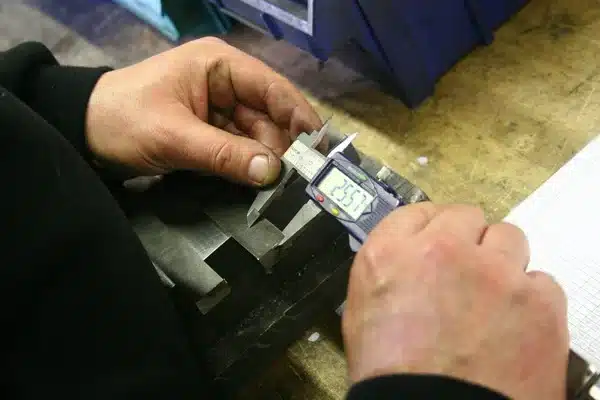
A ferrite content meter (often called a Feritscope by its most common brand) measures magnetic permeability directly and reports it as a percentage or Ferrite Number, per DIN EN ISO 17655 and ANSI/AWS A4.2. It’s portable, non-destructive, gives a reading in seconds, and is accurate to roughly ±1-3 Fe% across a 0.1-80% range.
This is a genuine step up from a magnet: instead of a binary “it pulled or it didn’t,” you get an actual number, and a real 304 reading 0.3% ferrite looks nothing like a 201 substitute reading 4-8% after the same handling.
Positive material identification (PMI) goes further by reading actual elemental composition rather than inferring it from magnetism. A handheld XRF analyzer gives a chromium/nickel/molybdenum reading in seconds and can confirm whether molybdenum is present at all — the single fact that separates 316 from 304 — but it can’t reliably measure carbon, phosphorus, or sulfur at specification levels.
Optical emission spectrometry (OES) closes that gap and is the standard referenced in ASTM E1086, but it’s a lab-bench method, not a shop-floor one.
Neither instrument matters much without paperwork behind it. A mill test certificate tied to a specific heat number is what lets you check a shipment against your purchase order after the fact — the same EN 10204 3.1/3.2 framework used across metallic products generally, including the electrical steel coils we ship every week.
As a specialty steel exporter across both product lines, the verification logic doesn’t change based on which alloy is on the certificate: a number only means something if it’s tied to a heat you can trace back to the material sitting in front of you.
A Field Checklist for Buyers
We get some version of this question fairly often from buyers on our own stainless orders: “the sample stuck to a fridge magnet a little, is that a problem?” Almost always, no — it’s a cut edge or a formed corner doing exactly what cold-worked austenitic steel does.
The one time it actually mattered, the pull was strong and even across the whole flat face of the sheet, not just at an edge, and a follow-up PMI check confirmed it wasn’t 304 at all. That contrast — weak and localized versus strong and uniform — is the practical version of everything above.
A magnet still has a place in this process — as a fast, free first screen, not a final answer.
- Use the magnet as a screen, not a verdict. A strong, even pull across an entire flat piece is a real red flag worth escalating. A faint tug at a cut edge or a bend on an otherwise clean piece is expected from cold work and isn’t proof of anything on its own.
- Ask for the mill test certificate before the shipment leaves, not after it arrives. Match the heat number on the certificate to a marking or tag on the actual material — a certificate with no traceable link to the physical shipment is close to worthless.
- For anything expensive or corrosion-critical, budget for a PMI spot-check. Handheld XRF testing through a third-party inspector typically runs a few hundred dollars per sample — a small fraction of the cost of a mislabeled shipment failing in service.
- For welded assemblies or duplex material, ask specifically about ferrite content verification, not just “is it magnetic” — duplex grades are supposed to show moderate magnetism, so a magnet test alone can’t tell you whether that reading is on-spec or off-spec.
- Treat “it didn’t stick to a magnet” as reassuring, not conclusive — it rules out the crudest ferritic substitutions but says nothing definitive about 304 vs. 316, or about an engineered-to-pass low-nickel substitute.
Bottom Line
Whether stainless steel is magnetic depends first on its family — ferritic and martensitic grades are magnetic by design, austenitic grades like 304 and 316 normally aren’t — and second on what’s happened to that specific piece of metal, since cold working can induce real, localized magnetism in an otherwise non-magnetic grade without changing what it actually is.
That physical reality was always a reason to treat a magnet test as a rough screen rather than a verdict. What’s changed is that the reason has gotten sharper: with grade price gaps wider in 2026 than they’ve been in years, buyers who rely on a magnet as their only check are relying on the one test a motivated supplier can most easily engineer around.
A ferrite content meter, a PMI reading, and a mill certificate tied to a heat number cost more time and, in some cases, more money than a magnet. For anything where the grade actually matters — a third-party inspection where the stakes justify it — that’s a small price for actually knowing what showed up on the dock.
FAQ
Will a magnet stick to stainless steel?
It depends on the grade. Ferritic grades (430, 409) and martensitic grades (410, 420) will always show a strong pull — that’s inherent to their crystal structure. Austenitic grades (304, 316) normally show little to no pull when properly annealed, but cold-worked sections of the same piece — a bent edge, a machined corner — can pick up a faint magnetic response without the underlying grade changing.
Can a magnet stick to 304 stainless steel?
Yes, weakly, in specific spots. Fully annealed 304 is essentially non-magnetic, with published research measuring its austenite phase at a magnetic permeability barely above that of empty space. But bending, drawing, or heavy machining can convert a small fraction of that austenite into magnetic strain-induced martensite at the worked location, so a cold-formed edge or corner on genuine 304 can show a real, if faint, magnetic response.
How can I tell if my stainless steel is 304 or 316?
Not reliably with a magnet — both are weakly-to-non-magnetic austenitic grades in the annealed state, and cold work affects both similarly. The dependable way is a mill test certificate reporting molybdenum content (316 contains roughly 2-3%, 304 has none) tied to a heat number, cross-checked with positive material identification (XRF or OES) where the stakes justify it.
What grade of stainless steel is not magnetic?
Austenitic grades — 304, 316, 316L, 321 and similar — are the non-magnetic family, in their normal annealed condition. None of them are perfectly non-magnetic in an absolute sense; research has found trace ferromagnetic content (typically under 1%) from residual delta ferrite even in well-annealed 304, and cold-worked sections of any austenitic grade can pick up localized magnetism.
Why is 316 stainless steel less magnetic than 430?
They’re different crystal families entirely. 316 is austenitic — its high nickel content locks in a face-centered cubic structure that’s inherently non-magnetic. 430 is ferritic — a low-nickel, chromium-only grade that keeps the body-centered cubic structure plain iron has at room temperature, which is inherently magnetic. No amount of processing changes 430 into a non-magnetic grade, and no amount of processing makes properly annealed 316 as magnetic as 430.
Does cold-worked 304 stay magnetic forever?
The strain-induced martensite that forms during cold working is a real, stable change to that local area’s crystal structure — it doesn’t reverse on its own at room temperature. A full anneal (heating above roughly 1,040°C and cooling appropriately) will convert the martensite back to austenite and restore the non-magnetic state, but that’s a mill-level heat treatment, not something that happens from normal use or handling.
Is a magnet test a reliable way to catch fake or mislabeled stainless steel?
Not on its own, and less so than it used to be. It can catch the crudest substitutions — a fully ferritic grade sold as 304 will fail obviously. But documented cases show suppliers substituting low-nickel grades like 201 for 304 and specifically engineering the composition to stay non-magnetic, precisely because they know buyers check with a magnet.
A magnet test that’s easy to anticipate is a test that’s easy to defeat; pairing it with a mill certificate and, for higher-stakes orders, a PMI spot-check is the more reliable combination.
References
- Wikipedia — Austenitic stainless steel
- Journal of Magnetism and Magnetic Materials (2018) — Delta ferrite is ubiquitous in type 304 stainless steel: Consequences for magnetic characterization
- NDT Supply — Ferrite Content Meters (Feritscope)
- Drawell Analytical Instruments — Fake 304 Stainless Steel? How Spectrometers Reveal the Truth
- Alibaba Seller Blog (2026) — Stainless Steel Material Grades: A Practical Procurement Guide for Southeast Asian B2B Exporters
- MEPS International (2026-04-30) — Rising Nickel Prices Reignite Stainless Steel Cost Concerns

