Key Takeaways
- Both transformer classes use grain-oriented electrical steel. Duty cycle — not voltage rating — is what actually pushes grade selection in different directions.
- A distribution transformer stays energized around the clock regardless of load. Its no-load loss runs for roughly 8,760 hours a year, every year, whether or not anyone downstream is drawing power.
- Power transformers see load that tracks demand, so loss capitalization math weighs load loss more heavily against no-load loss than it does for distribution equipment.
- A utility running 30,000 distribution transformers turns a fraction of a watt saved per unit into a real aggregate loss reduction. That math is why Hi-B grades — and sometimes amorphous cores — show up more at this end of the market.
- US DOE minimum efficiency rules for distribution transformers target no-load loss specifically. Regulation reinforces the same pressure the duty cycle already creates.
Same Steel Category, Different Duty Cycle
Look up “power transformer vs distribution transformer” and almost everything you’ll find talks about voltage ratings and where each sits on the grid. Substation units versus the gray can on the pole outside a house. True enough. None of it explains why the core steel spec often looks different between the two — because that question sits one layer below what these articles are answering.
Both types typically draw from the same grain-oriented electrical steel category. What actually differs is which specific grade inside that category gets chosen, and that decision traces back to how each transformer actually behaves once it’s installed — not to the number stamped on its nameplate.
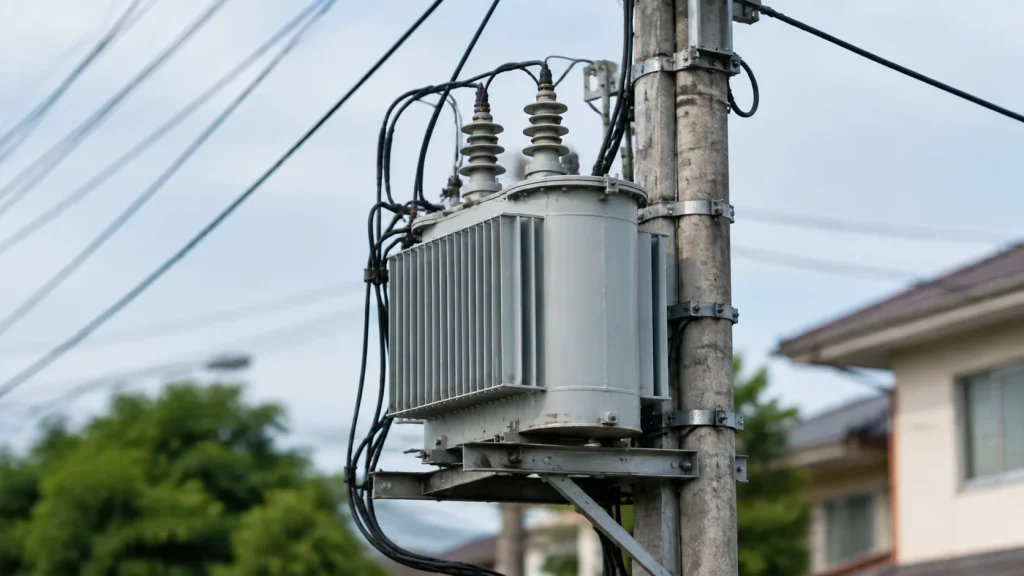
The Case for Distribution Transformers: No-Load Loss Runs the Clock
Picture one on a pole. It doesn’t switch off at night. It doesn’t power down when the house underneath it is drawing almost nothing. It just sits there, energized, for the entire service life of the unit — which means its core loss (the no-load loss that happens purely from being energized, regardless of current flowing through it) never stops accumulating. 8,760 hours a year. Every year.
Now scale that to a utility’s actual fleet. Thirty thousand units isn’t an unusual number for a mid-sized service territory. Shave a fraction of a watt off the no-load loss of each one, and multiply by 30,000, running continuously, for decades. That’s not a rounding error — that’s the entire reason distribution transformer core selection leans toward premium Hi-B (domain-refined) grain-oriented grades, and in some markets skips silicon steel altogether in favor of amorphous metal cores built specifically to chase no-load loss down.
Power Transformers Play a Different Game
A power transformer at a generation plant or transmission substation doesn’t sit at the same flat, mostly-idle load profile. Demand swings, and the transformer’s load swings with it. It still incurs no-load loss whenever it’s energized — that part doesn’t go away — but the utility’s loss capitalization math (the present-value cost of no-load loss plus load loss, added up over the unit’s service life) leans harder toward load loss here, simply because these units carry far more current when they’re actually working.
That doesn’t push power transformer cores toward cheaper steel. These are the largest, most capital-intensive units on the network, and a small efficiency gain still matters at that scale. What changes is the balance the grade selection is solving for: no-load loss still counts, but it gets weighed against load loss and the unit’s actual expected duty cycle, rather than optimized in isolation the way distribution transformer design usually treats it.
A Quick Sanity Check: Why the Fleet Math Actually Matters
Worth walking through the arithmetic once, because “small savings add up” is the kind of claim that sounds true without actually landing until you see the numbers side by side. This is an illustrative scenario, not a specific project — the point is the shape of the math, not the exact figures.
Say a utility operates 30,000 distribution transformers, and a premium Hi-B grade shaves roughly 3 watts off the no-load loss of each unit compared to a conventional grain-oriented grade. That’s 90,000 watts — 90 kW — of continuous loss reduction across the fleet, running 8,760 hours a year, every year, for as long as those units stay in service. Run that through a utility’s own energy cost and loss capitalization assumptions, and a grade upgrade that looks marginal unit-by-unit stops looking marginal at fleet scale.
Now run the same exercise for a power transformer program. A utility isn’t operating 30,000 power transformers — it might operate a few dozen, each individually far larger and more expensive than any single distribution unit. The aggregation effect that makes small no-load loss gains so valuable in the distribution fleet barely applies here, because there’s no large population of units to multiply the saving across. That’s the structural reason the two grade-selection logics diverge, reduced to arithmetic rather than duty-cycle description.
Grade Selection Comparison
| Factor | Distribution Transformers | Power Transformers |
|---|---|---|
| Typical duty cycle | Energized continuously, variable/light load | Energized continuously, heavier load tied to demand swings |
| Dominant loss concern | No-load (core) loss — accumulates regardless of load | Balanced no-load and load loss via loss capitalization |
| Common grade preference | Premium Hi-B grain-oriented, sometimes amorphous core | Hi-B and conventional grain-oriented, per-unit economics |
| Typical thickness range | 0.23mm–0.27mm | 0.23mm–0.30mm |
| Fleet size per utility | Often tens of thousands of units | Far fewer units, much larger individual capacity |
None of this is a fixed rule. Loss capitalization coefficients shift by utility, by region, by tariff structure. What’s consistent is the direction the economics push in — and that direction genuinely differs between the two classes.
Core Construction Differences That Also Matter
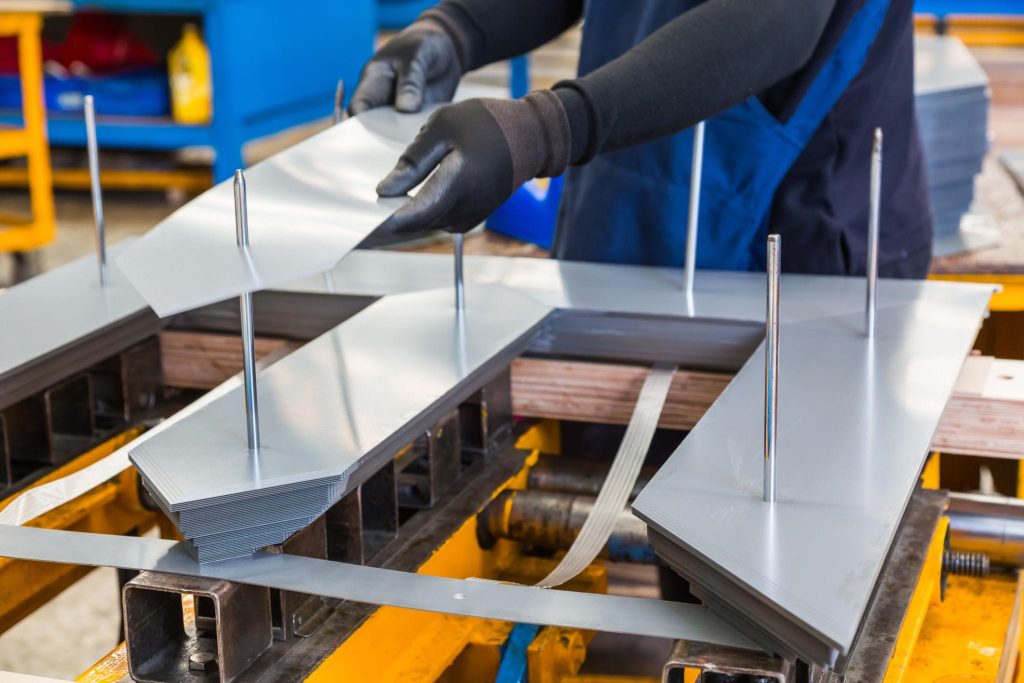
Grade isn’t the whole story. Distribution transformers — especially the single-phase, pole-mounted kind — more often use wound core construction: the core wound continuously from one steel strip. Very low core loss, but it boxes in your core geometry options. Power transformers, especially large three-phase units, more often go stacked (or step-lap stacked), which handles the bigger, more complex core shapes these units need — usually at a small stacking-factor and joint-loss cost relative to a wound core of the same grade.
Neither wins outright. They’re solving different mechanical problems at different scales, and construction method interacts with grade choice rather than sitting apart from it.

Regulation Adds Pressure on Top of the Economics
The US Department of Energy sets minimum efficiency requirements specifically for distribution transformers, and comparable frameworks exist in the EU and elsewhere. These rules target no-load loss directly — which means regulation, not just internal utility economics, is pushing in the same direction continuous energization already pushes.
Power transformers face efficiency expectations too, but project-by-project against a utility’s own loss capitalization formula, not a single blanket minimum the way a mass-produced, standardized product category gets regulated. Lower volume, higher customization, different regulatory treatment. It tracks.
What This Means for Your Steel Spec
Specifying for a distribution transformer program? No-load loss performance should be leading the grade decision, not tied for third place with everything else. Ask for core loss figures at your actual operating induction and frequency, and start from a premium Hi-B grade rather than treating it as an upsell to justify. Grain-oriented silicon steel covers the thickness range this equipment class typically runs in.
Specifying for a power transformer program is a different exercise. Run your own loss capitalization numbers before assuming the distribution-transformer answer carries over — it usually doesn’t, once your specific no-load/load loss cost coefficients enter the picture. The power transformer and distribution transformer application pages break grades down by use case, and if your spec references a non-Chinese standard, the grade equivalents reference is worth a look before you finalize anything.
FAQ
Do power transformers and distribution transformers use different steel grades?
Not automatically — both typically draw from the grain-oriented electrical steel category. What differs is which specific grade inside that category gets chosen, driven by duty cycle and loss capitalization economics rather than voltage rating alone.
Why does no-load loss matter more for distribution transformers?
Because they stay energized continuously no matter what’s actually being drawn downstream, so core loss accumulates around the clock for the unit’s entire service life. Multiply that by a utility fleet running in the tens of thousands, and small per-unit improvements add up fast.
What is loss capitalization and how does it affect grade selection?
It’s the present-value calculation utilities use to weigh a transformer’s no-load loss and load loss over its service life against its purchase price. The weighting shifts by transformer class and by utility — which is why a distribution-transformer grade choice doesn’t automatically transfer to a power transformer program.
Are distribution transformer efficiency standards actually regulated?
Yes, in several major markets — the US DOE sets minimum efficiency requirements specifically for distribution transformers, with comparable frameworks elsewhere. They target no-load loss directly, adding regulatory weight to a pressure that continuous energization already creates.
Should I default to the highest Hi-B grade available for a distribution transformer program?
It’s a reasonable starting point, given how heavily no-load loss weighs for this equipment class. But confirm it against your own loss capitalization economics and budget — request core loss data at your actual operating induction and frequency rather than assuming the premium grade pays for itself in every program.
Specifying core steel for a distribution or power transformer program? Contact Zhongxin Special Steel with your loss capitalization targets, and we’ll help match grade selection to your specific duty cycle.