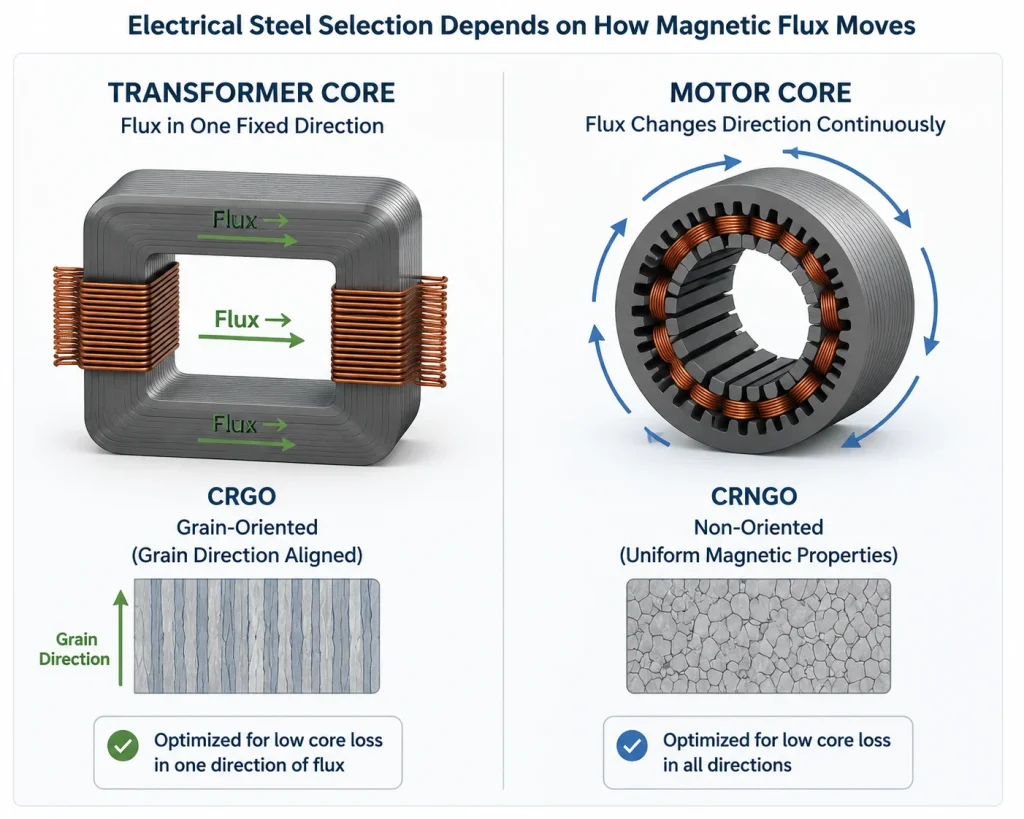
A buyer once sent us a spec sheet copied almost word-for-word from a transformer core order, asking us to quote the same material for a new line of induction motors. We had to walk that back before quoting anything, because the two applications need electrical steel that’s engineered for opposite priorities — one wants directional efficiency, the other needs uniform performance in every direction. That mix-up is more common than you’d think, mostly because “electrical steel” gets talked about as if it’s one material, when really it’s a family of grades, each built around a specific way the magnetic field behaves in that particular piece of equipment.
This guide maps out where electrical steel actually gets used — transformers, motors, EV traction drives, household appliances, and renewable energy generation — and, more usefully, why the grade requirements differ so much across them. If you landed here trying to figure out which grade fits your specific equipment, our electrical steel grades guide covers the technical side in depth; this one is organized by application instead of by grade.
Core Key Points
- The magnetic field’s direction of travel in the equipment — fixed (transformers) versus rotating (motors, generators) — is the single biggest factor determining which electrical steel grade family fits, more important than cost or thickness alone.
- Transformers overwhelmingly use grain-oriented (CRGO) steel because their magnetic circuit is designed around one consistent flux direction.
- Motors, generators, and most rotating equipment use non-oriented (CRNGO) steel because the field direction changes continuously as the rotor spins.
- EV traction motors are pushing the industry toward ultra-thin silicon steel (0.05-0.20mm) because their operating frequencies (often 400Hz+) make standard-thickness CRNGO disproportionately lossy.
- Wind turbine generators and household appliance motors both fall into the CRNGO category, but at very different scales and cost sensitivities — a wind generator core can weigh tons, while an appliance motor core weighs grams.
Power and Distribution Transformers
Transformers are the application CRGO was built for. The core carries flux in a single, fixed direction that’s designed into the geometry — a step-lap or mitred core construction, for example — so the steel’s directional efficiency advantage is fully usable rather than wasted.
Distribution transformers (the ones on utility poles and in substations, typically under a few MVA) and power transformers (larger grid-scale units) both use CRGO, but the specific grade often differs:
- Distribution transformers commonly use standard CRGO (0.27-0.30mm) where cost efficiency matters and loss penalties are more moderate.
- Power transformers at utility scale, where no-load loss penalties from the grid operator can be steep, more often justify Hi-B CRGO despite the higher material cost.
Industrial Motors and Generators
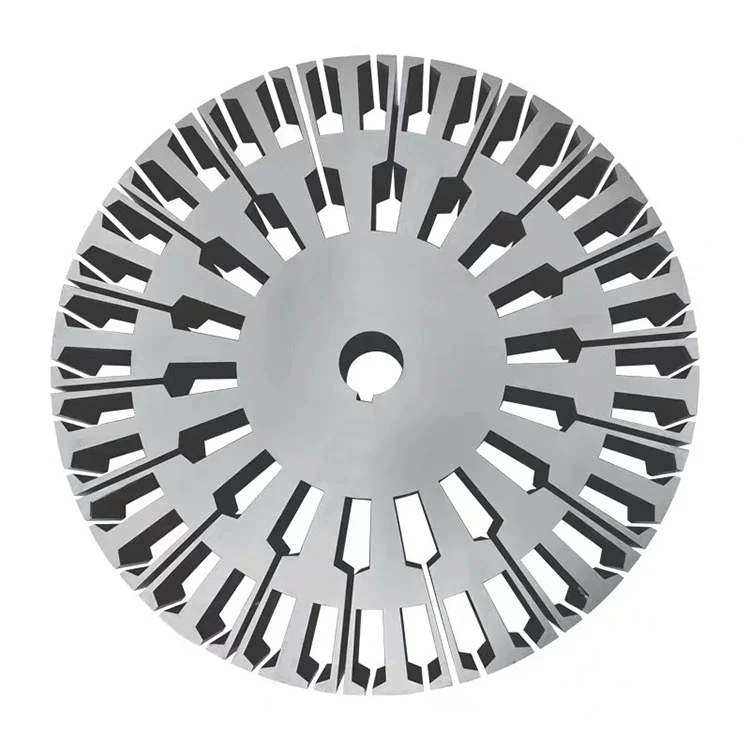
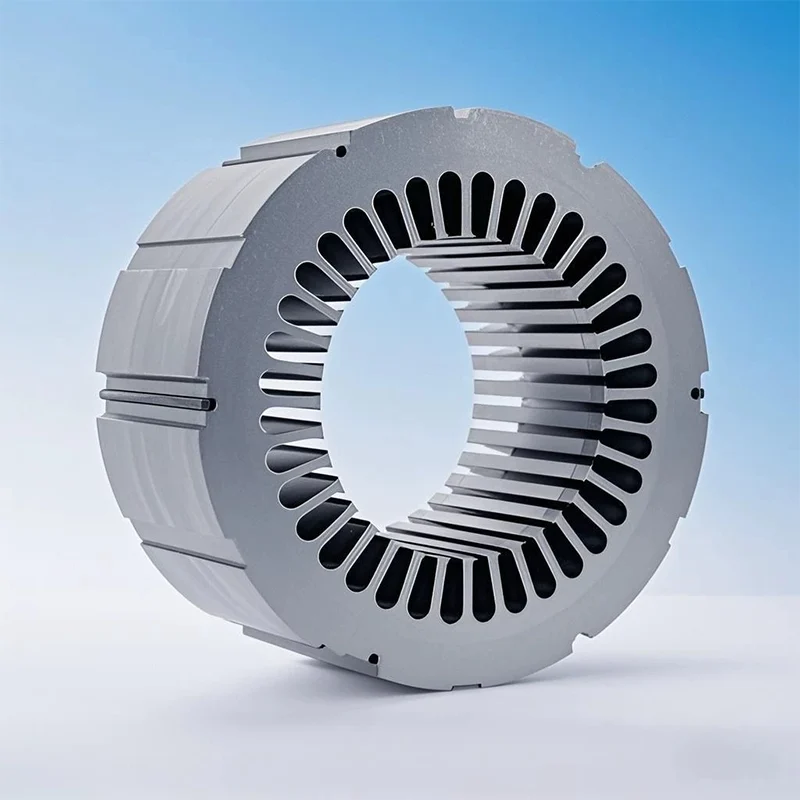
Any equipment with a spinning rotor — induction motors, synchronous generators, most industrial drive equipment — needs the magnetic field in the core to perform consistently regardless of direction, because the field itself is rotating through 360 degrees as the machine operates. This is exactly what CRNGO is built for, and it’s why using CRGO here (even though its core-loss numbers look better on a spec sheet) doesn’t deliver the efficiency gain you’d expect — you’d be paying for a directional advantage the application can’t use.
Within industrial motor applications, the main variable is typically core loss ceiling relative to the required IE-class efficiency rating, not grade family — CRNGO is close to universal here, with higher-silicon, lower-loss variants reserved for premium-efficiency motor lines.
EV Traction Motors
This is where electrical steel selection has changed the most in the last several years. EV traction motors run at electrical frequencies far above the 50/60 Hz grid standard — often several hundred Hz at the switching frequency the core actually experiences — and core loss scales roughly with the square of frequency for a given thickness. That relationship makes standard 0.35-0.50mm CRNGO noticeably lossy at EV operating frequencies, which is why the industry has moved toward ultra-thin grades in the 0.05-0.20mm range specifically for this segment.
The tradeoff is cost: ultra-thin grades typically run 40-80% more per ton than standard CRNGO, due to lower rolling yield and slower production speed. That premium is justified when the frequency profile genuinely demands it — which, for most EV traction motor designs today, it does.
Household Appliance Motors
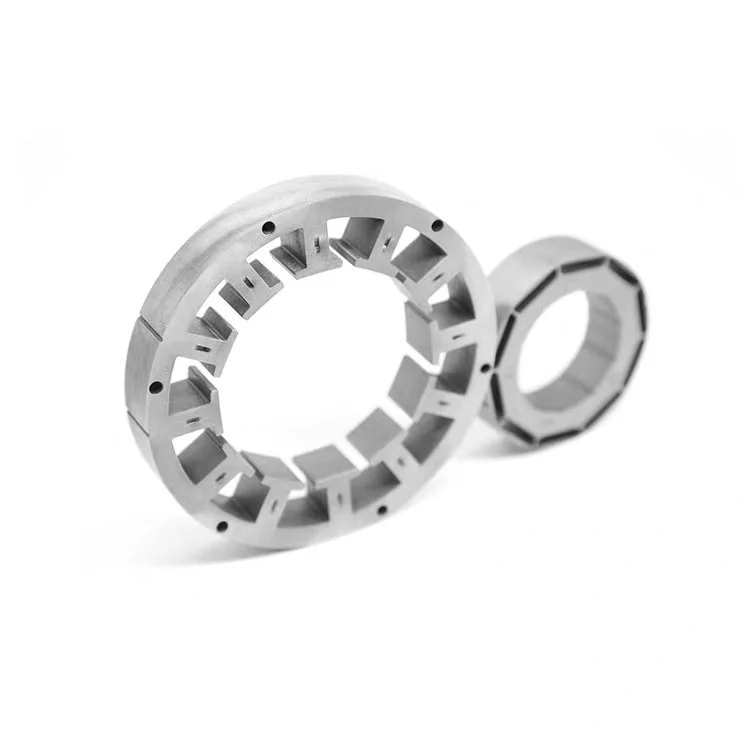
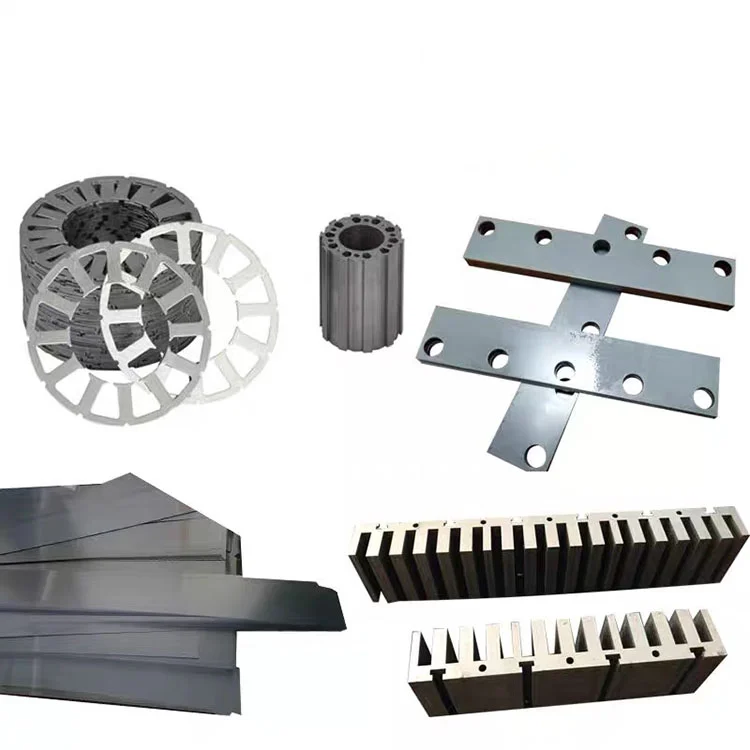
Washing machine motors, refrigerator compressors, and small fan motors sit at the opposite end of the cost-sensitivity spectrum from EV traction motors, even though they’re in the same broad CRNGO category. These applications run at standard grid frequency, don’t need ultra-thin gauges, and prioritize cost efficiency at high production volumes over the last percentage point of core loss reduction. Standard CRNGO (0.35-0.50mm) is the default here, and for good reason — there’s little efficiency upside to paying for a thinner or higher-grade material in an application that doesn’t need it.
Wind and Renewable Energy Generation
Wind turbine generators are, magnetically, large-scale rotating equipment — so they fall into the CRNGO category alongside industrial motors, just at a much bigger physical scale (a single generator core can weigh several tons). The scale changes the economics: even small percentage improvements in core loss translate into meaningful absolute energy savings over a turbine’s operating life, which is why premium CRNGO grades see more use in wind generation than in equivalent-frequency industrial motors of similar core-loss requirements.
Solar inverter transformers, by contrast, behave more like conventional distribution transformers from a grade-selection standpoint — fixed-direction flux, CRGO territory — even though they sit within a “renewable energy” application category alongside wind.
Application-to-Grade Quick Reference
| Application | Field Direction | Typical Grade | Typical Thickness |
|---|---|---|---|
| Power/distribution transformers | Fixed | CRGO (Hi-B for premium efficiency) | 0.23-0.30mm |
| Industrial motors & generators | Rotating | CRNGO | 0.35-0.50mm |
| EV traction motors | Rotating, high frequency | Ultra-thin silicon steel | 0.05-0.20mm |
| Household appliance motors | Rotating | Standard CRNGO | 0.35-0.50mm |
| Wind turbine generators | Rotating (large scale) | Premium CRNGO | 0.35-0.50mm |
| Solar inverter transformers | Fixed | CRGO | 0.23-0.30mm |
FAQ
Can the same electrical steel grade work across multiple applications?
Not usually, and treating grade selection as interchangeable across applications is one of the most common costly mistakes we see. The deciding factor is whether the magnetic field in the equipment is fixed-direction (favoring CRGO) or rotating (favoring CRNGO), and that’s determined by the equipment type, not by convenience or existing stock.
Why do EV motors need different steel than industrial motors, if both have rotating fields?
Both use the CRNGO family, but EV traction motors operate at much higher electrical frequencies, which makes core loss scale up sharply with standard thickness. That’s why EV applications increasingly specify ultra-thin gauges (0.05-0.20mm) that industrial motors at standard grid frequency don’t need.
Is wind turbine generator steel the same as household appliance motor steel?
Both typically use CRNGO, but at very different scales and cost sensitivities. Wind generators often justify premium, lower-loss CRNGO grades because small efficiency gains compound into meaningful savings over the turbine’s operating life, while appliance motors prioritize cost efficiency at high production volume.
What’s the most common mistake buyers make when selecting steel across different equipment types?
Assuming a grade that performs well in one application (usually judged by an isolated core-loss number) will perform equally well in a different application without checking whether the field direction actually matches. A rotating-field application needs CRNGO regardless of how good a CRGO spec sheet looks.
If you’re specifying steel for a new product line and you’re not sure which application category it falls into, tell us the equipment type and operating frequency and we’ll map it to the right grade family before you commit to an order — it’s a five-minute conversation that avoids a much longer one later.